The impact of microdosed plyometric training on speed and explosive abilities of football players during the pre-season
Marián Škorik, Tomáš Kalina, Martin Pupiš, Michal Hrubý

TL;DR
This study found that microdosed plyometric training, with shorter and more frequent sessions, leads to similar improvements in speed and explosive abilities as traditional training in young football players.
Contribution
The study introduces microdosed plyometric training as a viable alternative to traditional training when scheduling is limited.
Findings
Both training groups showed similar improvements in jump and sprint performance.
Microdosing did not result in significantly different adaptations compared to traditional training.
Shorter, more frequent sessions may be as effective as longer ones for plyometric training.
Abstract
Microdosed training distributes a given training stimulus into shorter, more frequent sessions. This study investigated whether a microdosed plyometric program produces similar adaptations to a traditional plyometric program when the total number of plyometric contacts is closely matched in elite youth football players. In this quasi-experimental, two-group study, twenty-four elite U19 players were allocated to a traditional training group (TRG, n = 12, 2 sessions·week⁻¹, ~ 40 min·session⁻¹) or a microdosed group (MDG, n = 12, 3–4 sessions·week⁻¹, ~ 20 min·session⁻¹). Allocation was nonrandomized and matched on countermovement jump (CMJ) height and modified reactive strength index (RSI mod) from a drop jump (DJ), with standing broad jump (SBJ) used as a tiebreaker. Total plyometric contact volume was closely matched over an 8-week intervention. Primary outcomes were 30 m sprint…
Genes, proteins, chemicals, diseases, species, mutations and cell lines named across the full text — each resolved to its canonical identifier and authoritative record.
Click any figure to enlarge with its caption.
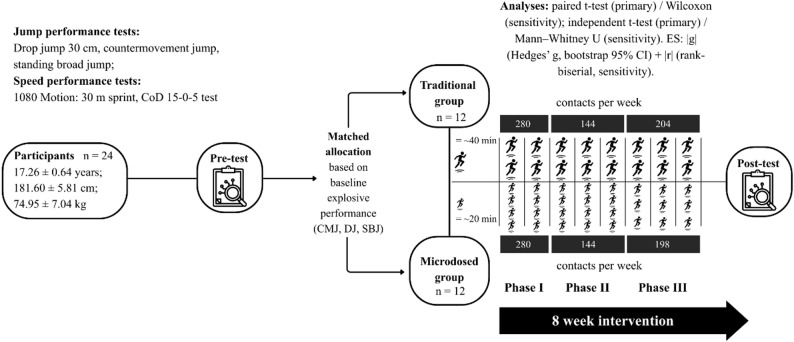 Figure 1
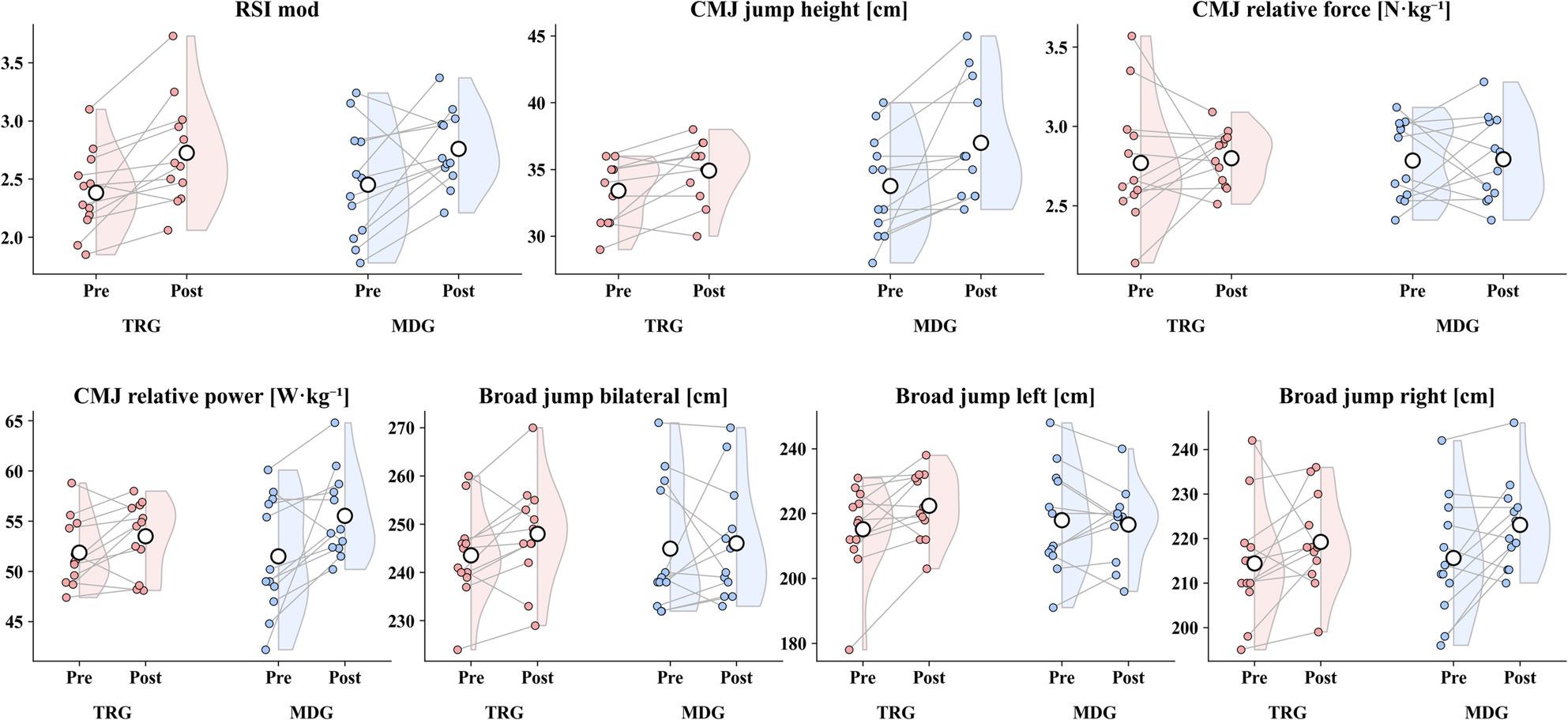 Figure 2
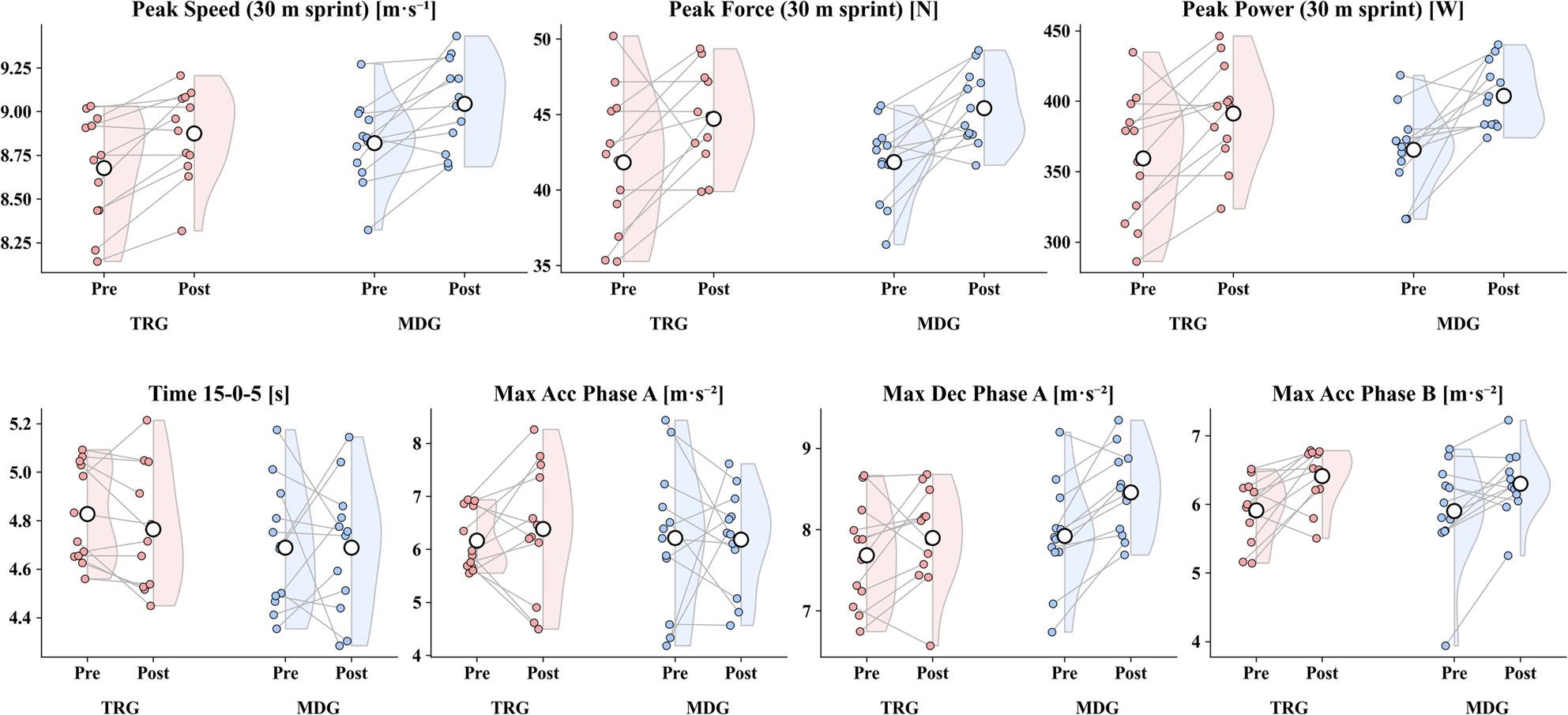 Figure 3
Peer Reviews
No public reviews on file for this paper yet. If you reviewed it on a platform where reviews are public (OpenReview, ICLR, NeurIPS, ICML), you can paste yours below so the community can read it here.
Videos
No videos yet. Explain this paper in a talk, walkthrough, or lecture? Add one.
Taxonomy
TopicsSports Performance and Training · Sports injuries and prevention · Genetics and Physical Performance