The pectoralis major index: a novel computed tomography biomarker for low thoracic muscle mass and eastern cooperative oncology group performance status in lung cancer patients
Wenbin Gu, Yusheng Li, Fang Wang, Chunyu Wu, Zhaojie Peng, Xihua Zhou, Wenxuan Lei, Mingxuan Huang, Fei Peng

TL;DR
This study introduces a new CT-based biomarker, the pectoralis major index, to assess muscle mass in lung cancer patients and link it to health outcomes.
Contribution
The study proposes a novel CT-based biomarker (pectoralis major index) for assessing thoracic muscle mass and its association with performance status in lung cancer patients.
Findings
The pectoralis major index showed excellent discrimination for low thoracic muscle mass in male lung cancer patients.
The pectoralis major index is independently associated with poor ECOG performance status in lung cancer patients.
T4-level muscle metrics effectively differentiate low thoracic muscle mass across disease stages and sex.
Abstract
Chest computed tomography (CT) seldom covers the third lumbar (L3) vertebral level, the standard landmark for assessing total body muscle mass. As muscle measurements at the fourth thoracic (T4) level show high concordance with those at L3, the T4 level may serve as a viable alternative. We evaluated the discriminatory performance of T4 musculature for lung cancer–related low thoracic muscle mass (LTMM) and its association with Eastern Cooperative Oncology Group (ECOG) performance status. We retrospectively included 289 inpatients with newly diagnosed lung cancer who underwent chest CT within 3 months. At T4, the pectoralis major, pectoralis minor, and chest–wall muscle group were segmented to derive cross–sectional area (CSA), density, and height–normalized indices (cm2/m2). Low thoracic muscle mass (LTMM) was defined by sex–specific 25th–percentile thoracic 4th vertebra level muscle…
Genes, proteins, chemicals, diseases, species, mutations and cell lines named across the full text — each resolved to its canonical identifier and authoritative record.
Click any figure to enlarge with its caption.
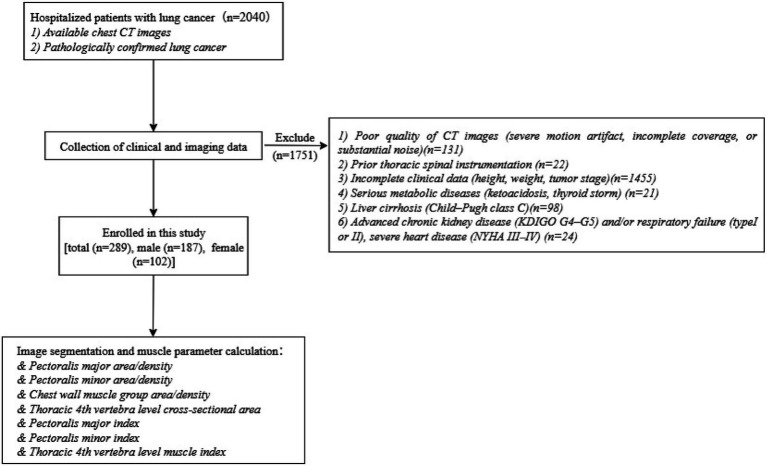 Figure 1
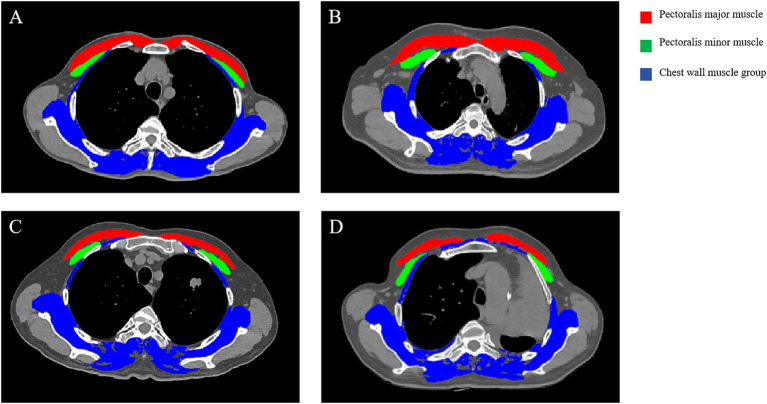 Figure 2
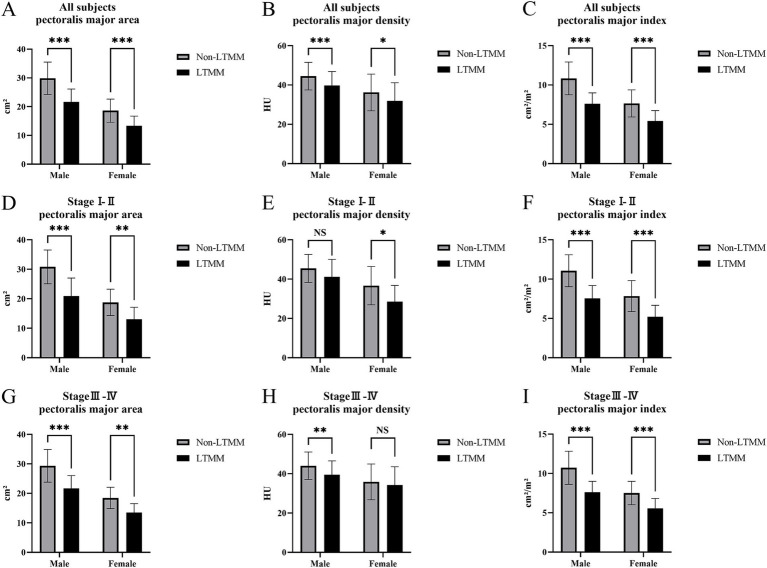 Figure 3
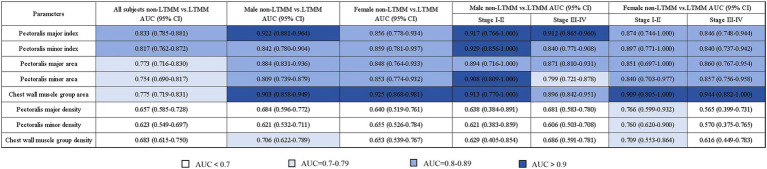 Figure 4
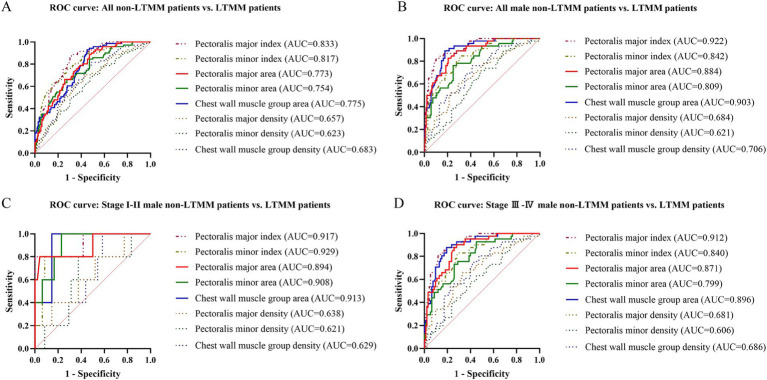 Figure 5
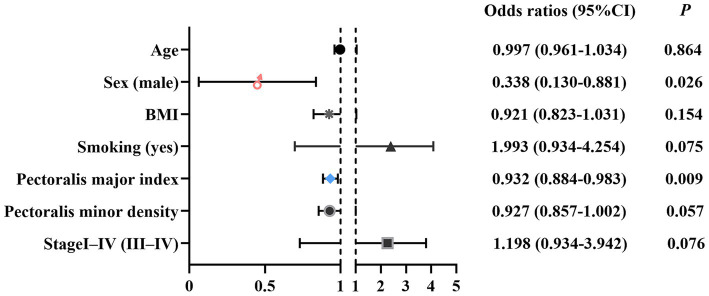 Figure 6
Peer Reviews
No public reviews on file for this paper yet. If you reviewed it on a platform where reviews are public (OpenReview, ICLR, NeurIPS, ICML), you can paste yours below so the community can read it here.
Videos
No videos yet. Explain this paper in a talk, walkthrough, or lecture? Add one.
Taxonomy
TopicsLung Cancer Diagnosis and Treatment · Nutrition and Health in Aging · Scoliosis diagnosis and treatment