Fungal spinal infections: a narrative review on diagnosis, treatment strategies, and collaborative management approaches
Anand Kumar Das, Mainak Sinha, Rijhul Lahariya, Saraj Kumar Singh, Sona Bhardwaj, Simmi Kishore

TL;DR
This review summarizes the diagnosis, treatment, and management of rare fungal spinal infections, highlighting the importance of early detection and collaboration among specialists.
Contribution
The paper provides a comprehensive analysis of patient data and treatment outcomes for fungal spinal infections.
Findings
Candida albicans was the most common pathogen in fungal spinal infections.
Triazoles were the most frequently used antifungal treatment.
Collaboration between spine surgeons and radiologists is crucial for managing these infections.
Abstract
Spinal fungal infections are rare with a frequency of 2.2 times per 100,000 people annually. They are caused by pathogens such Coccidioides immitis, Blastomyces dermatitidis, Cryptococcus neoformans, Candida albicans, and Aspergillus fumigatus (found globally). This review on fungal spinal infections examines patient demographics, medicinal treatments, surgical methods, and outcomes. All PubMed articles on fungal spine infections were analysed, regardless of fungus, publication year, or spinal segment. The patient’s age, gender, affected spinal section, microorganism, treatment regimens, surgical methods, follow-up period, and results were recorded. Of the 134 analyzed patients, 66.4% were male. The mean age was 54.3±14.9 years. Most susceptible was the lumbar spine (47%), followed by the thoracic (29.9%) and lumbo-sacral (12.7%). The most common organism was Candida albicans…
Genes, proteins, chemicals, diseases, species, mutations and cell lines named across the full text — each resolved to its canonical identifier and authoritative record.
Click any figure to enlarge with its caption.
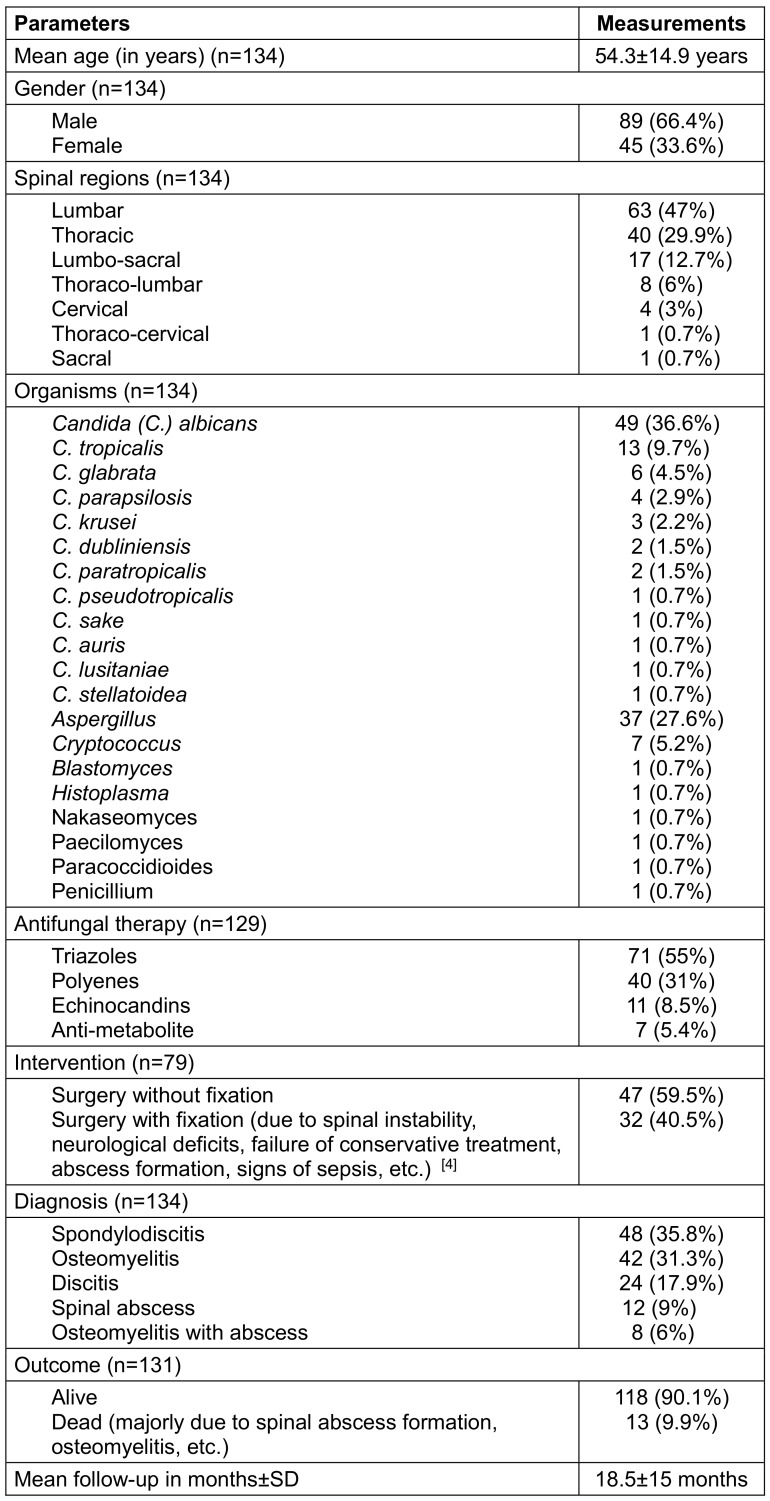 Figure 1
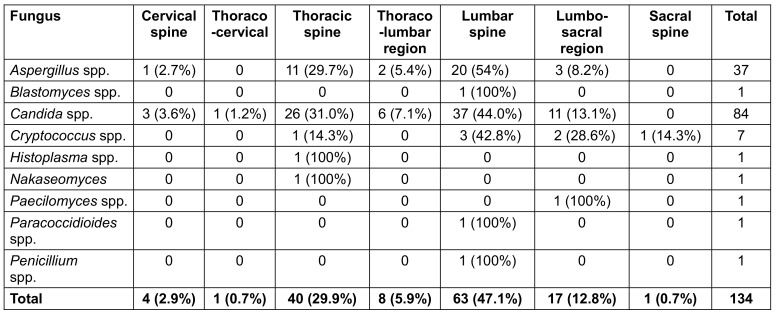 Figure 2
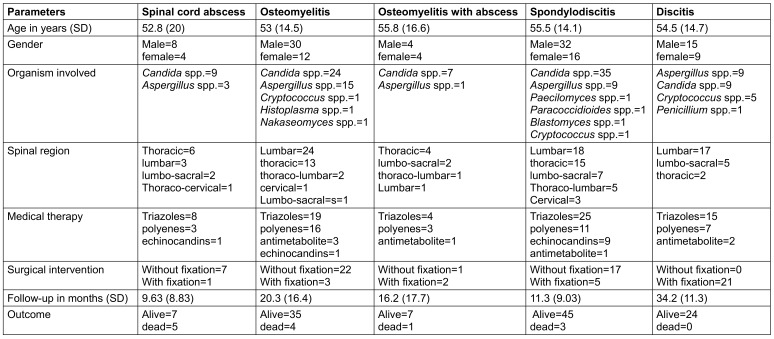 Figure 3
Peer Reviews
No public reviews on file for this paper yet. If you reviewed it on a platform where reviews are public (OpenReview, ICLR, NeurIPS, ICML), you can paste yours below so the community can read it here.
Videos
No videos yet. Explain this paper in a talk, walkthrough, or lecture? Add one.
Taxonomy
TopicsFungal Infections and Studies · Infectious Diseases and Tuberculosis · Nail Diseases and Treatments