Attribution of Selfhood Based on Simple Behavioral Cues: Toward a Pars‐Pro‐Toto Account
Jan Pohl, Kristina Nikolovska, Dennis Küster, Francesco Maurelli, Arvid Kappas, Bernhard Hommel

TL;DR
People attribute selfhood to robots based on simple behavioral cues, even if only one cue is present, leading to a halo effect in perception.
Contribution
The study introduces a Pars-Pro-Toto account, suggesting that minimal cues can trigger broader selfhood attributions through interacting characteristics.
Findings
Robots displaying a single selfhood-related cue led to increased selfhood attribution.
Perceived sentient characteristics were triggered by any single cue, showing a halo effect.
A Brunswikian model is proposed to explain how cues interact in selfhood attribution.
Abstract
While the necessity of a concept of “self” for understanding human behavior remains subject to debate, it evidently has significance in everyday life: Lay individuals ascribe selves to humans but also to animals and technical systems, shaping their interactions accordingly. The literature suggests that there are distal behavioral cues eliciting this perception of selfhood and they may be as minimal as simple movement observed as causal. We aimed to identify which types of behavioral cues increase selfhood‐attribution to other agents such as robots. Specifically, we compared behavior of nonhumanoid robots suggesting either the presence or absence of behavioral cues for one of the characteristics of causality, equifinality, behavioral efficiency, learning sensitivity, and context sensitivity. Results showed a consistent pattern of increased selfhood‐attribution toward robots exhibiting…
Genes, proteins, chemicals, diseases, species, mutations and cell lines named across the full text — each resolved to its canonical identifier and authoritative record.
Click any figure to enlarge with its caption.
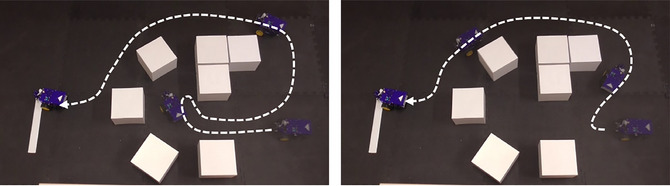 Figure 1
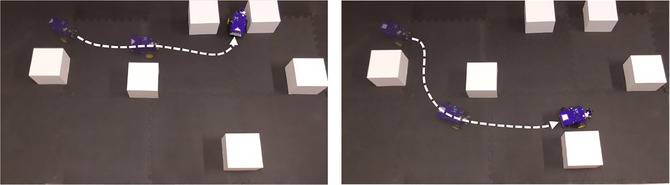 Figure 2
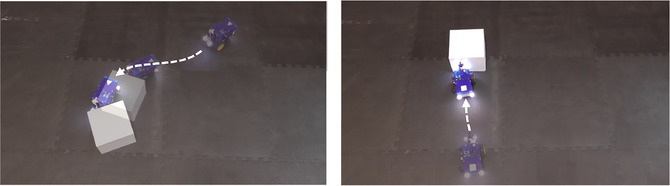 Figure 3
 Figure 4
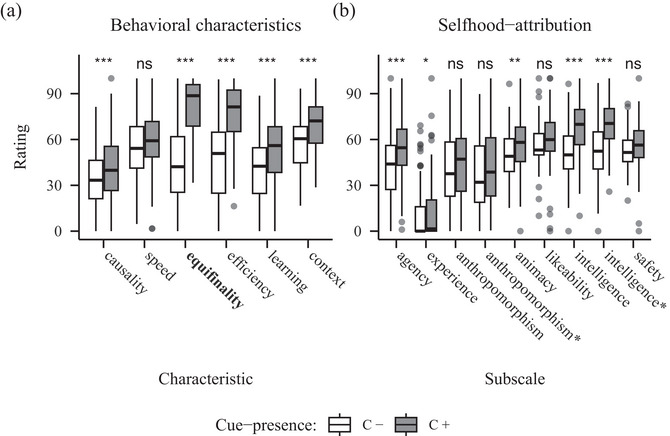 Figure 5
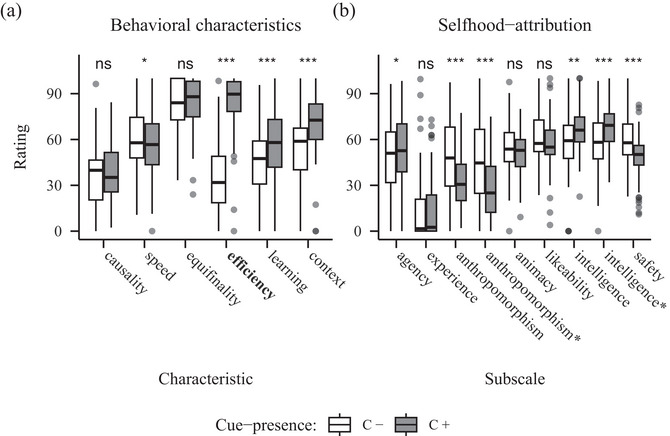 Figure 6
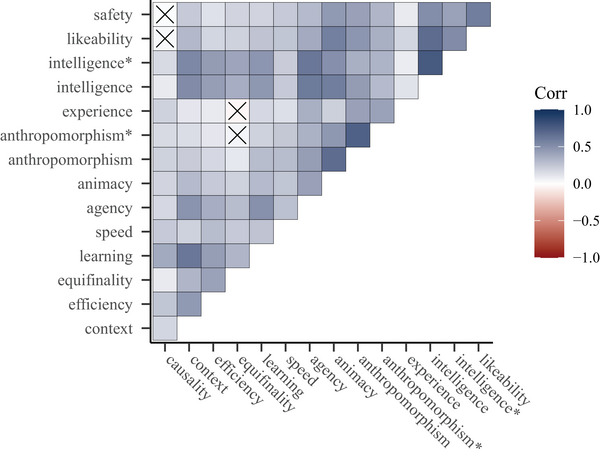 Figure 7
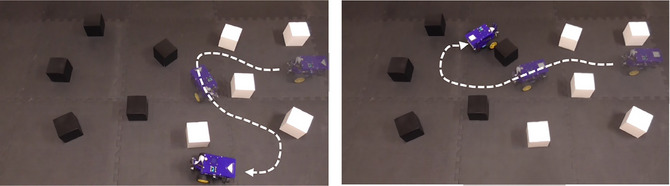 Figure 8
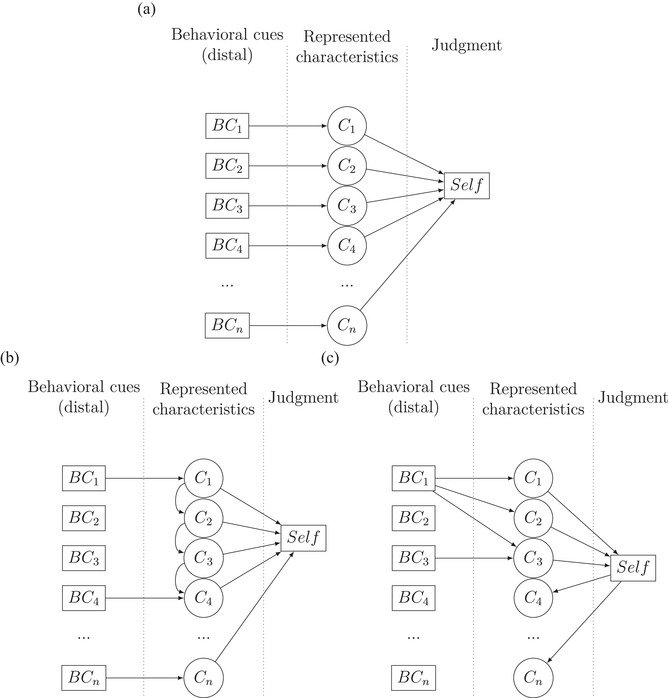 Figure 9
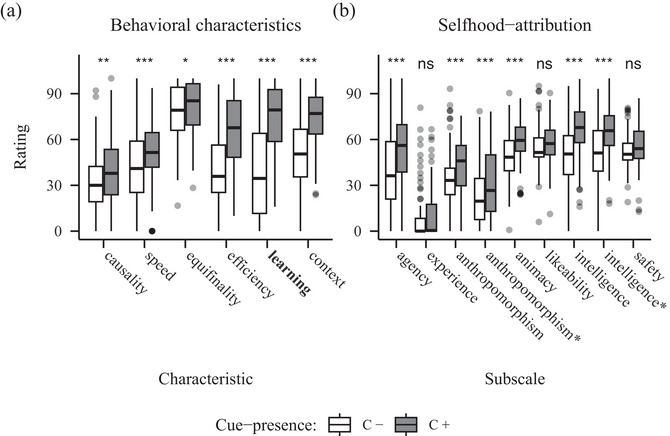 Figure 10
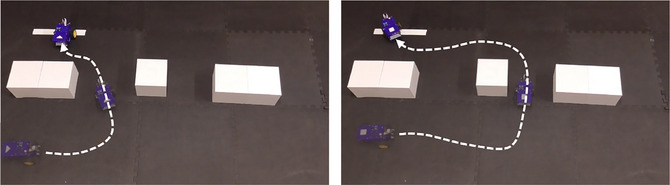 Figure 11
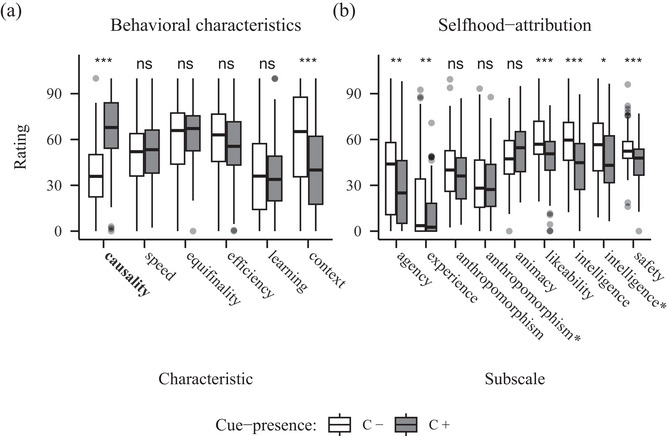 Figure 12
Peer Reviews
No public reviews on file for this paper yet. If you reviewed it on a platform where reviews are public (OpenReview, ICLR, NeurIPS, ICML), you can paste yours below so the community can read it here.
Videos
No videos yet. Explain this paper in a talk, walkthrough, or lecture? Add one.
Taxonomy
TopicsSocial Robot Interaction and HRI · Psychology of Moral and Emotional Judgment · Action Observation and Synchronization