Cortical Brain Activation During Robot‐Assisted Gait in Humans With Acute and Chronic Spinal Cord Injury: A Functional Near‐Infrared Spectroscopy Study
Ana Rita C. Donati, Daniel Boari Coelho, João Ricardo Sato, Felipe Fregni, Linamara Rizzo Battistella

TL;DR
This study uses brain imaging to explore how people with spinal cord injuries use their brain's motor areas during robot-assisted walking, showing brain adaptability.
Contribution
The study demonstrates brain motor cortex plasticity in individuals with spinal cord injury during robotic gait training.
Findings
Chronic SCI patients showed higher brain activity in motor areas compared to acute patients during robotic gait.
Paraplegic individuals exhibited greater motor cortex activation than tetraplegic individuals during the task.
Brain motor areas like SMA and M1 showed increased activity during robotic gait compared to rest.
Abstract
Most treatments being developed to regain motor function following spinal cord injury (SCI) presuppose that brain motor functions remain intact. To examine this assumption, this study aims to analyze residual neurological functions during assisted robotic gait in individuals with SCI comparing blocks (gait × resting), time after SCI (acute × chronic), injury level (paraplegic × tetraplegic), and ASIA scale (ASIA C × D). The hemodynamic functions were analyzed using functional near‐infrared spectroscopy (fNIRS) in 23 individuals (11 acute, 12 chronic; ASIA Impairment Scale grade C: 10, D: 13; paraplegia: 15, tetraplegia: 8) while performing an assisted robotic gait task (Lokomat). Brain areas analyzed included supplementary motor area (SMA), dorsolateral prefrontal cortex (DLPFC), primary motor cortex (M1), and primary somatosensory cortex (S1). Blocks (robotic gait × resting), acute ×…
Genes, proteins, chemicals, diseases, species, mutations and cell lines named across the full text — each resolved to its canonical identifier and authoritative record.
Click any figure to enlarge with its caption.
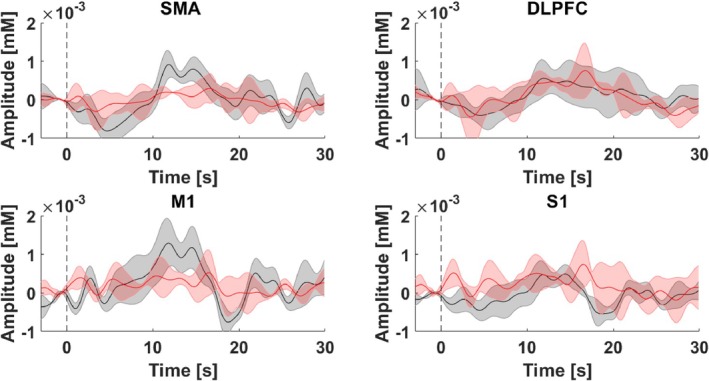 Figure 1
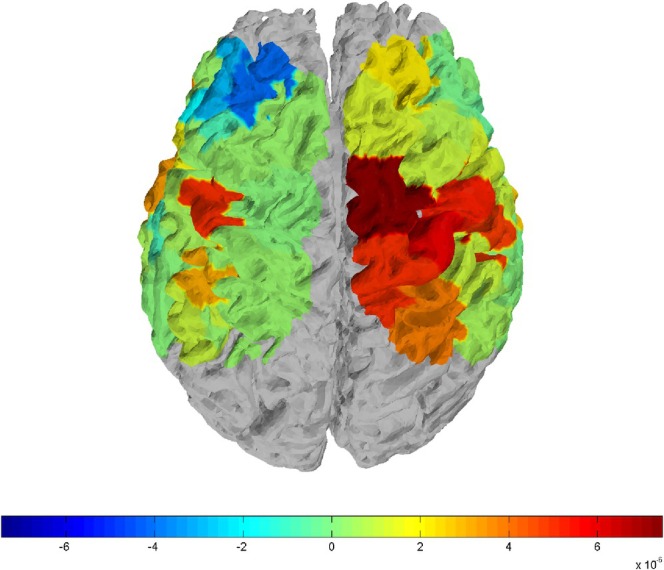 Figure 2
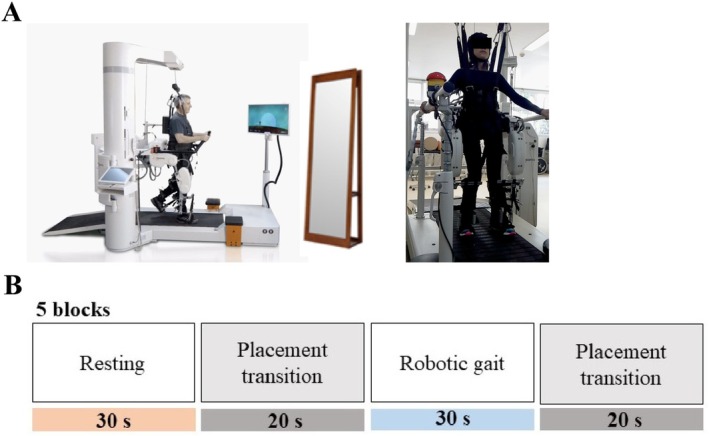 Figure 3
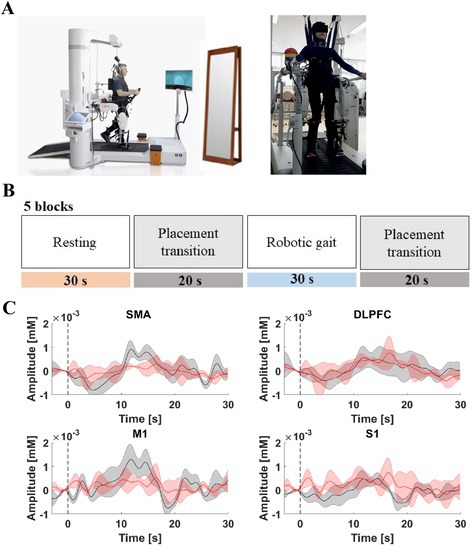 Figure 4
Peer Reviews
No public reviews on file for this paper yet. If you reviewed it on a platform where reviews are public (OpenReview, ICLR, NeurIPS, ICML), you can paste yours below so the community can read it here.
Videos
No videos yet. Explain this paper in a talk, walkthrough, or lecture? Add one.
Taxonomy
TopicsSpinal Cord Injury Research · Optical Imaging and Spectroscopy Techniques · Stroke Rehabilitation and Recovery