Alterations in epigenetic marks and expression of genes related to stress regulation: an exploratory study among newborns after fetal repair of spina bifida aperta
M. A. Landolt, N. L. Strebel, U. Moehrlen, N. Ochsenbein, N. Strübing, T. Burkhardt, C. D’Addario, M Pucci, A. Bodenmann, E. Grünblatt

TL;DR
This study explores molecular changes in newborns who underwent fetal repair for spina bifida, focusing on genes involved in stress regulation.
Contribution
The study identifies gene- and site-specific epigenetic and gene expression differences in newborns after fetal spina bifida repair.
Findings
Significant differences in FKBP5 methylation were observed at specific CpG sites in the fSBA group compared to controls.
NR3C1 gene expression was elevated in the fSBA group, while FKBP5 expression did not differ between groups.
Molecular variations suggest potential stress-related alterations following fetal interventions.
Abstract
Fetal repair of spina bifida aperta (fSBA) is an established intervention that improves neurological and neurodevelopmental outcomes. The present exploratory study examines whether molecular signatures related to stress regulation are detectable in newborns following this procedure. Specifically, we investigated DNA methylation and gene expression of two stress-regulatory genes, NR3C1 and FKBP5. Within a clinical trial (ID: NCT04027374), we analyzed postpartum saliva samples from newborns who had undergone fSBA repair (fSBA group; n = 30) and compared them with two control groups: newborns exposed to antenatal glucocorticoids for lung maturation (LMI group; n = 12) and healthy controls (HC group; n = 27). Pyrosequencing and qRT-PCR were used for epigenetic and transcriptional analyses. Significant group differences were observed in FKBP5 methylation, particularly at intron 7 CpG sites…
Genes, proteins, chemicals, diseases, species, mutations and cell lines named across the full text — each resolved to its canonical identifier and authoritative record.
Click any figure to enlarge with its caption.
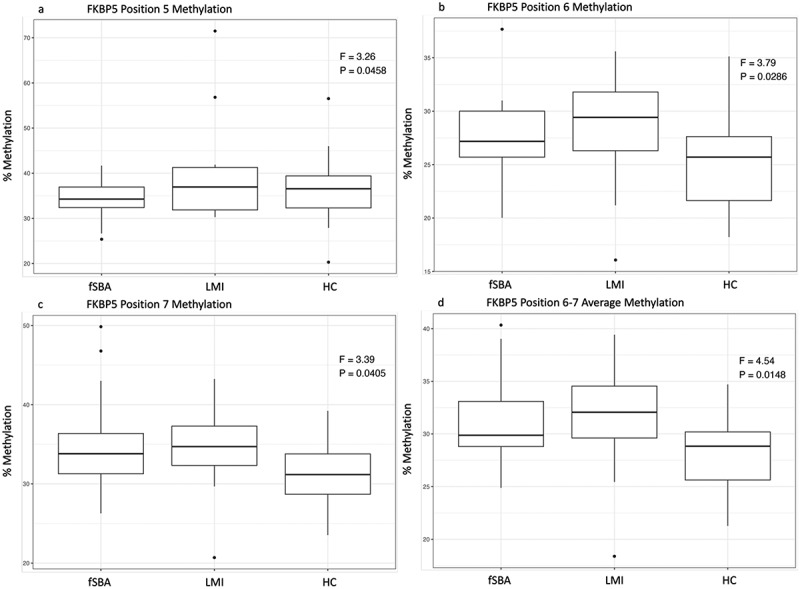 Figure 1
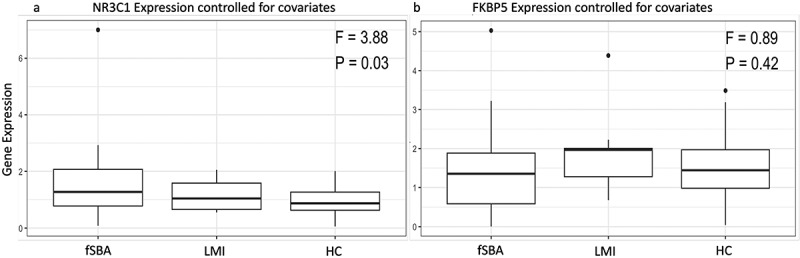 Figure 2
 Figure 3
 Figure 4
Peer Reviews
No public reviews on file for this paper yet. If you reviewed it on a platform where reviews are public (OpenReview, ICLR, NeurIPS, ICML), you can paste yours below so the community can read it here.
Videos
No videos yet. Explain this paper in a talk, walkthrough, or lecture? Add one.
Taxonomy
TopicsSpinal Dysraphism and Malformations · Prenatal Substance Exposure Effects · Congenital Diaphragmatic Hernia Studies