Metabolic Adaptation during Cardiac Exercise Rehabilitation in Patients after a First Myocardial Infarction
Eleonora Bossi, Marta Nobile, Federico Paoletti, Lorenzo Ticini, Simone Serrao, Alessia Giglio, Gianfranco Parati, Antonio Zaza, Lia Crotti, Gabriella Malfatto, Giuseppe Paglia

TL;DR
This study explores how intensive cardiac rehabilitation affects metabolism in patients recovering from a first heart attack, revealing beneficial metabolic changes and potential biomarkers.
Contribution
The study identifies specific metabolic and lipidomic adaptations during cardiac rehabilitation, including mitohormesis and phosphatidylserine responses.
Findings
Cardiac rehabilitation significantly improved clinical outcomes like 6 min walk test and BNP levels.
Metabolomic analysis revealed increased N-acetyl-l-tyrosine, suggesting a mitohormesis response to exercise-induced stress.
Phosphatidylserines increased acutely after the first training session, indicating a protective role in myocardial recovery.
Abstract
Cardiac rehabilitation (CR) is highly beneficial in postmyocardial infarction (MI) patients; however, its metabolic impact remains underexplored. This study investigated metabolic and lipidomic adaptations to an intensive CR program in 25 nondiabetic male patients (<75 years) following a first uncomplicated ST-elevation MI (STEMI). CR involved 24 ± 3 sessions, with baseline and final clinical assessments, and, in a subgroup of 17 patients, longitudinal dried blood spots (DBS) were collected, and metabolomics/lipidomics analysis was also performed. CR significantly improved clinical outcomes, including the 6 min walk test, B-type natriuretic peptide (BNP), left ventricular ejection fraction (LVEF%), C-reactive protein (CRP), and homocysteine levels. Metabolomic analysis showed sustained metabolic adaptations, notably increased N-acetyl-l-tyrosine (NAT), suggesting a mitohormesis response…
Genes, proteins, chemicals, diseases, species, mutations and cell lines named across the full text — each resolved to its canonical identifier and authoritative record.
Click any figure to enlarge with its caption.
 Figure 1
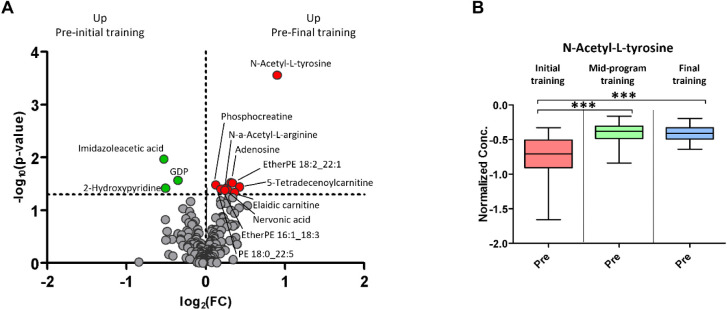 Figure 2
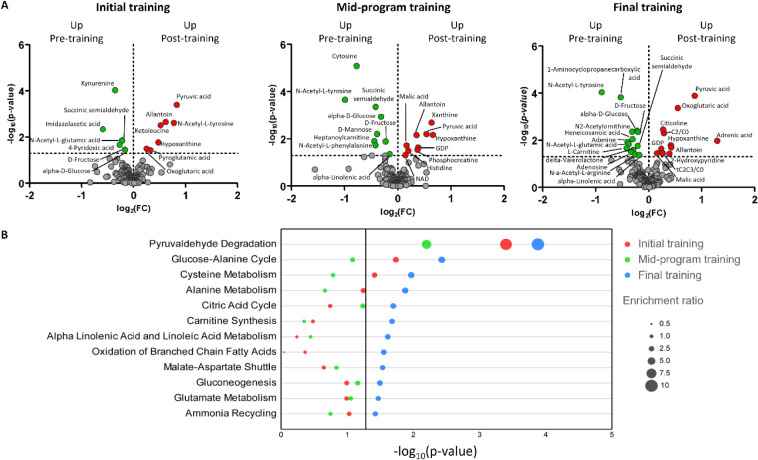 Figure 3
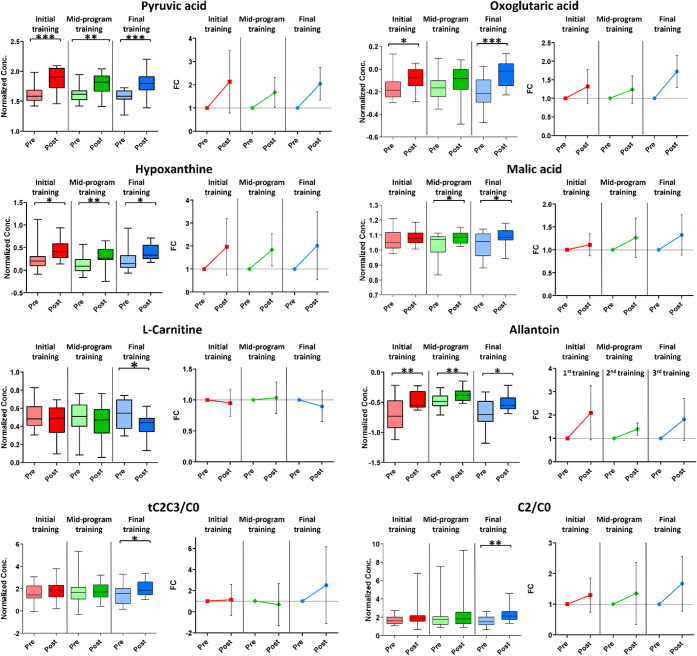 Figure 4
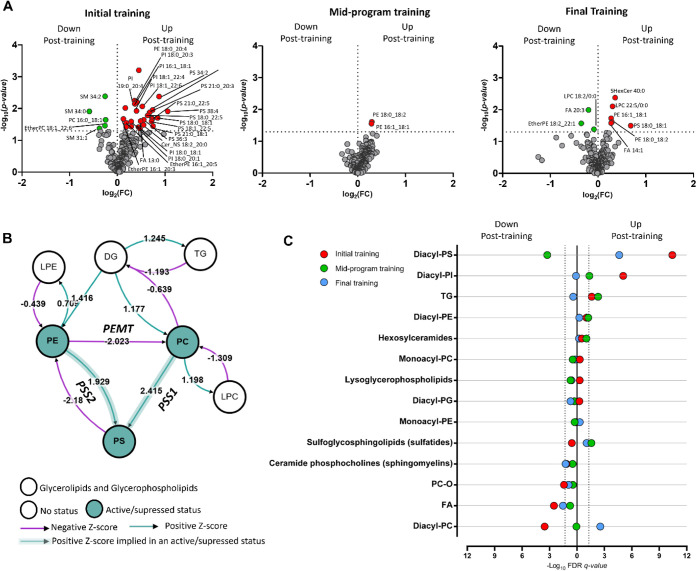 Figure 5
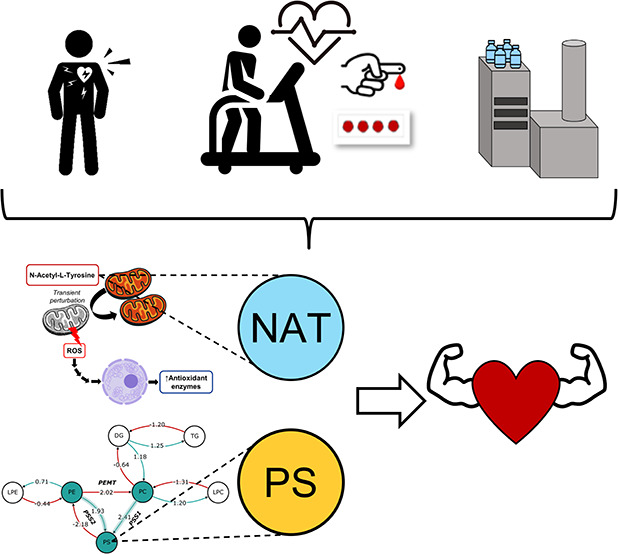 Figure 6
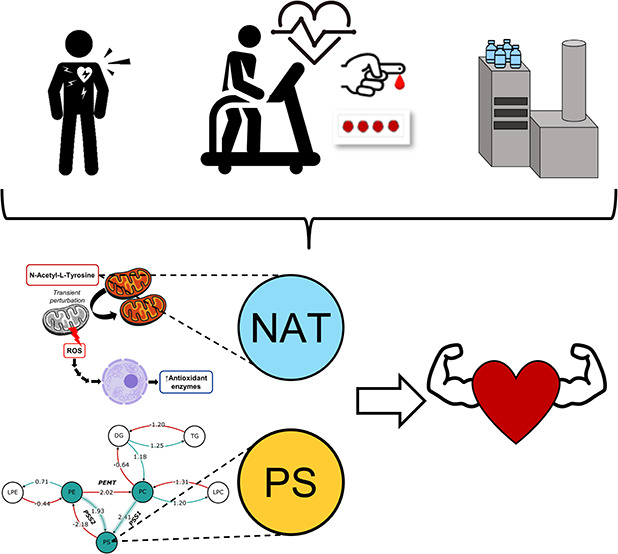 Figure 7
Peer Reviews
No public reviews on file for this paper yet. If you reviewed it on a platform where reviews are public (OpenReview, ICLR, NeurIPS, ICML), you can paste yours below so the community can read it here.
Videos
No videos yet. Explain this paper in a talk, walkthrough, or lecture? Add one.
Taxonomy
TopicsMetabolomics and Mass Spectrometry Studies · Cardiovascular and exercise physiology · Exercise and Physiological Responses