Hybrid Scaffolds Decouple Biochemical & Biophysical Regulation of Cell Phenotype
Xinyuan Song, Samantha C. Mitchell, Abbie N. Smart, William Hardiman, Daniel V. Bax, Ceri E. Staley, Catherine Probert, Pamela Collier, Marian Meakin, Alison A. Ritchie, Tania Mendonca, Amanda J. Wright, Victoria James, Anna M. Grabowska, Catherine L. R. Merry, Serena M. Best

TL;DR
A new biomaterial system allows separate control of stiffness and matrix composition to study how cells respond to changes in their environment.
Contribution
This is the first system to independently control stiffness, composition, and 3D collagen architecture in hybrid scaffolds.
Findings
Fibroblast morphology depends on scaffold composition and viscoelasticity.
Collagen fiber patterning enhances breast cancer cell proliferation and invasion.
Hybrid scaffolds enable combined control over biochemical and biophysical cell drivers.
Abstract
The extracellular matrix changes dramatically during the progression of diseases like cancer. These complex, tissue‐specific changes are not adequately replicated by most current biomaterial disease models. This work demonstrates, for the first time, a biomaterial system allowing combined, independent control over stiffness, extracellular matrix composition and 3D collagen architecture. Defined hydrogel formulations are successfully perfused into ice‐templated collagen scaffolds, controlling the composition of these hybrid scaffolds at constant stiffness. The Young's moduli of these hybrid scaffolds can also be tuned independently of composition via chemical cross‐linking. Encapsulation of human dermal fibroblasts reveals that fibroblast morphology depends on hybrid scaffold composition and on viscoelasticity, highlighting the importance of a system that decouples biophysical from…
Genes, proteins, chemicals, diseases, species, mutations and cell lines named across the full text — each resolved to its canonical identifier and authoritative record.
Click any figure to enlarge with its caption.
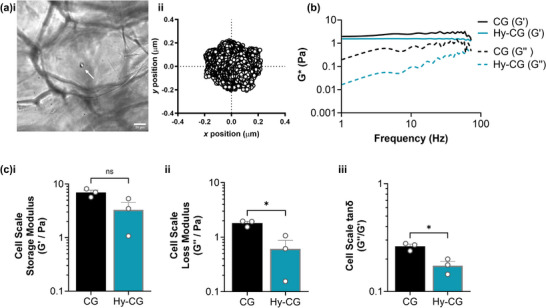 Figure 1
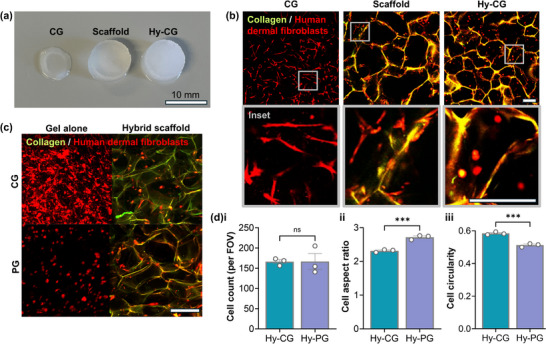 Figure 2
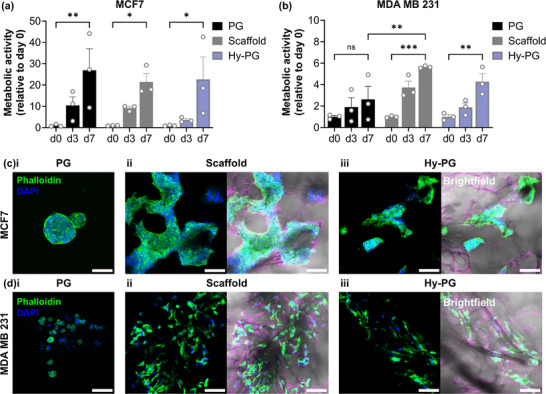 Figure 3
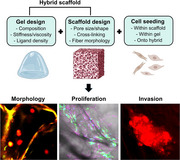 Figure 4
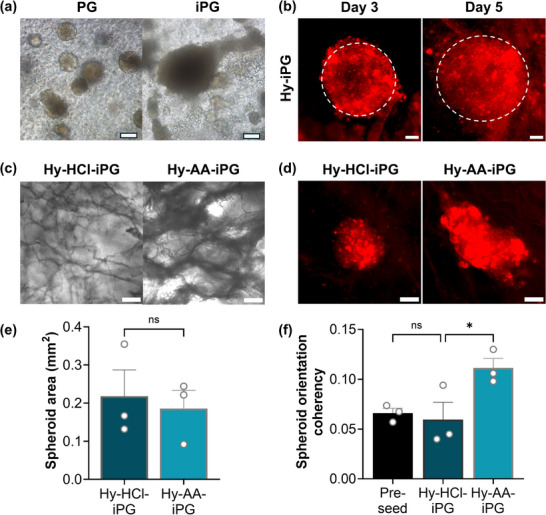 Figure 5
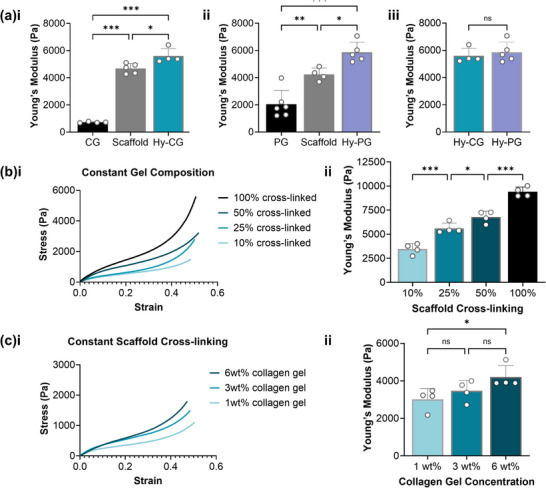 Figure 6
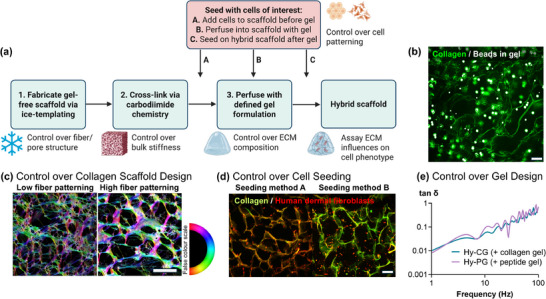 Figure 7
Peer Reviews
No public reviews on file for this paper yet. If you reviewed it on a platform where reviews are public (OpenReview, ICLR, NeurIPS, ICML), you can paste yours below so the community can read it here.
Videos
No videos yet. Explain this paper in a talk, walkthrough, or lecture? Add one.
Taxonomy
TopicsCollagen: Extraction and Characterization · Hydrogels: synthesis, properties, applications · 3D Printing in Biomedical Research