2‑Lithiomethylindoles: Untapped Anions for the Synthesis of 2‑Functionalized Indoles
Sara Gómez-Gil, Marta Solas, Samuel Suárez-Pantiga, Roberto Sanz

TL;DR
This paper introduces a new method for making 2-functionalized indoles using 2-lithiomethylindoles, which are efficient and versatile in synthesizing a wide range of indole derivatives.
Contribution
The study presents a novel and general protocol for the synthesis of 2-functionalized indoles using 2-lithiomethylindoles as untapped anions.
Findings
The use of nBuLi at room temperature provides optimal conditions for α-lithiation of 1,2-dimethylindoles.
The method allows for the synthesis of a broad range of C2-functionalized indoles with good yields.
Deep eutectic solvents enable the reactions under air- and moisture-tolerant conditions, making the process greener and simpler.
Abstract
Optimal conditions for the metalation via α-lithiation of 1,2-dimethylindoles were established with nBuLi at room temperature, providing the most effective protocol. The resulting organolithium reagents bearing the structure of 2-lithiomethylindole were efficiently trapped with diverse electrophiles, including Weinreb amides, ketones, alkyl bromides, and epoxides, affording a broad range of C2-functionalized indoles in good yields. The methodology proved general and was successfully applied to 2-methylindoles bearing different substituents at the benzenoid ring, C3, and on the nitrogen atom, as well as to 2-benzylindoles, giving access to new functionalized indole derivatives. Importantly, deep eutectic solvents enabled these transformations under air- and moisture-tolerant conditions, highlighting their greener and operationally simple character. The synthetic utility of the method was…
Genes, proteins, chemicals, diseases, species, mutations and cell lines named across the full text — each resolved to its canonical identifier and authoritative record.
Click any figure to enlarge with its caption.
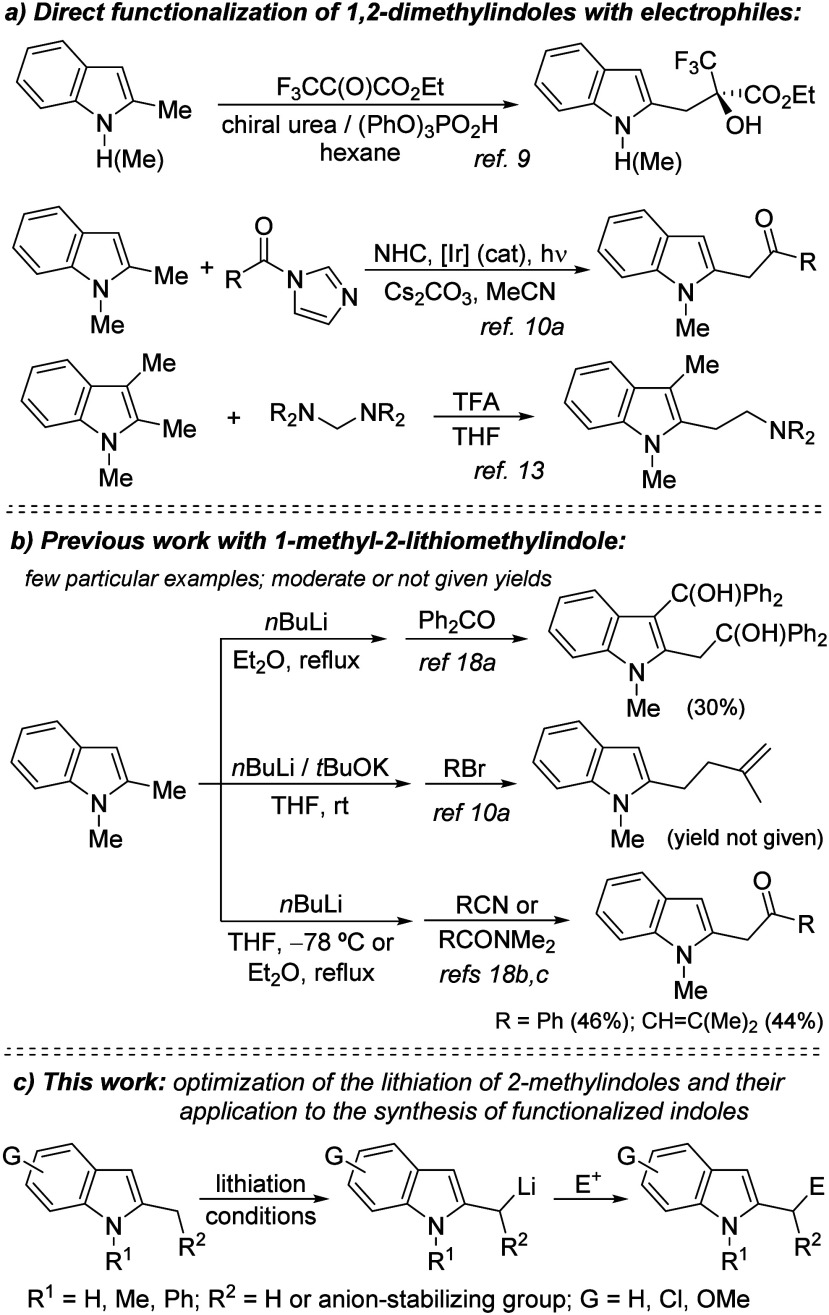 Figure 1
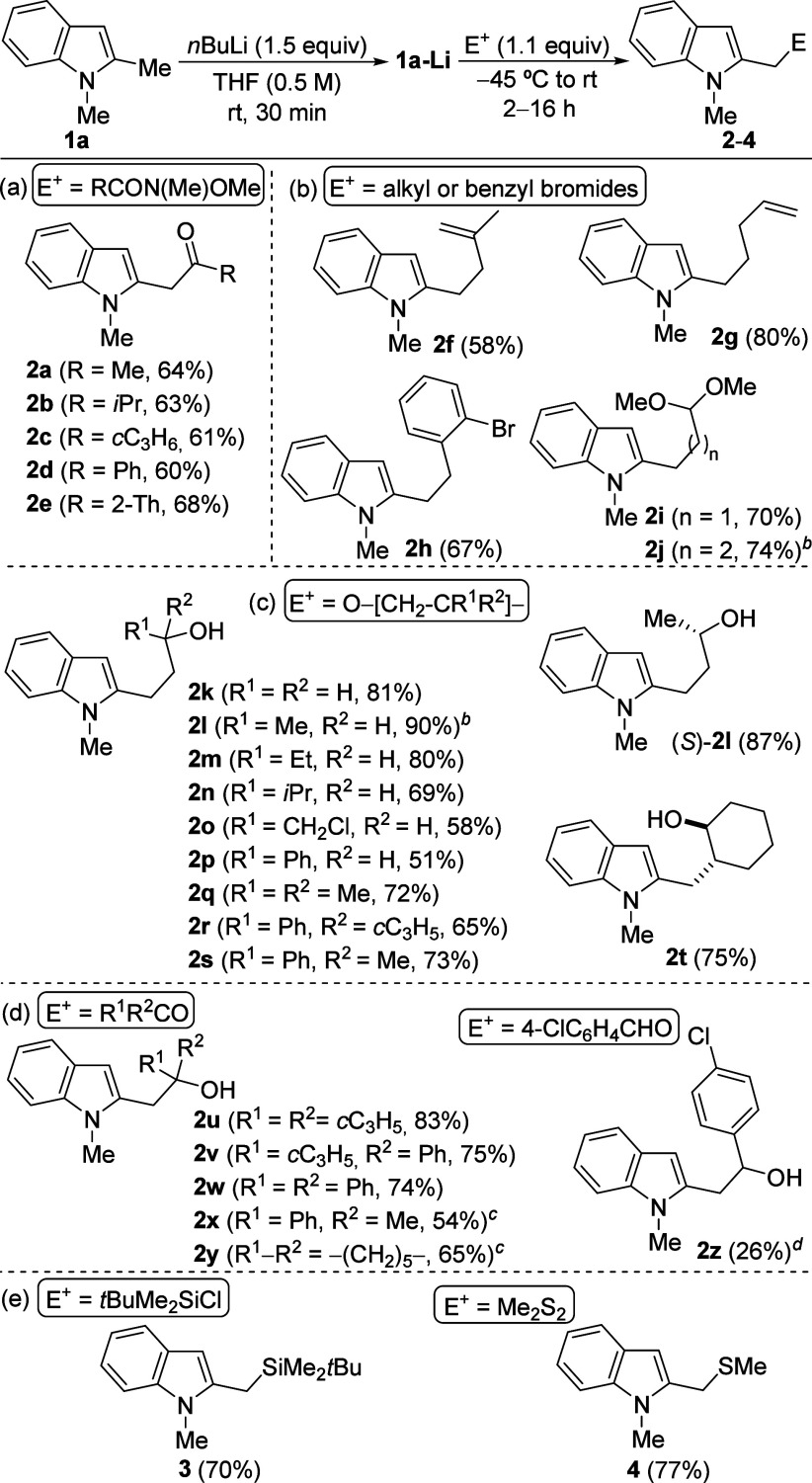 Figure 2
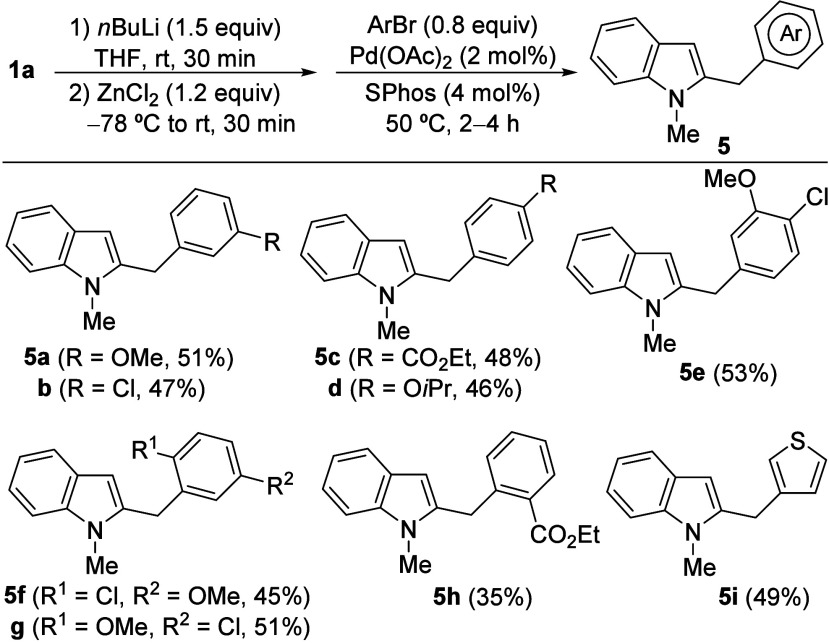 Figure 3
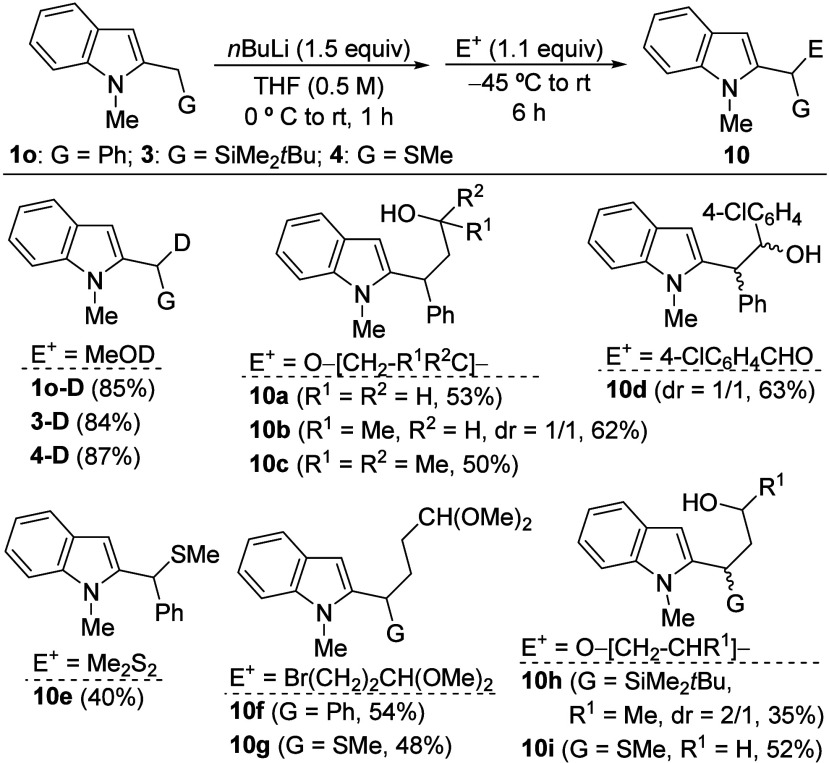 Figure 4
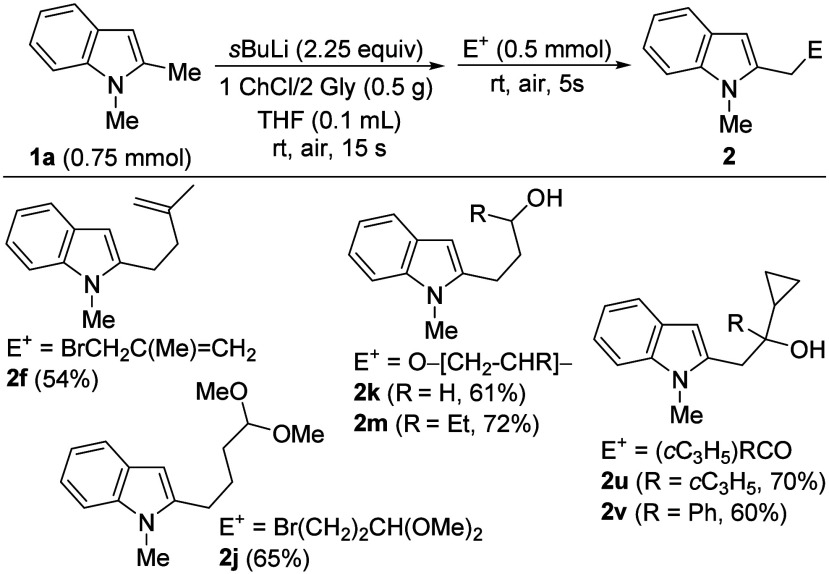 Figure 5
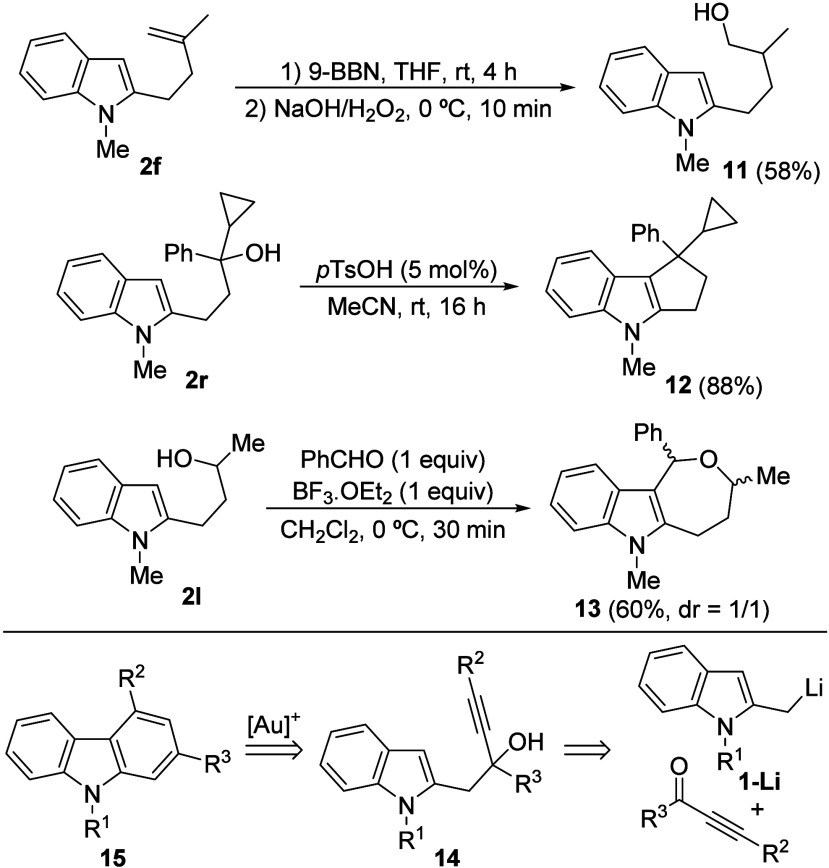 Figure 6
 Figure 7
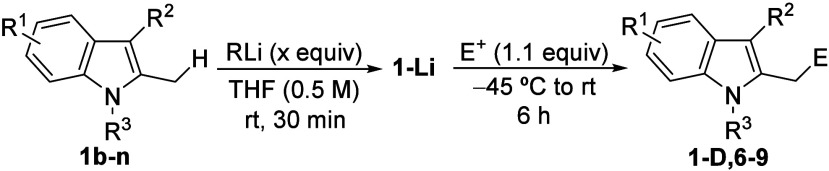 Figure 8
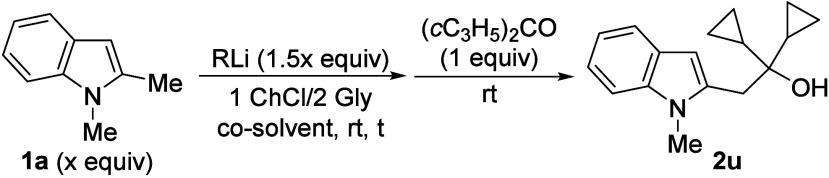 Figure 9
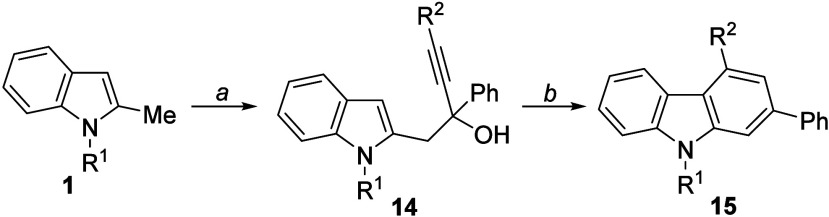 Figure 10
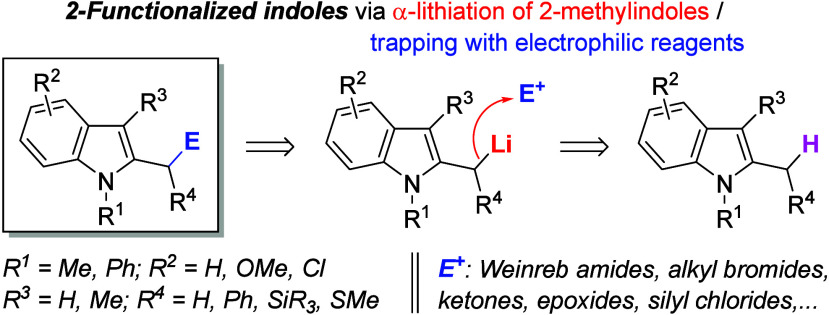 Figure 11
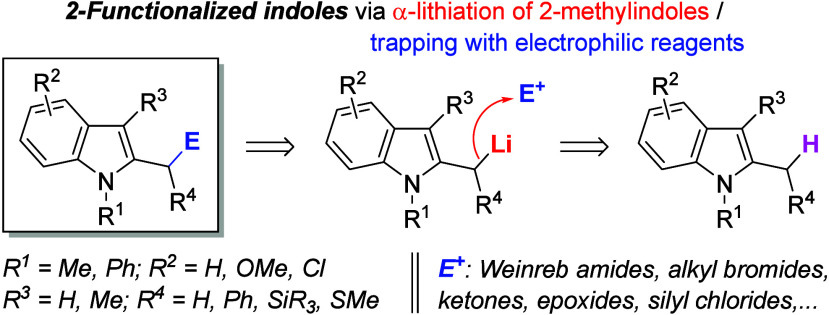 Figure 12
Peer Reviews
No public reviews on file for this paper yet. If you reviewed it on a platform where reviews are public (OpenReview, ICLR, NeurIPS, ICML), you can paste yours below so the community can read it here.
Videos
No videos yet. Explain this paper in a talk, walkthrough, or lecture? Add one.
Taxonomy
TopicsCoordination Chemistry and Organometallics · Synthesis and Reactivity of Sulfur-Containing Compounds · Bipolar Disorder and Treatment