Stereochemical Analysis of Tertiary Trifluoroacetamides Leveraging Both Through-Space 1H···19F Spin–Spin Couplings and Anisotropic Solvent-Induced Shifts
Kizuki Watanabe, Ryota Takano, Hidetsugu Tabata, Kiriko Hirano, Motoo Iida, Tetsuta Oshitari, Hideaki Natsugari, Takenori Kusumi, Kayo Nakamura, Hideyo Takahashi

TL;DR
This paper presents a method to determine the stereochemistry of N,N-dialkyl trifluoroacetamides using NMR techniques involving spin–spin couplings and solvent-induced shifts.
Contribution
A novel approach combining through-space couplings and solvent-induced shifts for stereochemical assignment of isomers.
Findings
Through-space spin–spin couplings and aromatic solvent-induced shifts reliably distinguish E/Z isomers.
C6D6 preferentially shifts trans-methyl/methylene protons over cis ones.
ASIS-based methods are validated as reliable for stereochemical analysis.
Abstract
In this study, the assignment of E/Z-isomers of N,N-dialkyl trifluoroacetamides (1–8) is investigated by using 1H-nuclear magnetic resonance spectroscopy, and data pertaining to both through-space spin–spin couplings (TSCs) and aromatic solvent-induced shifts (ASISs) are utilized to develop a reliable and convenient approach for determining the stereochemistry of these isomers. Although TSCsobserved when the F from the CF3 group is spatially close to protonsalone may be useful for determining E/Z isomers, through-bond couplings (TBCs) are also observed when the proton is five bonds apart from the F in the CF3 group. Thus, an additional one-dimensional 1H–19F heteronuclear Overhauser enhancement spectroscopy (HOESY) experiment is required to distinguish between the TSCs and TBCs. By contrast, the ASIS results for all compounds are consistent with the general observation that C6D6…
Genes, proteins, chemicals, diseases, species, mutations and cell lines named across the full text — each resolved to its canonical identifier and authoritative record.
Click any figure to enlarge with its caption.
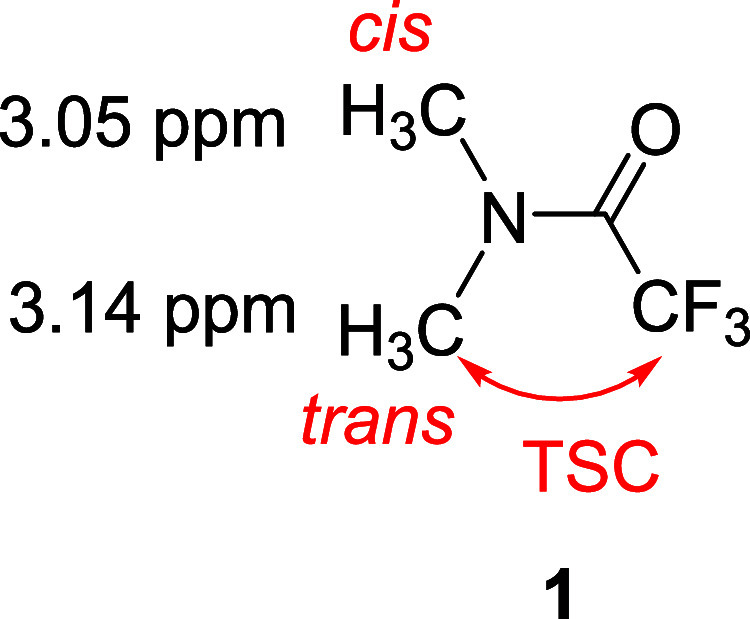 Figure 1
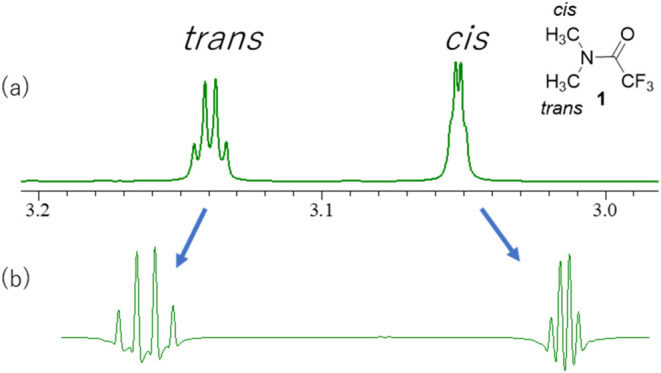 Figure 2
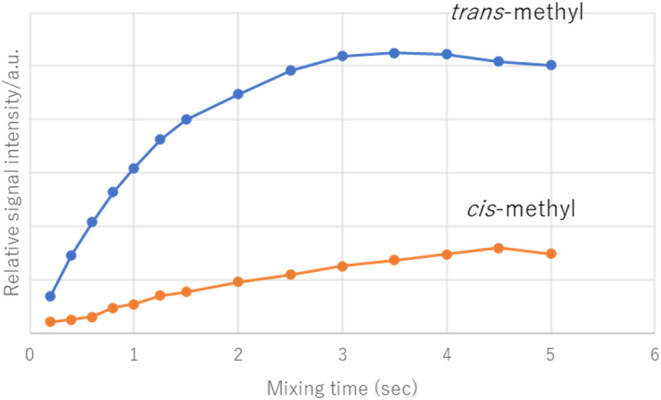 Figure 3
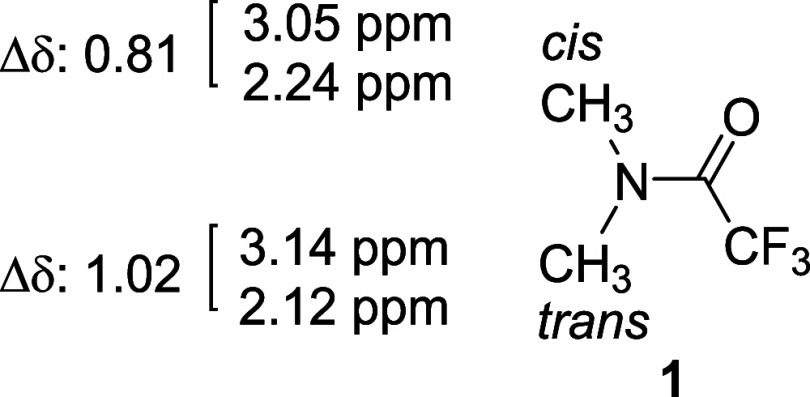 Figure 4
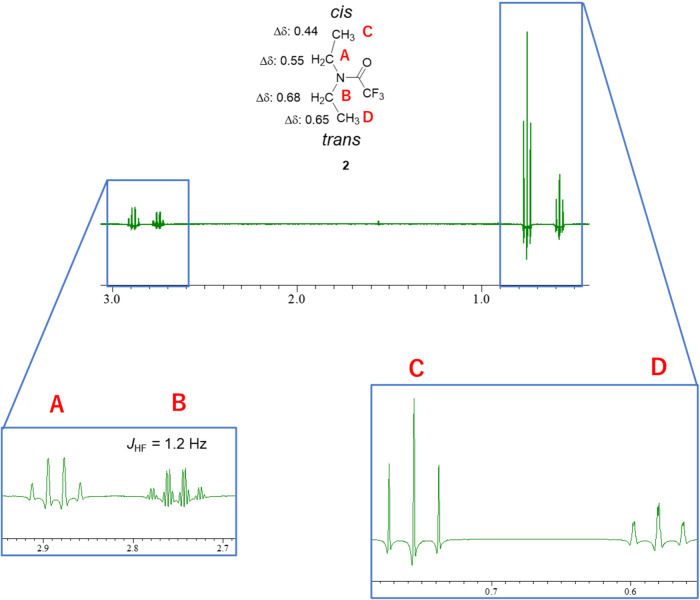 Figure 5
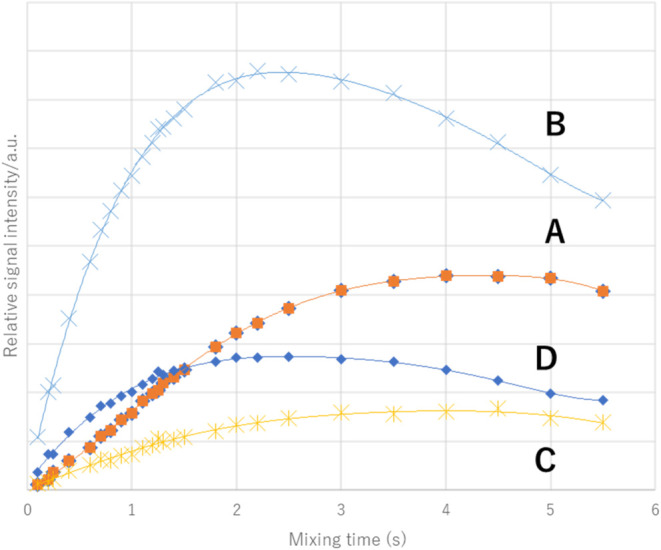 Figure 6
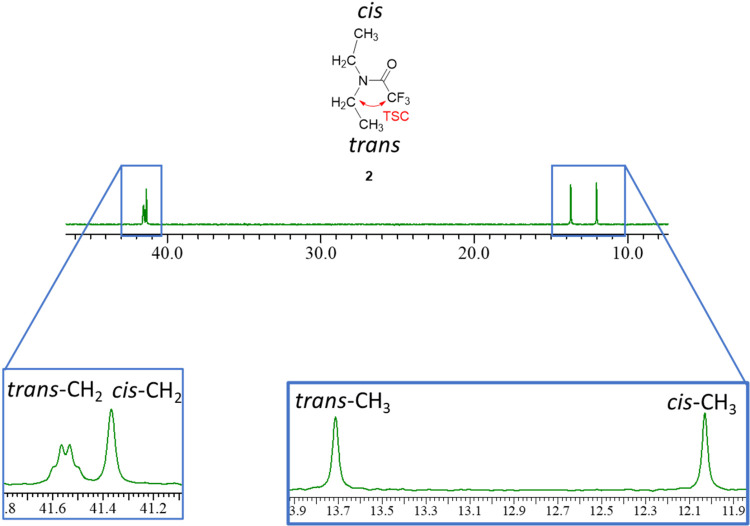 Figure 7
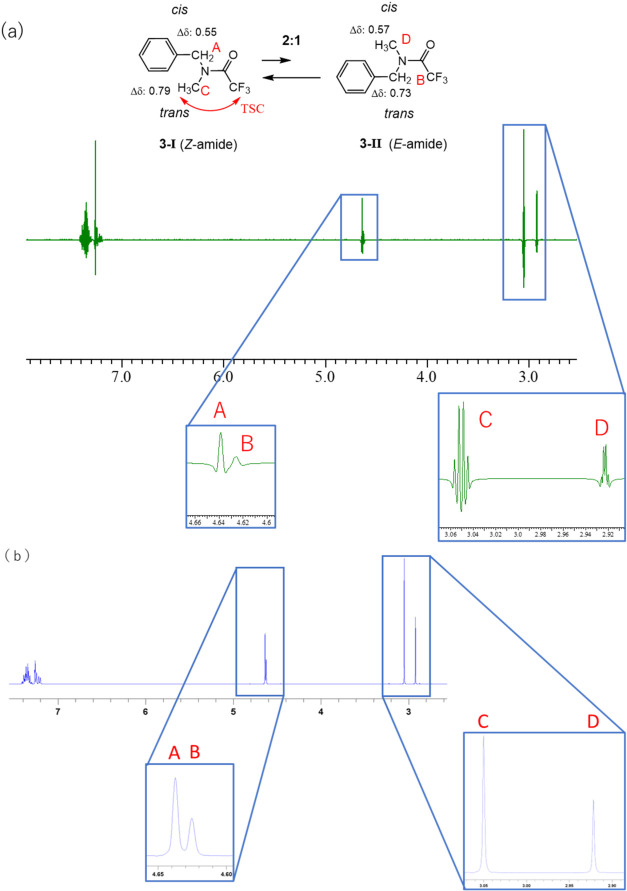 Figure 8
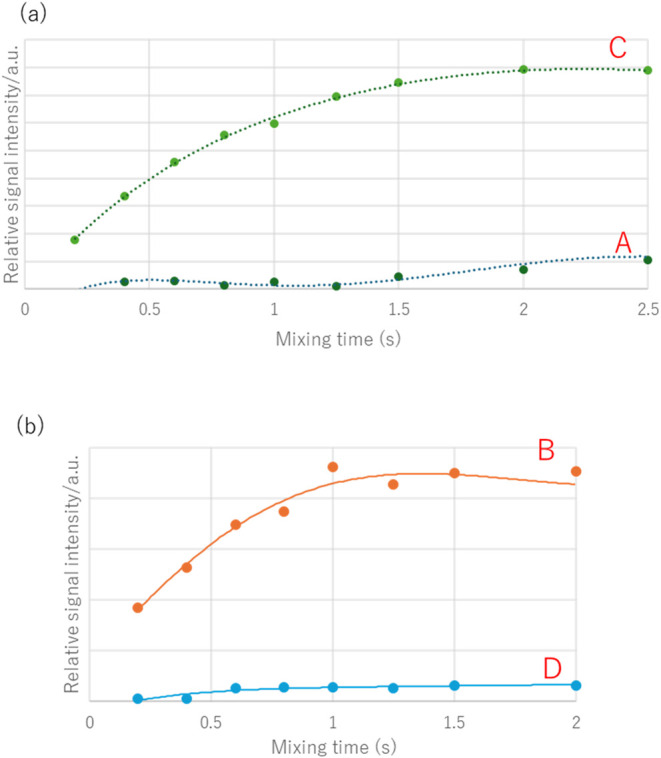 Figure 9
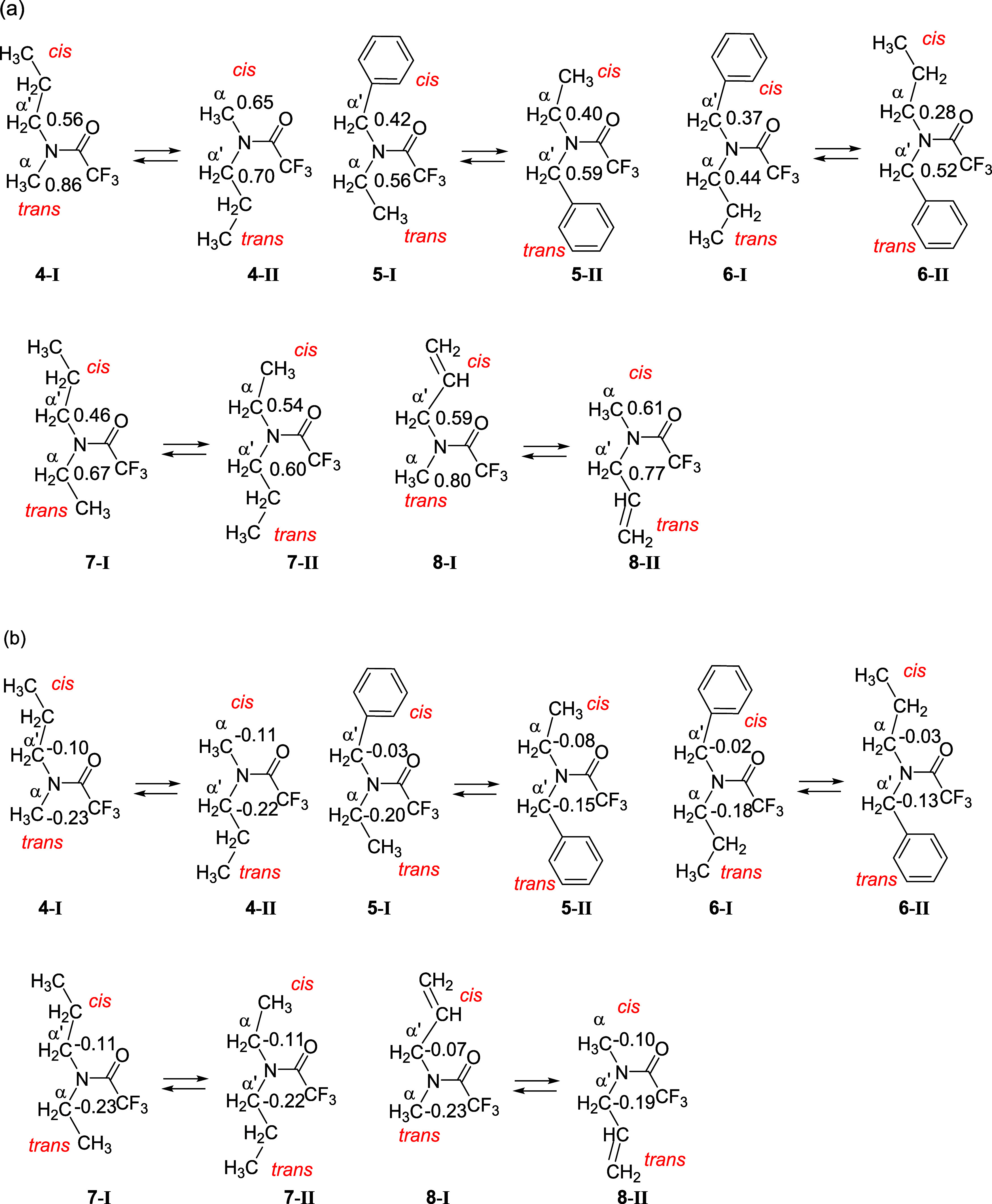 Figure 10
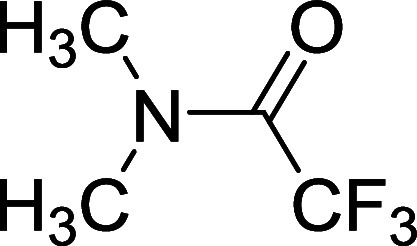 Figure 11
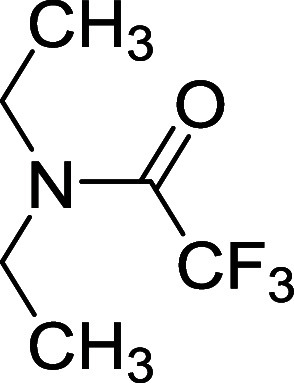 Figure 12
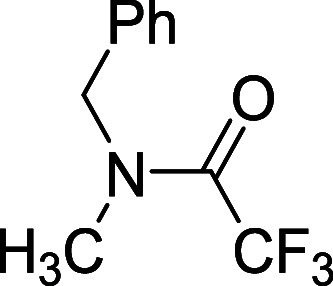 Figure 13
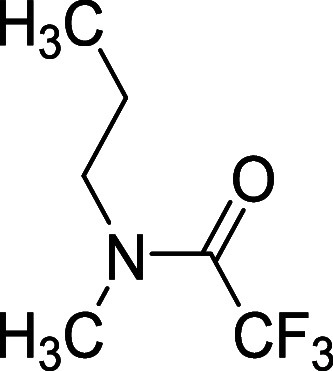 Figure 14
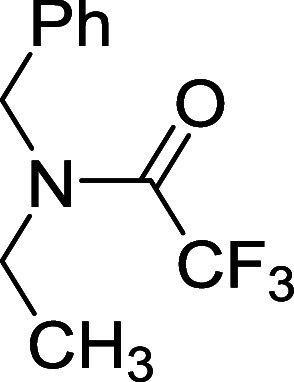 Figure 15
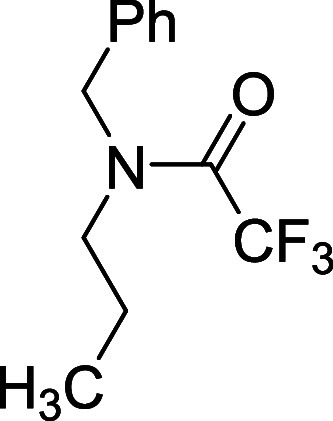 Figure 16
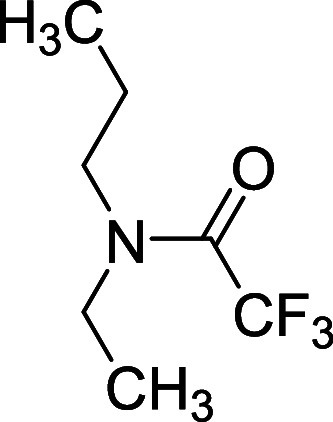 Figure 17
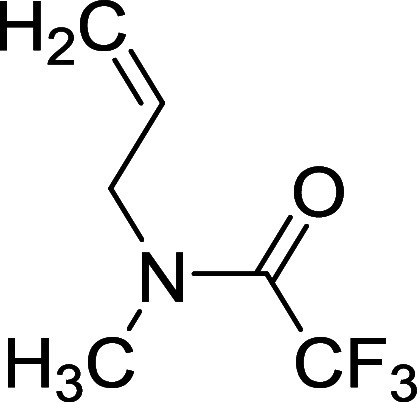 Figure 18
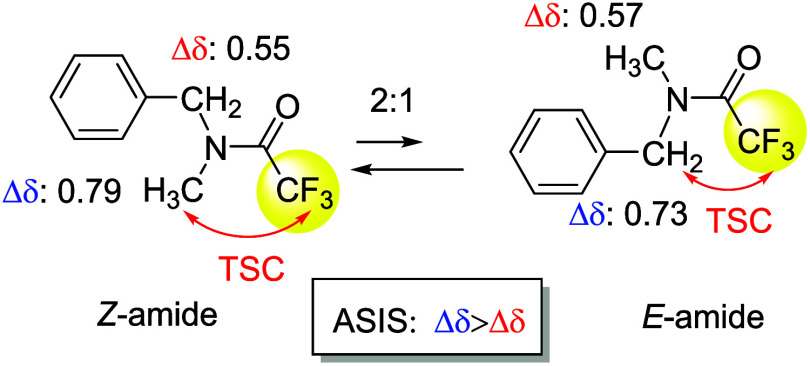 Figure 19
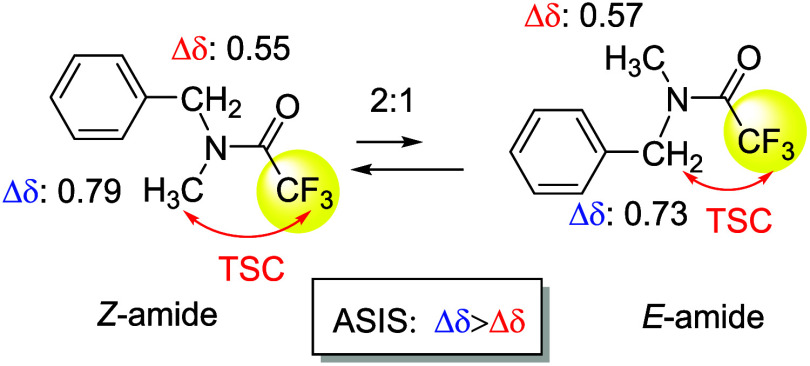 Figure 20
Peer Reviews
No public reviews on file for this paper yet. If you reviewed it on a platform where reviews are public (OpenReview, ICLR, NeurIPS, ICML), you can paste yours below so the community can read it here.
Videos
No videos yet. Explain this paper in a talk, walkthrough, or lecture? Add one.
Taxonomy
TopicsFluorine in Organic Chemistry · Molecular spectroscopy and chirality · Coordination Chemistry and Organometallics