High-Throughput Proteomics Sample Preparation Using a 96-Channel Pipettor and Magnetic Pin Device
Georgia Roumelioti, Alex Montoya, Gemma L. M. Fisher, Eneko Pascual Navarro, Angela Woods, Jane Bennett, Naveenan Navaratnam, Oliver Gonzalez-Carvajal, Jodie Birch, Elizabeth Pyman, Sijia Yu, Aleksandra Gruevska, Luc-Alban Vuillemenot, Oleh Lushchak, Zoe Hall, Alexis R. Barr

TL;DR
This paper introduces a cost-effective, semi-automated workflow for high-throughput phosphoproteomics using 96-channel devices, reducing workload and variability.
Contribution
A practical, semi-automated phosphoproteomics workflow using 96-channel devices with cost-efficient solid-phase extraction plates and simplified digestion.
Findings
A 96-well phosphoproteomics workflow was completed in 2 days with minimal operator workload.
Custom solid-phase extraction plates using Oasis HLB sorbent were characterized for loading capacity and lipid removal.
PAC digestion can be simplified by aspirating beads without requiring continuous shaking.
Abstract
High-throughput proteomics requires efficient and highly reproducible sample processing, yet workflowsparticularly for PTM profilingremain complex and costly to fully automate. Here, we present a practical intermediate solution using manually operated 96-channel devices: the Gilson Platemaster P220 pipettor and VP Scientific 96-well magnetic pin device. Using this setup, we achieved robust and reproducible phosphoproteomics in a 96-well format, completing protein aggregation capture (PAC/SP3) digestion, desalting, phosphopeptide enrichment, and a second desalting step within 2 days while minimizing operator workload and variability. Several innovations enable this workflow. First, we describe a cost-efficient method to generate 96-well solid-phase extraction plates by directly packing the Oasis HLB sorbent into tapered filter plates. We extensively characterize these plates in terms…
Genes, proteins, chemicals, diseases, species, mutations and cell lines named across the full text — each resolved to its canonical identifier and authoritative record.
Click any figure to enlarge with its caption.
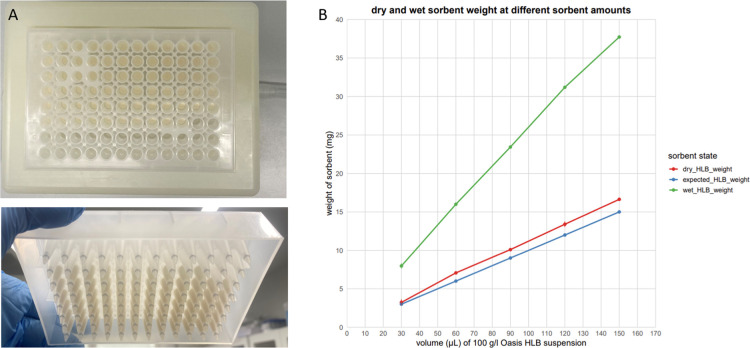 Figure 1
 Figure 2
 Figure 3
 Figure 4
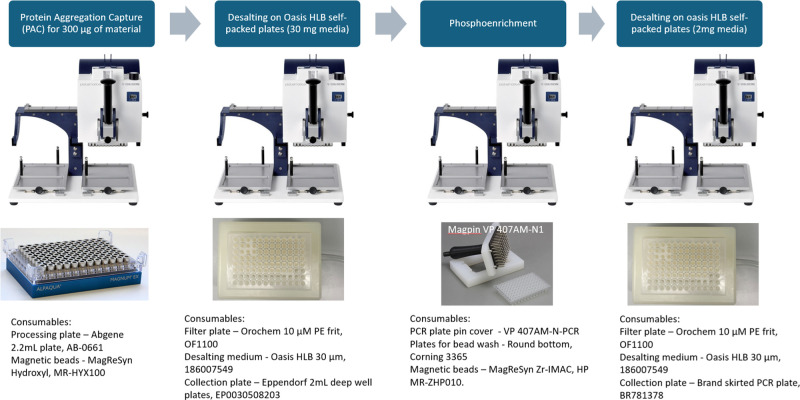 Figure 5
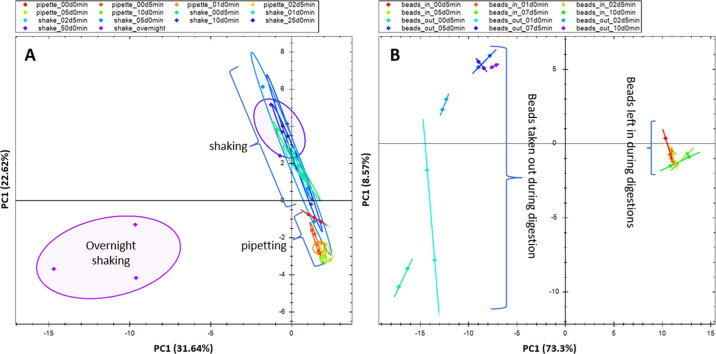 Figure 6
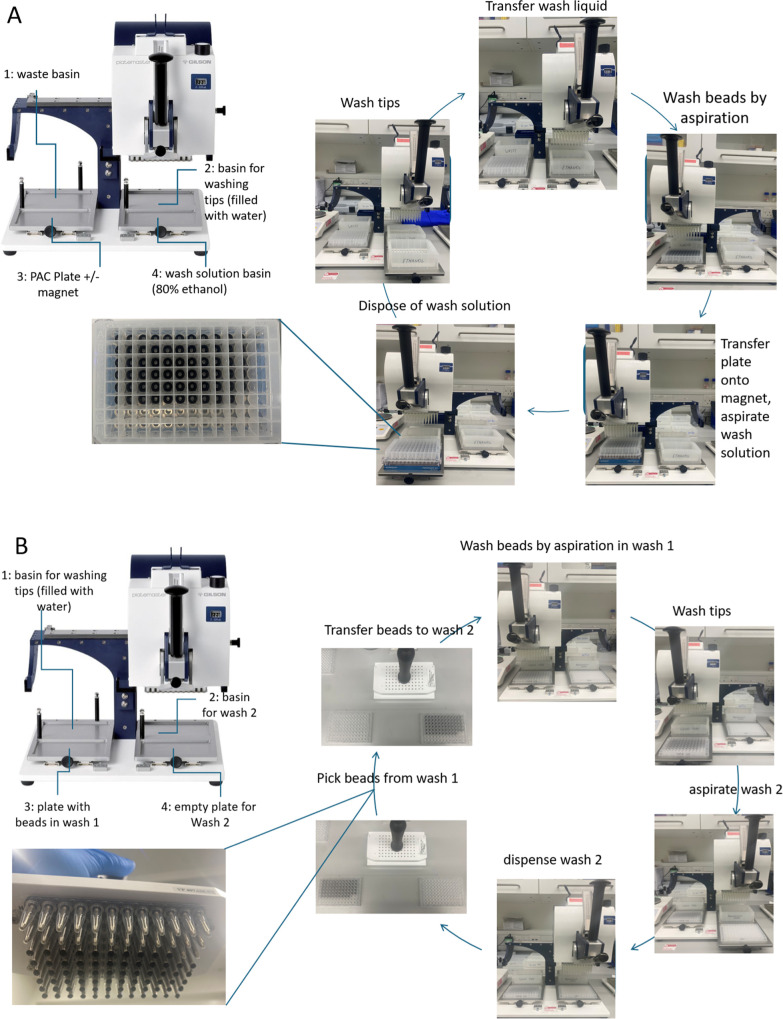 Figure 7
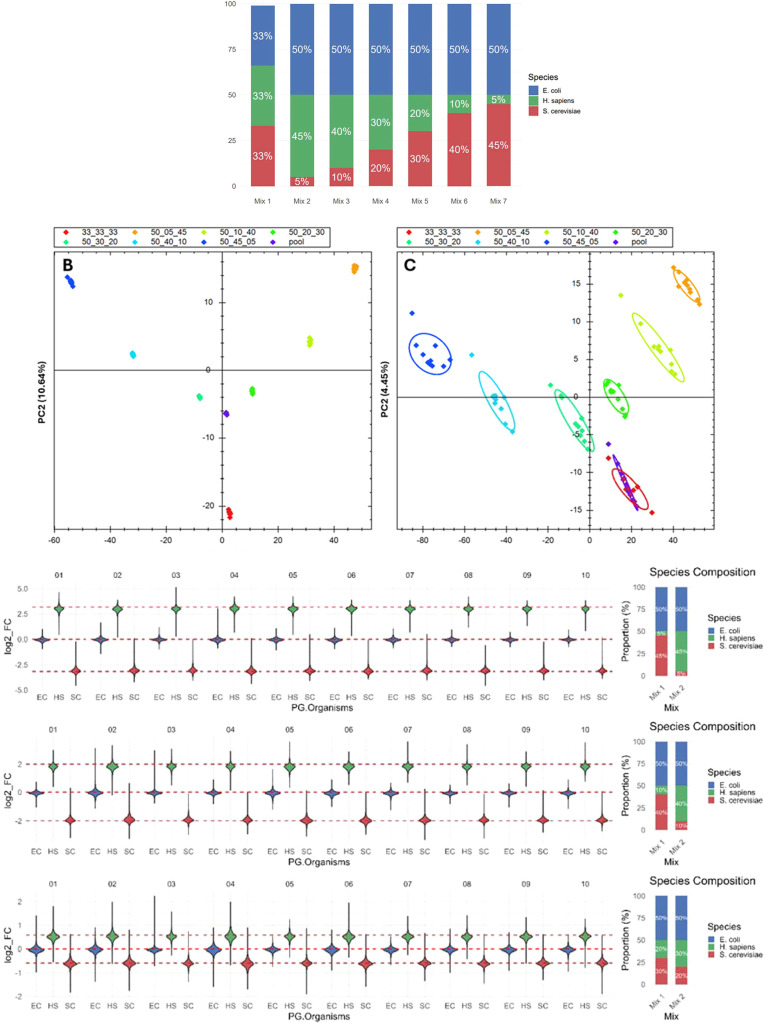 Figure 8
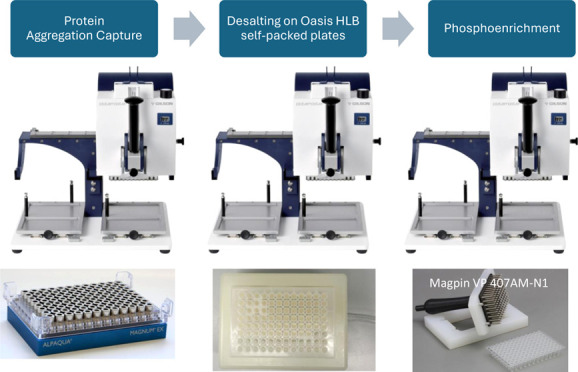 Figure 9
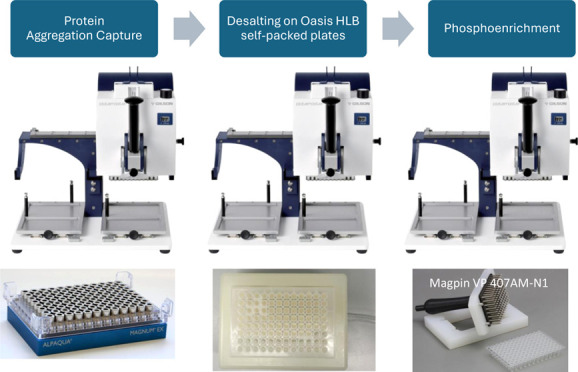 Figure 10
Peer Reviews
No public reviews on file for this paper yet. If you reviewed it on a platform where reviews are public (OpenReview, ICLR, NeurIPS, ICML), you can paste yours below so the community can read it here.
Videos
No videos yet. Explain this paper in a talk, walkthrough, or lecture? Add one.
Taxonomy
TopicsAdvanced Proteomics Techniques and Applications · Advanced Biosensing Techniques and Applications · Diatoms and Algae Research