Local Environmental Effects on Light-Driven CO2 Reduction in Liposomes
Amir Abbas, Richard Jacobi, Ingrid Merker, Riccarda Müller, Nathaniel R. Ritz, Nitish Kumar, Hani M. Elbeheiry, Dieter Sorsche, Kerstin Leopold, Leticia González, Andrea Pannwitz

TL;DR
This study explores how different lipid environments in liposomes affect the efficiency of light-driven CO2 reduction using molecular components.
Contribution
The paper provides design principles for optimizing light-driven CO2 reduction in liposomes by analyzing lipid membrane properties and molecular interactions.
Findings
Catalyst efficiency increases with distance from the membrane center and is linked to vertical reduction energies.
DMPC and DPPG-based liposomes showed the highest quenching efficiency and best photocatalytic performance.
Variation in cations did not significantly influence the performance, unlike electrochemical studies.
Abstract
We report the governing principles that regulate the activity of light-driven CO2 reduction by a molecular photosensitizer bis(2,2′-bipyridine)-(4,4′-dinonyl-2,2′-bipyridine)-ruthenium(II) (RuC 9 ) and a molecular catalyst (5,10,15,20-tetra(4-methylphenyl)porphinato)cobalt(II) (CoTTP) in supramolecular assembly within the lipid bilayers of liposomes suspended in water. We tested six different lipids with membranes in either the gel phase, fluid phase, or at the transition between both states, as well as zwitterionic or negatively charged headgroups. The correlation of the membrane rigidity with light-driven catalysis performance is not conclusive for the investigated set of lipid membranes, but molecular dynamics simulations elucidate how catalyst efficiency increases with the distance from the membrane center as well as their calculated vertical reduction energies. Luminescence…
Genes, proteins, chemicals, diseases, species, mutations and cell lines named across the full text — each resolved to its canonical identifier and authoritative record.
Click any figure to enlarge with its caption.
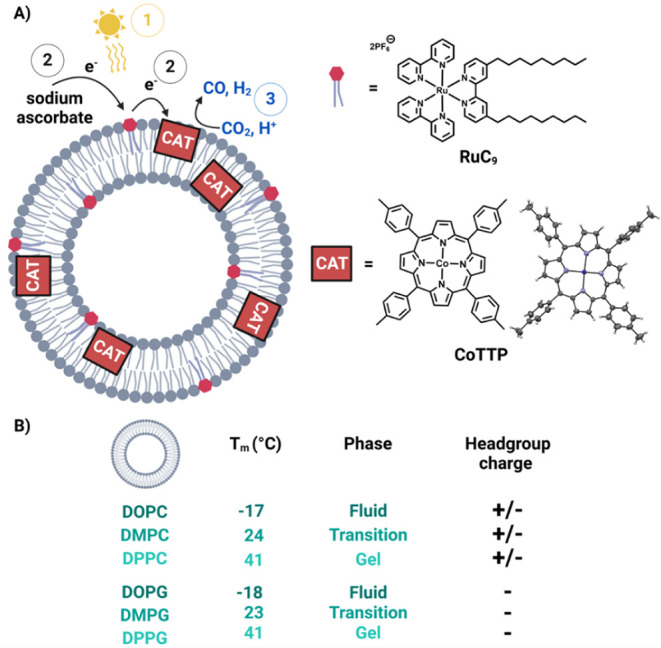 Figure 1
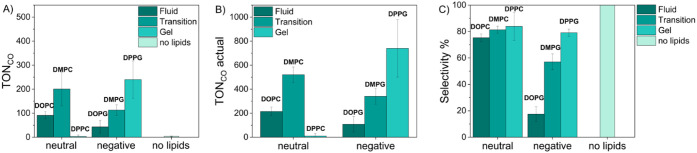 Figure 2
 Figure 3
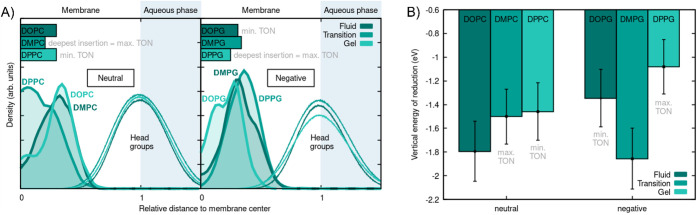 Figure 4
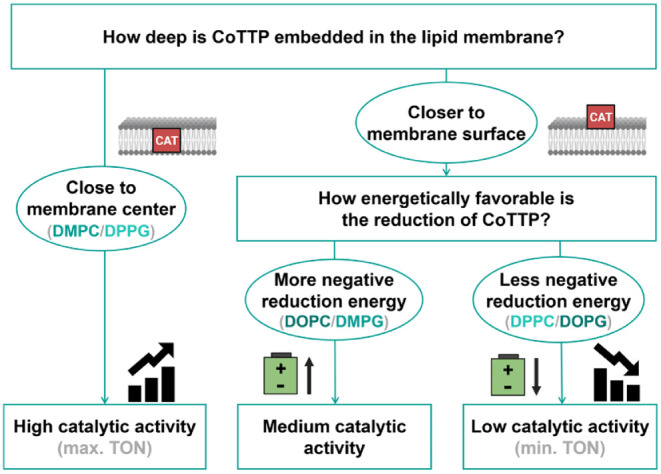 Figure 5
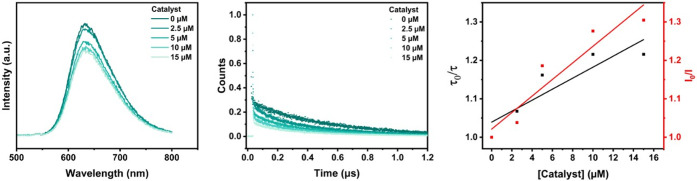 Figure 6
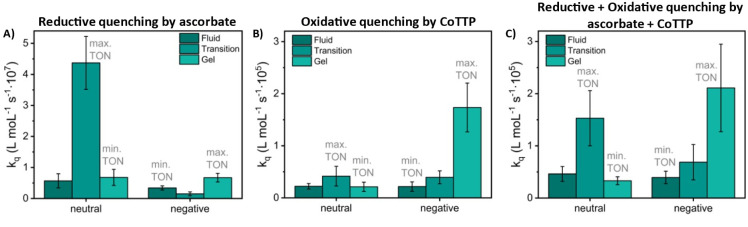 Figure 7
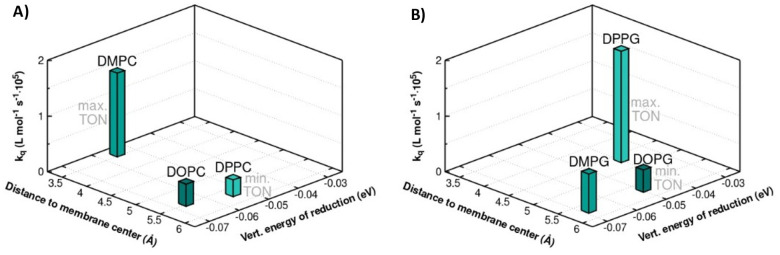 Figure 8
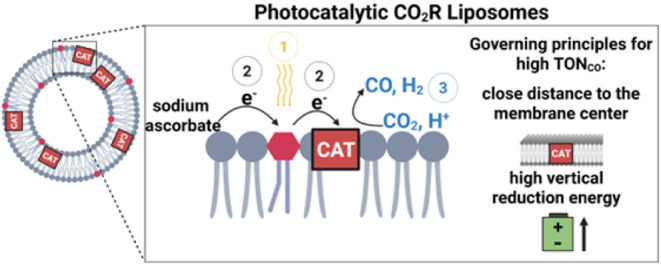 Figure 9
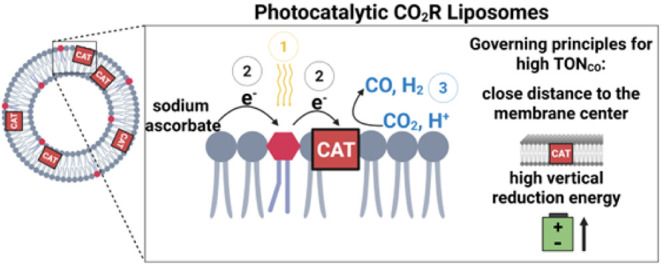 Figure 10
 Figure 11
 Figure 12
 Figure 13
Peer Reviews
No public reviews on file for this paper yet. If you reviewed it on a platform where reviews are public (OpenReview, ICLR, NeurIPS, ICML), you can paste yours below so the community can read it here.
Videos
No videos yet. Explain this paper in a talk, walkthrough, or lecture? Add one.
Taxonomy
TopicsLipid Membrane Structure and Behavior · Photochemistry and Electron Transfer Studies · Polydiacetylene-based materials and applications