Visible-Light-Induced Radical Cascade [4 + 2]/[4 + 2] Cycloaddition of Underexplored N‑Acryloyl Indoles To Access Dihydropyrido[1,2‑a]‑indolones
Cody Bishir, Samuel Milton, Abbey Hubbard, Michael Indalsingh, Zainah Abufouz, Liangyong Mei

TL;DR
A new visible-light-driven chemical reaction creates complex indolone structures using N-acryloyl indoles and N-hydroxyphthalimide esters.
Contribution
A novel radical cascade [4+2]/[4+2] cycloaddition method for synthesizing dihydropyrido[1,2-a]indolones is introduced.
Findings
The reaction forms four new C–C bonds and causes dearomatization of an indole ring.
The mechanism involves two N-acryloyl indole molecules in a radical cascade.
Scale-up and derivatization demonstrate the method's synthetic utility.
Abstract
We report a visible-light-mediated radical cascade [4 + 2]/[4 + 2] cycloaddition of simple N-acryloyl indoles and N-hydroxyphthalimide esters, which provides a streamlined route to structurally complex dihydropyrido[1,2-a]-indolones. The reaction features a sequence of four consecutive radical additions involving two N-acryloyl indole molecules, which forges four new C–C bonds and induces dearomatization of one indole ring. The proposed mechanism is supported by observations of [4 + 2] cycloaddition byproducts and additional control experiments. The synthetic utility of this method is demonstrated by the scale-up reaction and downstream derivatizations.
Genes, proteins, chemicals, diseases, species, mutations and cell lines named across the full text — each resolved to its canonical identifier and authoritative record.
Click any figure to enlarge with its caption.
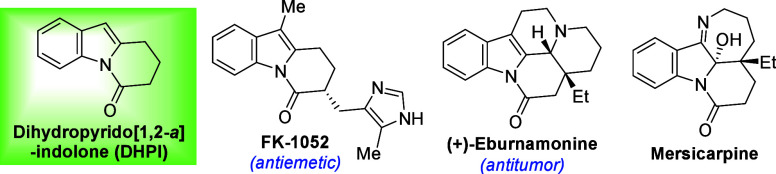 Figure 1
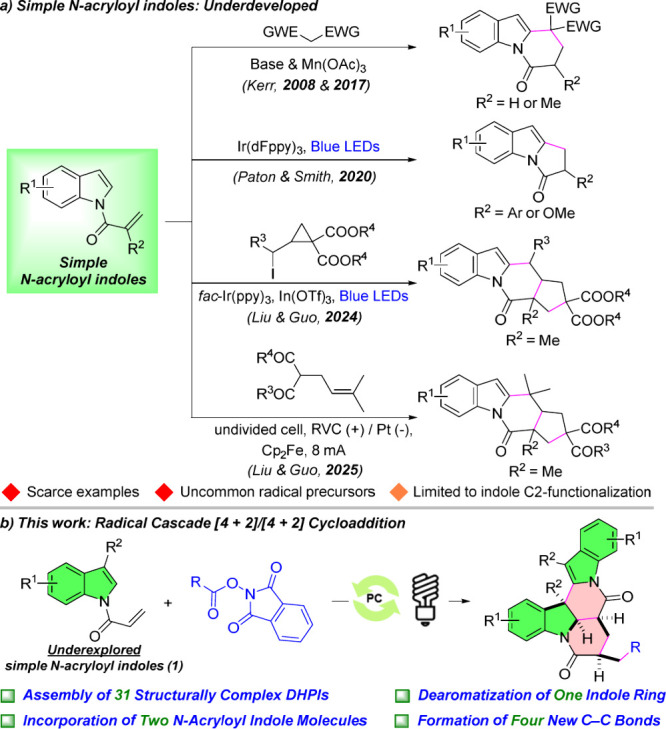 Figure 2
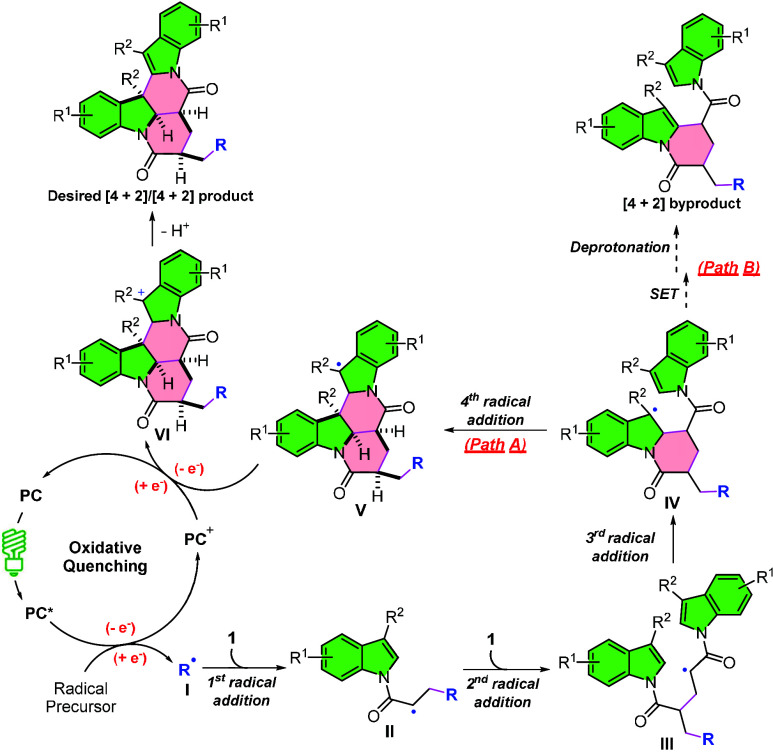 Figure 3
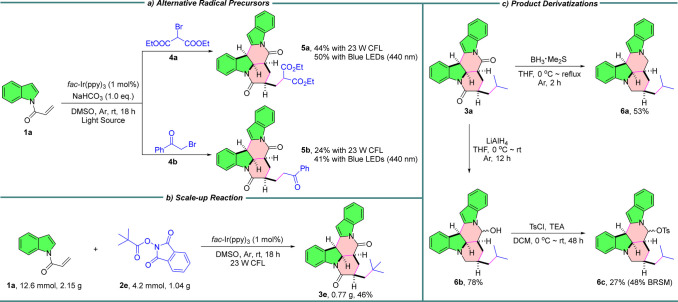 Figure 4
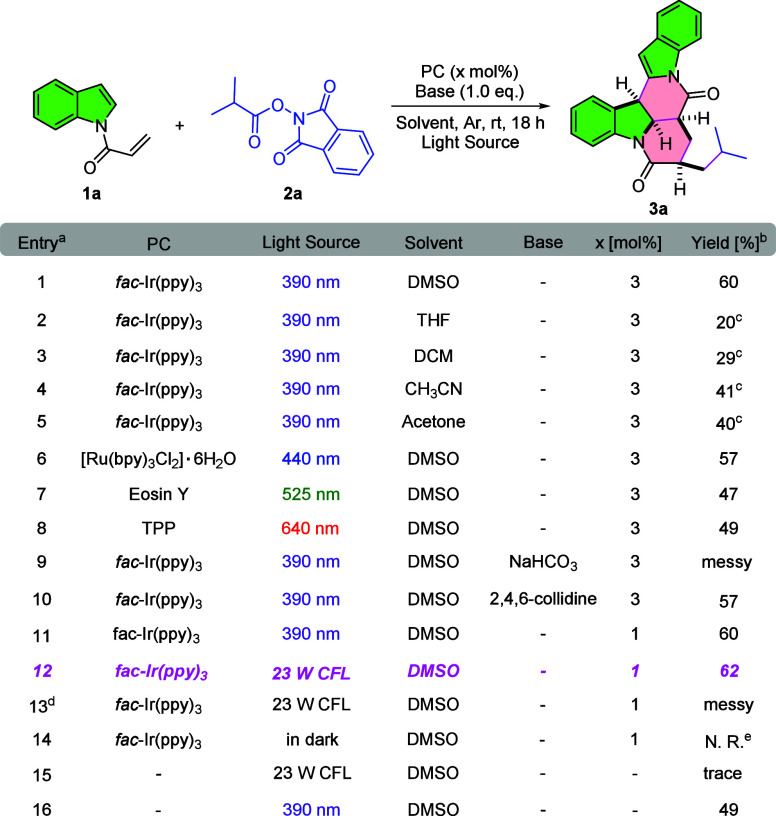 Figure 5
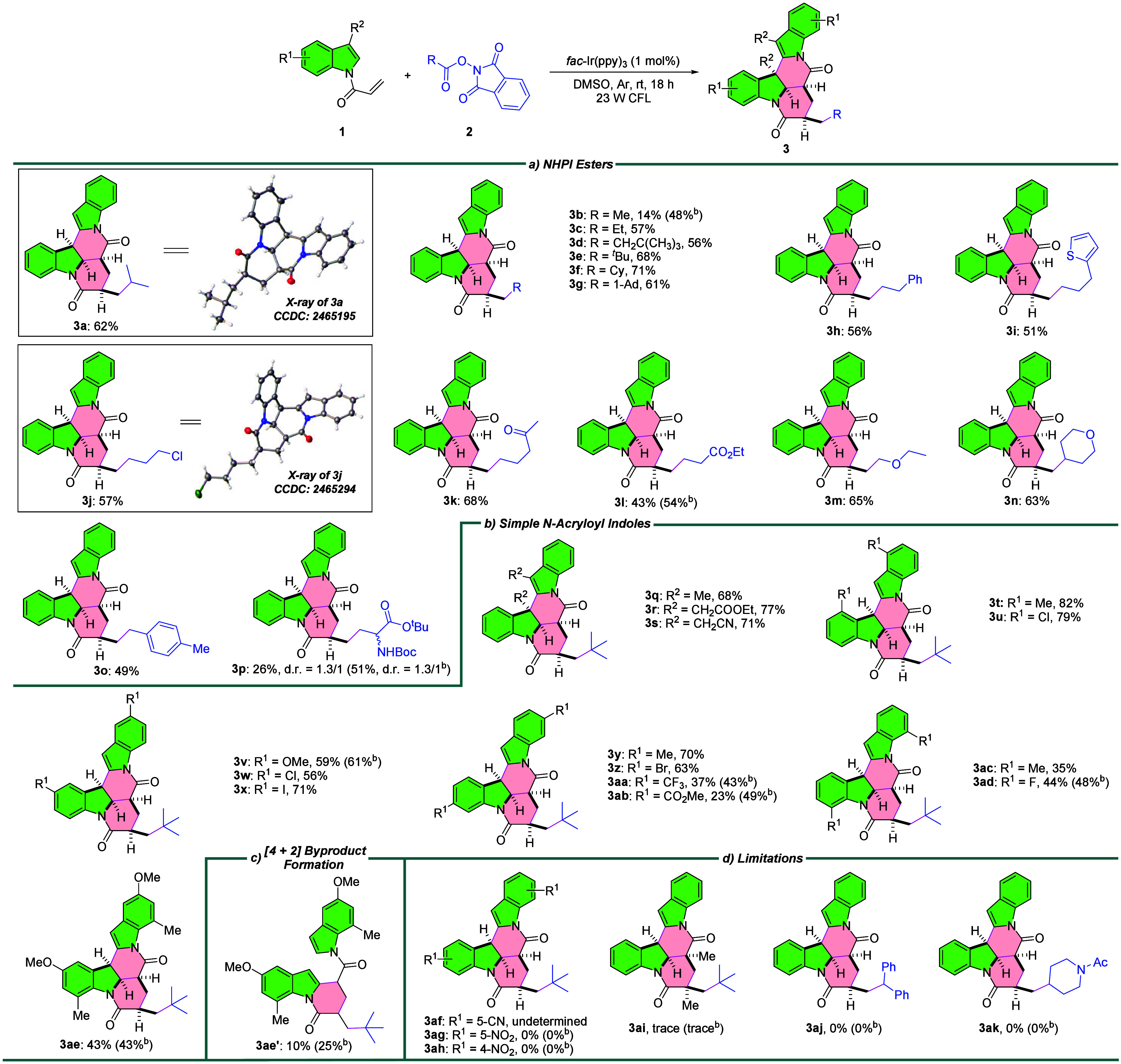 Figure 6
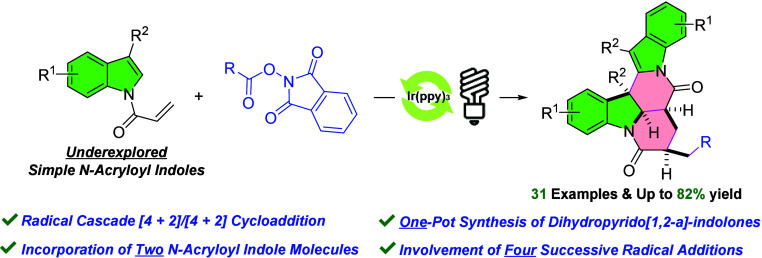 Figure 7
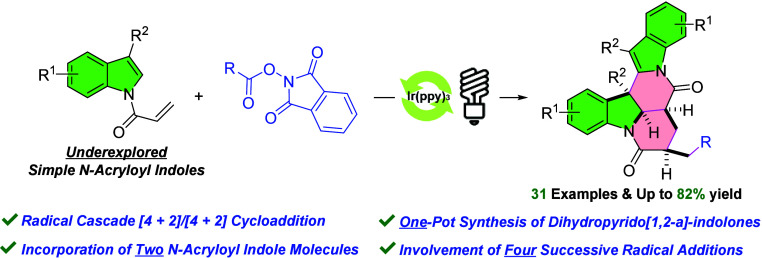 Figure 8
Peer Reviews
No public reviews on file for this paper yet. If you reviewed it on a platform where reviews are public (OpenReview, ICLR, NeurIPS, ICML), you can paste yours below so the community can read it here.
Videos
No videos yet. Explain this paper in a talk, walkthrough, or lecture? Add one.
Taxonomy
TopicsRadical Photochemical Reactions · Catalytic C–H Functionalization Methods · Oxidative Organic Chemistry Reactions