Extensions to Extended Tight‐Binding Methods for Transition‐Metal Containing Systems
Siyavash Moradi, Rebecca Tomann, Martin Head‐Gordon, Christopher J. Stein

TL;DR
This paper introduces improvements to a quantum chemistry method to better model systems containing transition metals, especially iron complexes.
Contribution
The paper introduces a geometric direct minimization scheme and a self-consistent Hubbard-U correction to the xTB method for transition-metal systems.
Findings
The +U correction significantly reduces error and improves electronic linearity in iron complexes.
The +U correction stabilizes SCF convergence by widening the HOMO–LUMO gap.
Optimized U values are system-dependent and improvements are only partially transferable.
Abstract
Semi‐empirical quantum‐chemical methods such as extended tight‐binding (xTB) models are widely used for large‐scale simulations. Despite their popularity, their accuracy for transition‐metal containing systems is lower than, for example, closed‐shell organic molecules. In this work, we extend the Q‐Chem‐xTB framework with a geometric direct minimization (GDM) scheme for robust self‐consistent convergence and Hubbard correction (+U) to improve the description of local interactions and reduce self‐interaction errors similar to those characteristic of density‐functional theory calculations for transition‐metal complexes. The Hubbard correction term is integrated self‐consistently within the xTB Hamiltonian, allowing shell‐specific U values for each atom. The performance of Q‐Chem‐xTB+U is assessed for four benchmark sets of iron complexes, focusing on their spin‐state energetics.…
Genes, proteins, chemicals, diseases, species, mutations and cell lines named across the full text — each resolved to its canonical identifier and authoritative record.
Click any figure to enlarge with its caption.
 Figure 1
 Figure 2
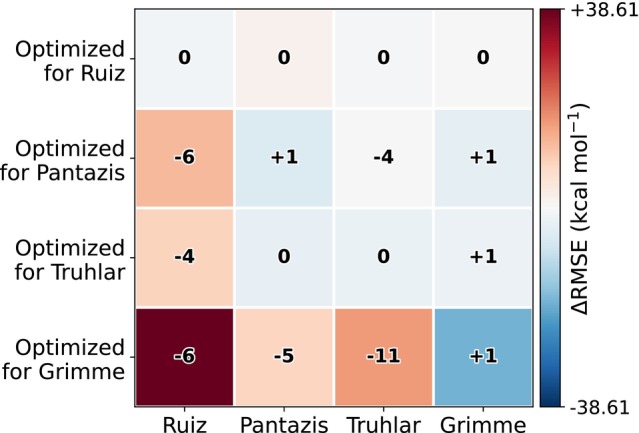 Figure 3
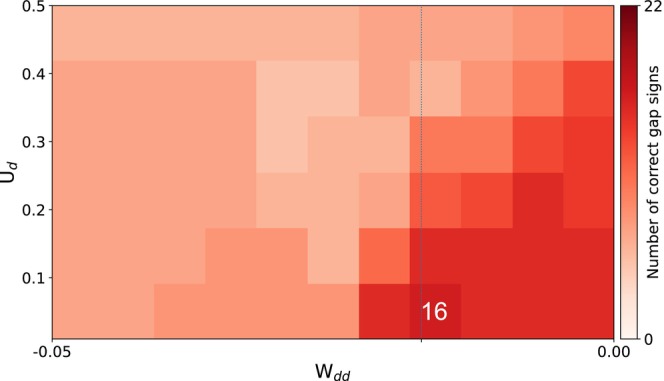 Figure 4
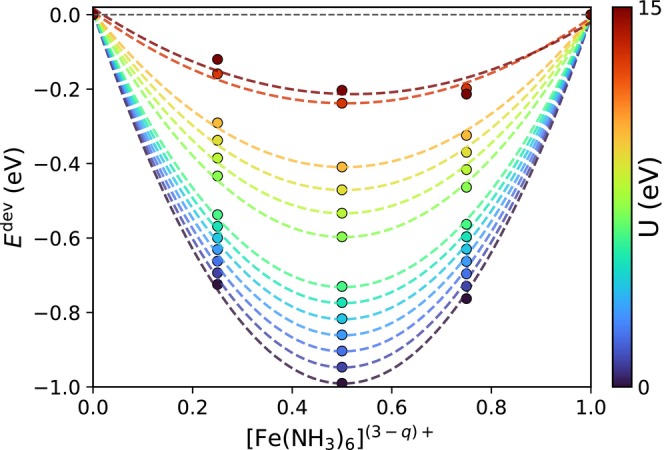 Figure 5
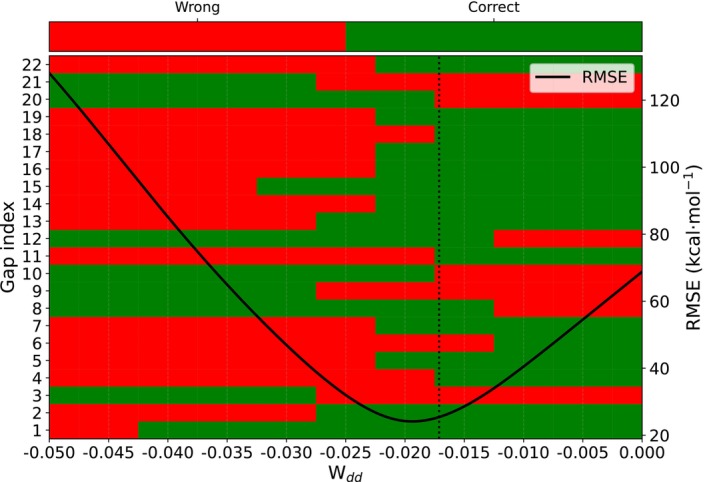 Figure 6
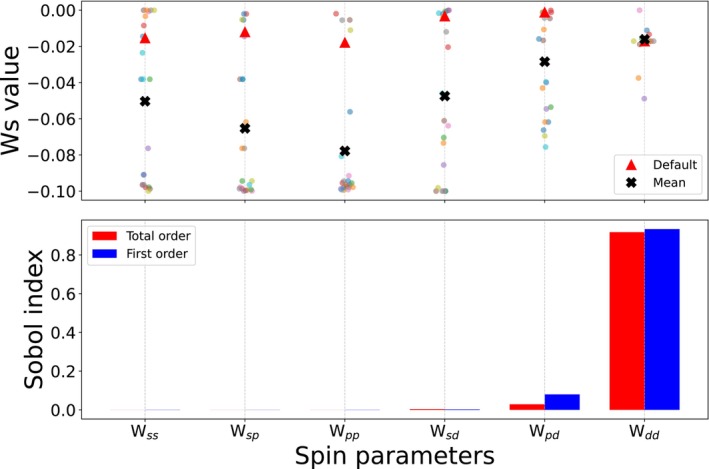 Figure 7
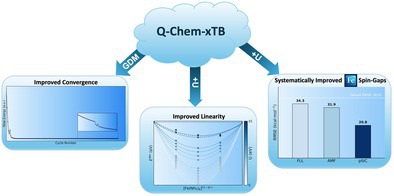 Figure 8
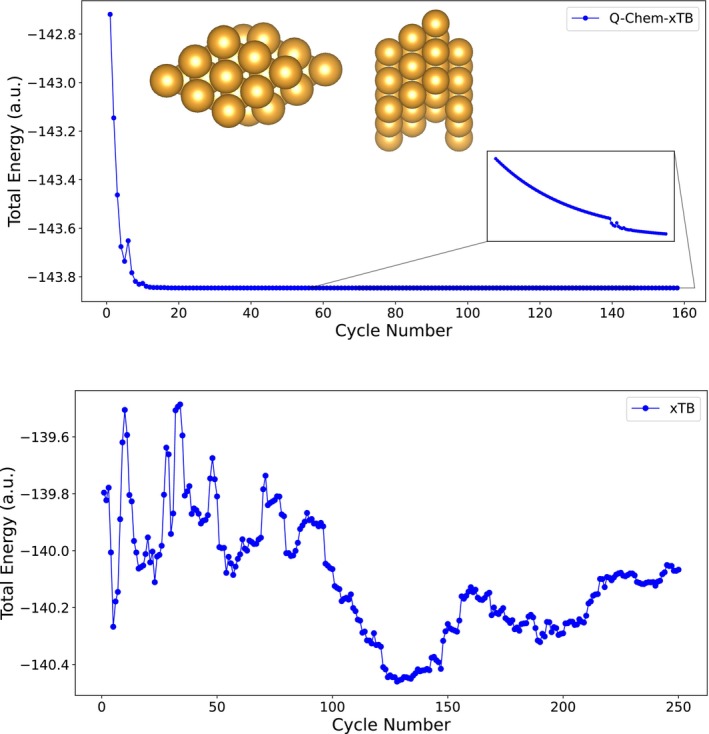 Figure 9
Peer Reviews
No public reviews on file for this paper yet. If you reviewed it on a platform where reviews are public (OpenReview, ICLR, NeurIPS, ICML), you can paste yours below so the community can read it here.
Videos
No videos yet. Explain this paper in a talk, walkthrough, or lecture? Add one.
Taxonomy
TopicsMachine Learning in Materials Science · Advanced Chemical Physics Studies · Advanced Physical and Chemical Molecular Interactions