Feasibility, acceptability and implementation of a whole-family mental health intervention for displaced adolescent girls in Colombia: A mixed-methods pilot randomized controlled trial
Ilana Seff, Arturo Harker Roa, Byron Powell, Natalia Cordoba, Carolina Rodriguez, Julianne Deitch, Elvia Tamaity Ariza Pena, Feven Gebrekidan, Lindsay Stark, Felipe Agudelo-Hernández, Catalina Cañizares, Emilia Zamora-Moncayo, Felipe Agudelo-Hernández, Emilia Zamora-Moncayo

TL;DR
A pilot study tested a family-based mental health program for displaced adolescent girls in Colombia, finding high acceptability but challenges in implementation.
Contribution
The study introduces a gender-transformative mental health intervention for displaced adolescent girls and evaluates its feasibility and acceptability in a real-world setting.
Findings
Quantitative analyses found no measurable changes in mental health outcomes at endline.
High participant satisfaction and acceptability of the SSAGE program content and mentor relationships were reported.
Implementation barriers included economic hardship, transportation issues, and caregivers' emotional distress.
Abstract
Adolescent girls affected by displacement face substantial mental-health risks. The Sibling Support for Adolescent Girls in Emergencies (SSAGE) is a 12-week, gender-transformative, family-based program designed to improve adolescent girls’ mental health in humanitarian settings. This mixed-methods pilot randomized controlled trial (RCT) assessed SSAGE’s feasibility, acceptability and potential effects among 186 Venezuelan migrant and Colombian returnee families in Colombia. Adolescent girls aged 13–19 years, their male siblings and caregivers participated in parallel sessions on gender dynamics, communication and relationships. Implementation outcomes drew on the Mental Health Implementation Science Tools (acceptability and feasibility subscales), attendance records and qualitative interviews. Analyses followed an intent-to-treat approach using adjusted linear and logistic regression…
Genes, proteins, chemicals, diseases, species, mutations and cell lines named across the full text — each resolved to its canonical identifier and authoritative record.
Click any figure to enlarge with its caption.
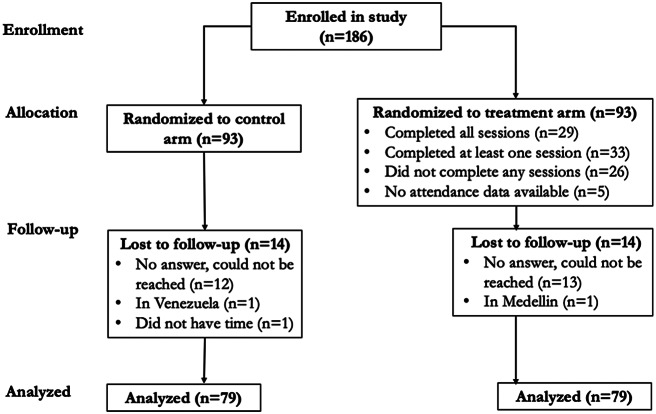 Figure 1
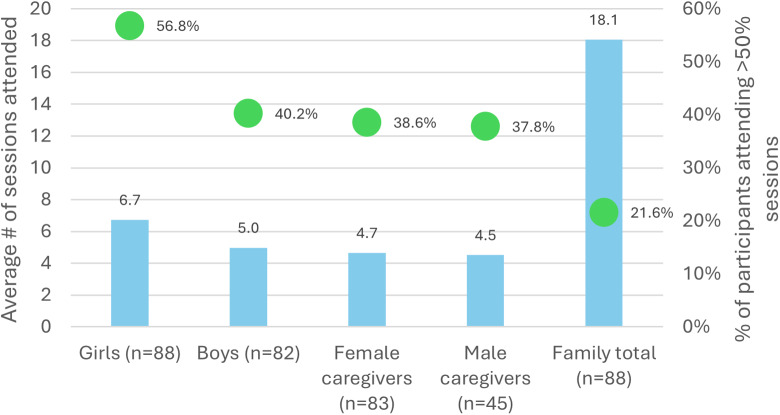 Figure 2
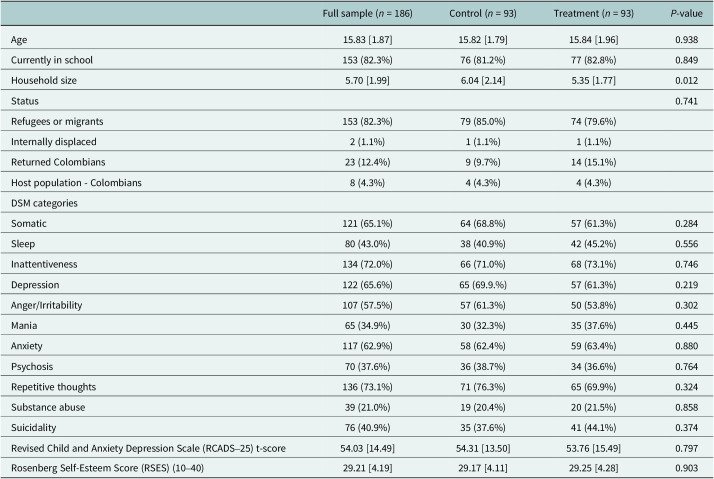 Figure 3
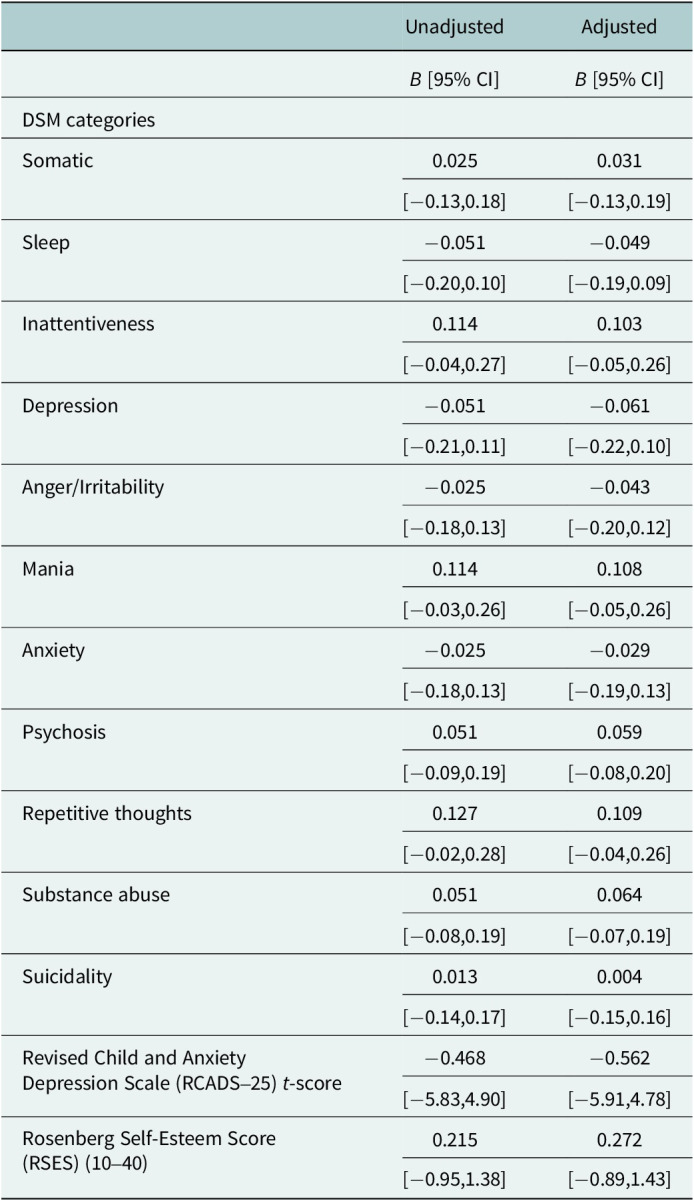 Figure 4
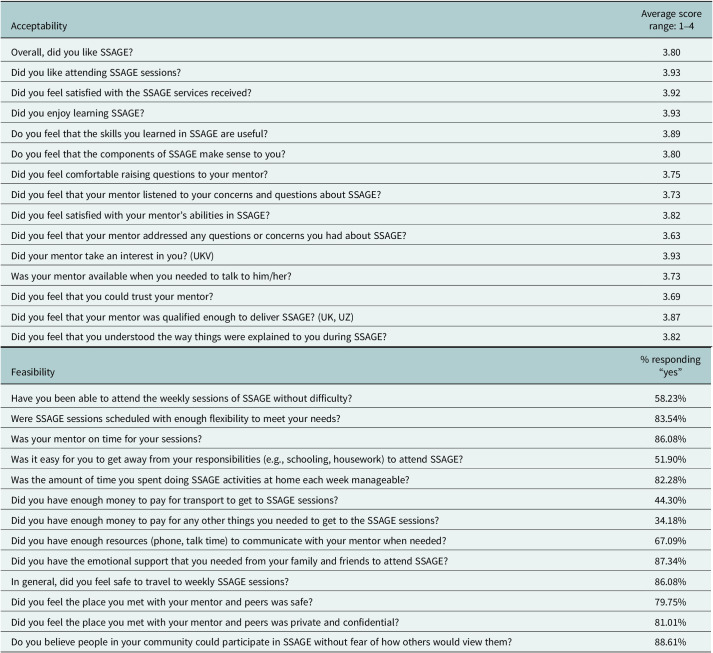 Figure 5
Peer Reviews
No public reviews on file for this paper yet. If you reviewed it on a platform where reviews are public (OpenReview, ICLR, NeurIPS, ICML), you can paste yours below so the community can read it here.
Videos
No videos yet. Explain this paper in a talk, walkthrough, or lecture? Add one.
Taxonomy
TopicsMigration, Health and Trauma · Adolescent Sexual and Reproductive Health · Child and Adolescent Psychosocial and Emotional Development