RSV Antibody Prophylaxis Needs for Extremely Preterm Infants in Their Second RSV Season
Marina Viñeta Paramo, Allison Watts, Alfonso Solimano, Claire Seaton, Manish Sadarangani, Hind Sbihi, Pascal M. Lavoie

TL;DR
The study investigates if extremely preterm infants need RSV antibody protection during their second RSV season.
Contribution
It evaluates the necessity of monoclonal antibody prophylaxis for extremely preterm infants beyond their first RSV season.
Findings
The study assesses RSV-related outcomes in extremely preterm infants during their second RSV season.
Findings may inform guidelines on extended monoclonal antibody use for this vulnerable population.
Abstract
This cohort study examines children in British Columbia, Canada, born between 2013 and 2024 to assess whether use of monoclonal antibodies for a second respiratory syncytial virus (RSV) season is warranted for extremely preterm infants.
Genes, proteins, chemicals, diseases, species, mutations and cell lines named across the full text — each resolved to its canonical identifier and authoritative record.
Click any figure to enlarge with its caption.
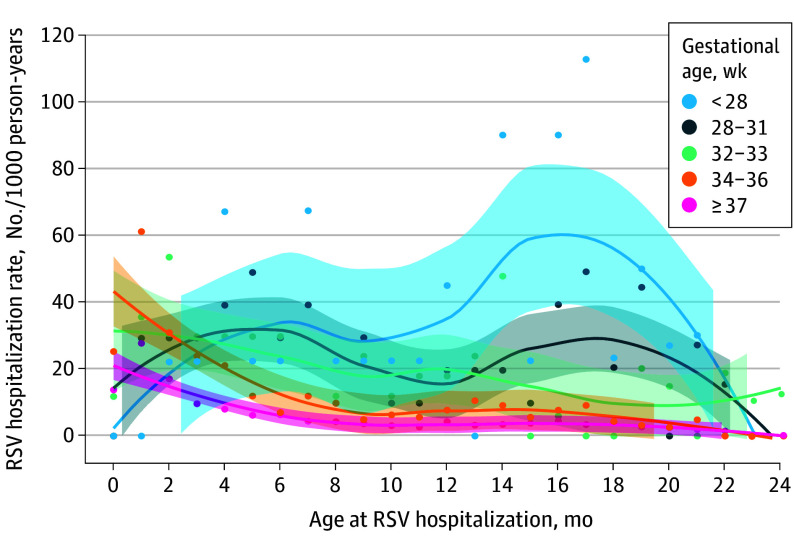 Figure 1
Peer Reviews
No public reviews on file for this paper yet. If you reviewed it on a platform where reviews are public (OpenReview, ICLR, NeurIPS, ICML), you can paste yours below so the community can read it here.
Videos
No videos yet. Explain this paper in a talk, walkthrough, or lecture? Add one.
Taxonomy
TopicsRespiratory viral infections research · Parvovirus B19 Infection Studies · Immunodeficiency and Autoimmune Disorders