Proteomic Analysis of Serum and Cerebrospinal Fluid in Children with Encephalopathy Associated with Human Betaherpesvirus 6B
Yoshiki Kawamura, Hisateru Yamaguchi, Tomoki Nishioka, Mao Kiribuchi, Ayano Yun, Hiroki Miura, Yotaro Kondo, Masato Itano, Yuki Higashimoto, Masaru Ihira, Jun-ichi Kawada, Tetsushi Yoshikawa

TL;DR
This study uses proteomic analysis to compare serum and cerebrospinal fluid proteins in children with HHV-6B-related encephalopathy to understand the disease's pathogenesis.
Contribution
The study identifies specific proteins and metabolic pathways associated with severe neurological complications of HHV-6B infection.
Findings
Nineteen serum proteins were differentially expressed in AESD compared to cFS during the acute phase.
The glycolytic pathway was upregulated in AESD, and MARCKS and GOLM1 were validated as upregulated proteins.
CSF analysis revealed 38 differentially expressed proteins, with cholesteryl ester transfer protein upregulated in AESD.
Abstract
Exanthem subitum (ES), a benign febrile exanthematous disease, is caused by primary human betaherpesvirus 6B (HHV-6B) infection. It may cause neurological complications, including complex febrile seizures (cFS), acute encephalopathy with biphasic seizures, and late reduced diffusion (AESD). cFS resolves spontaneously; however, AESD can pose severe sequelae. We aimed to elucidate AESD pathogenesis using a proteomic analysis. Using liquid chromatography-tandem mass spectrometry (LC-MS/MS), serum and cerebrospinal fluid (CSF) protein profiles were compared between patients with AESD and those with cFS (n = 3 or 4 per group). Metascape was used for enrichment analysis, and the selected proteins were validated using a large sample via enzyme-linked immunosorbent assay (ELISA). A total of 698 proteins were identified across all serum and CSF samples using LC-MS/MS. Nineteen serum proteins…
Genes, proteins, chemicals, diseases, species, mutations and cell lines named across the full text — each resolved to its canonical identifier and authoritative record.
Click any figure to enlarge with its caption.
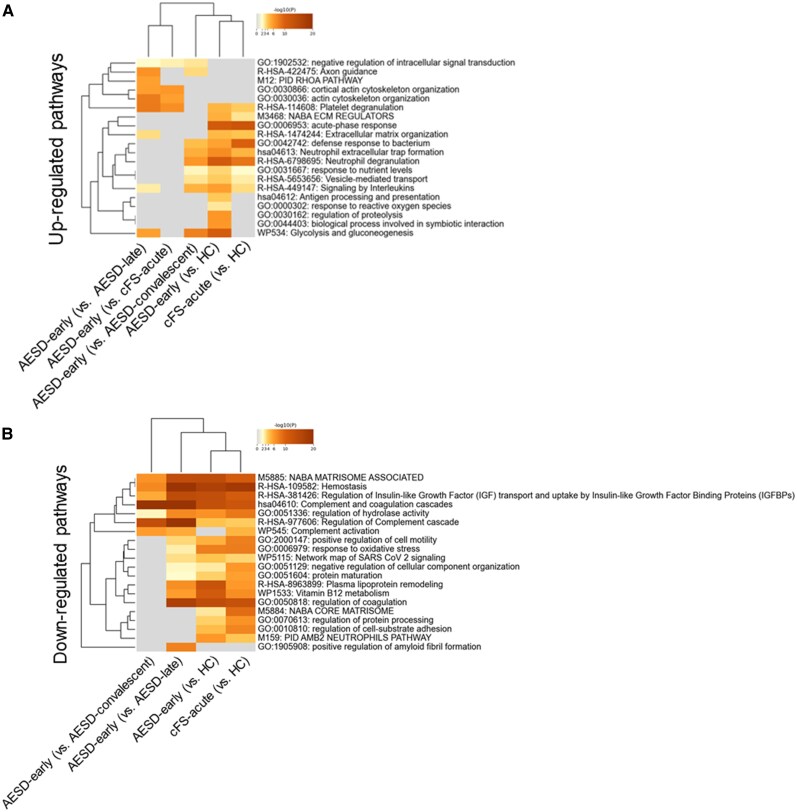 Figure 1
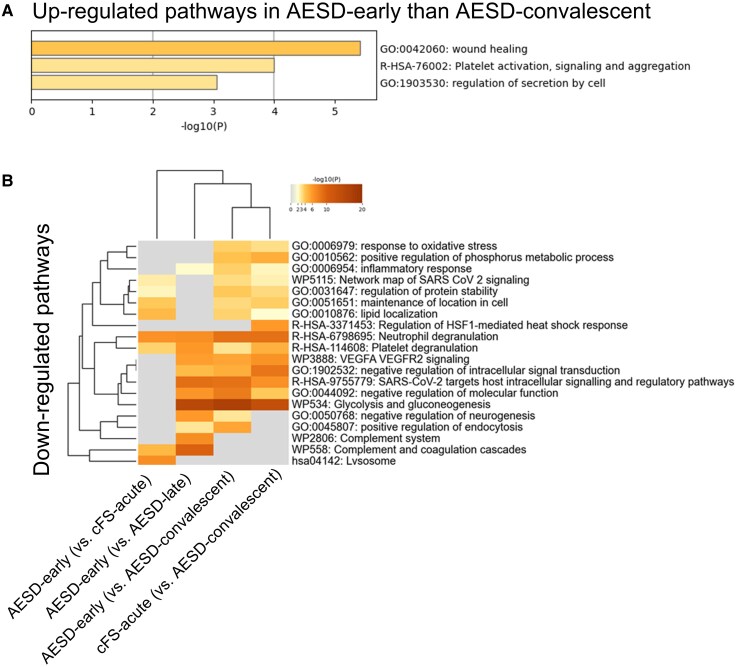 Figure 2
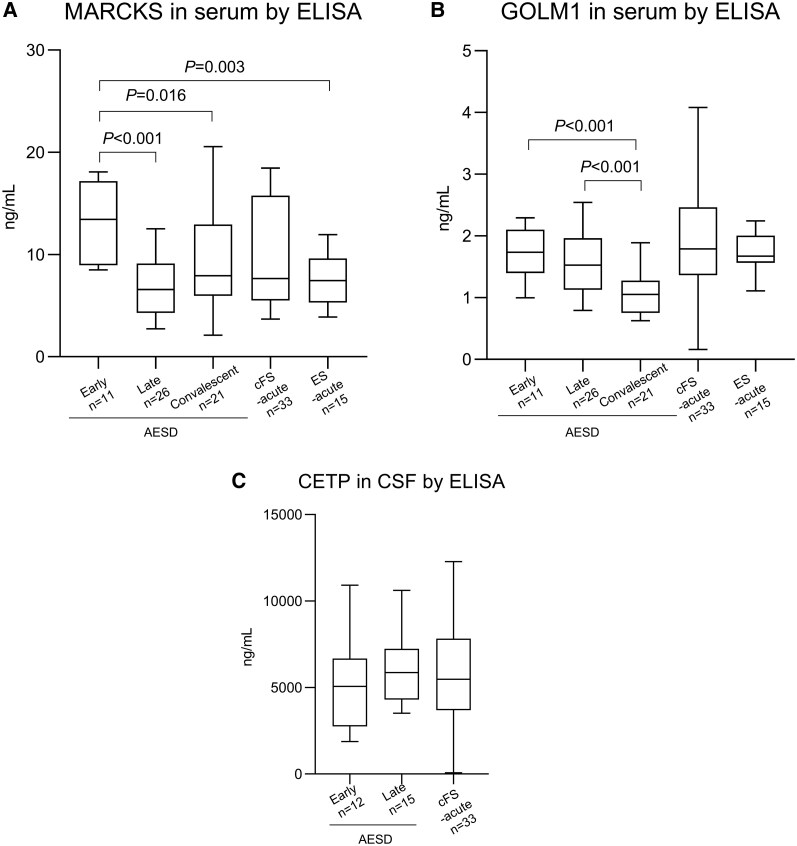 Figure 3
Peer Reviews
No public reviews on file for this paper yet. If you reviewed it on a platform where reviews are public (OpenReview, ICLR, NeurIPS, ICML), you can paste yours below so the community can read it here.
Videos
No videos yet. Explain this paper in a talk, walkthrough, or lecture? Add one.
Taxonomy
TopicsHerpesvirus Infections and Treatments · Infectious Encephalopathies and Encephalitis · Cytomegalovirus and herpesvirus research