A study evaluating differences in 3D upper limb kinematics and surface electromyography measures in adults with and without facioscapulohumeral dystrophy
Fraser Philp, Martin Seyres, Nicholas Emery, Richa Kulshrestha, Edward K. Chadwick

TL;DR
This study compares 3D arm movements and muscle activity in people with and without FSHD to understand how the condition affects upper limb function.
Contribution
The study provides new insights into the role of scapular kinematics and muscle activity in FSHD-related arm dysfunction.
Findings
People with FSHD showed reduced thoracohumeral elevation angles, especially in flexion and abduction.
Altered scapular movement, not glenohumeral joint issues, caused limited arm elevation in FSHD.
Muscle activity in FSHD groups was prolonged and variable, particularly in the trapezius and deltoid.
Abstract
Facioscapulohumeral dystrophy (FSHD) is a rare disease that causes progressive muscle wasting and loss of function, with the upper limb being the most affected. Factors leading to loss of arm function are poorly understood. A better understanding of movement profiles determined using 3D movement analysis could help inform treatment selection and development; however, limited evidence is available for combined 3D movement and surface electromyography (sEMG) studies that include the scapula. Our null hypothesis is that there are no differences between the movement and muscle activity of people with FSHD and age- and sex-matched controls (two-tailed). Adults were recruited into three groups: (1) FSHD with scapulothoracic arthrodesis (scap fix); (2) FSHD and no surgery (no surgery); or (3) age- and sex- matched control group (CG). Participants attended a single session and carried out…
Genes, proteins, chemicals, diseases, species, mutations and cell lines named across the full text — each resolved to its canonical identifier and authoritative record.
Click any figure to enlarge with its caption.
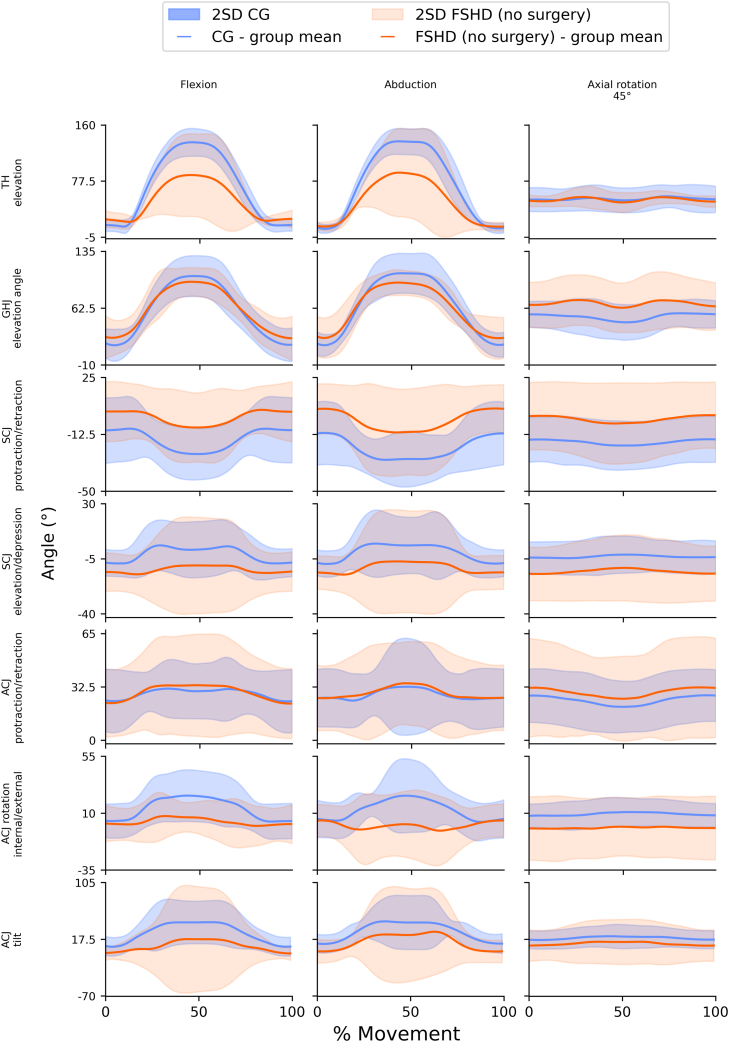 Figure 1
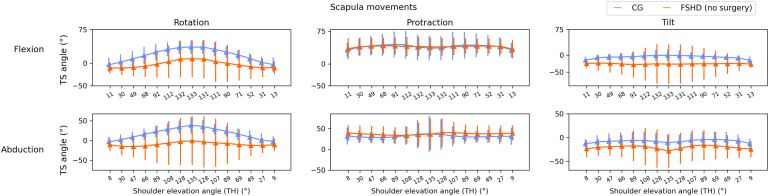 Figure 2
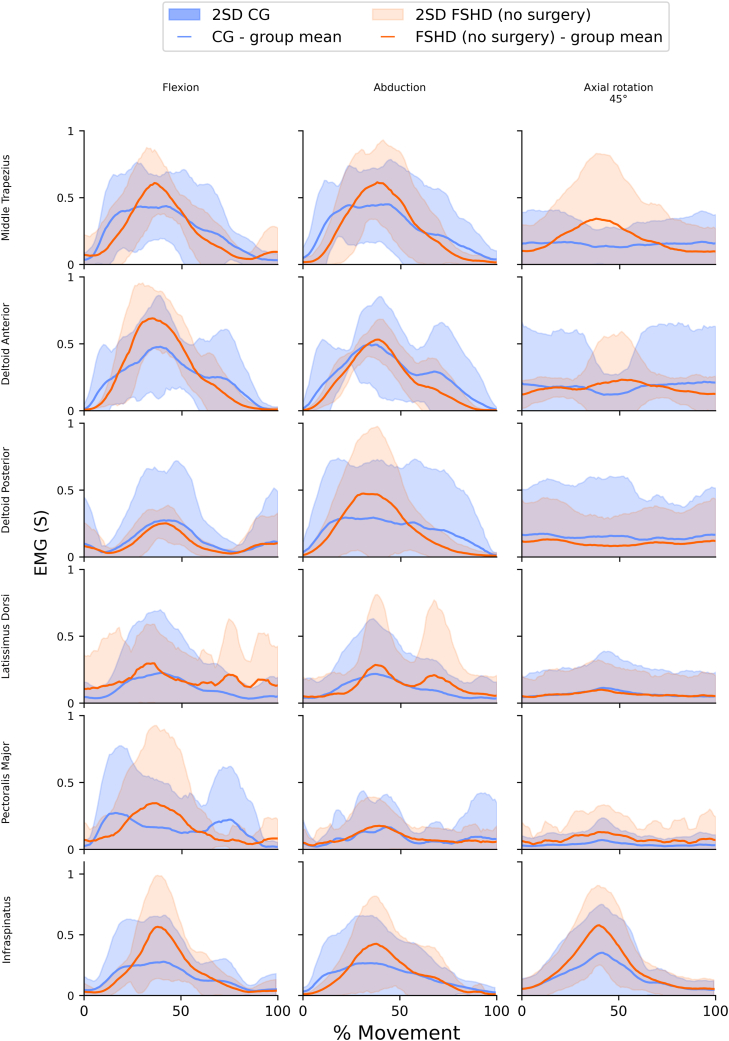 Figure 3
Peer Reviews
No public reviews on file for this paper yet. If you reviewed it on a platform where reviews are public (OpenReview, ICLR, NeurIPS, ICML), you can paste yours below so the community can read it here.
Videos
No videos yet. Explain this paper in a talk, walkthrough, or lecture? Add one.
Taxonomy
TopicsShoulder Injury and Treatment · Pain Management and Treatment · Pectus Deformity Diagnosis and Treatment