In vitro reconstitution of heterochromatin compartments reveals the spontaneous formation of tunable liquid–liquid interfaces
Lucy D Brennan, Hyeong-Ku Kim, Serafin Colmenares, Tatum Ego, Je-Kyung Ryu, Gary Karpen

TL;DR
This study shows how heterochromatin forms liquid-like compartments in the cell nucleus, using a simplified system to reveal how specific proteins and modifications control this process.
Contribution
The study introduces a minimal in vitro system to directly measure how H3K9me3 and HP1a regulate heterochromatin compartmentalization and liquid-liquid interfaces.
Findings
H3K9me3 limits condensate coalescence and promotes intra-array interactions.
HP1a increases chromatin condensate liquidity and is essential for compartmentalization.
Heterochromatin compartmentalization is spontaneous, reversible, and tunable via HP1a mutations.
Abstract
Compartmentalization of the genome into heterochromatin and euchromatin is a highly conserved and essential process across eukaryotes. Constitutive heterochromatin (C-Het) packages the repetitive regions of the genome within a biomolecular condensate formed through the enrichment of histone modification H3K9me3 and recruitment of its cognate reader protein heterochromatin protein-1 (HP1a). Linking the function of C-Het to its structure requires methods to assess the individual and combinatorial contributions of H3K9me3 and HP1a on the biophysical properties of C-Het. To this end, this study implements a minimal reconstitution system composed of in vitro assembled nucleosome arrays with and without H3K9me3 modifications (Me, methylated, and U, unmodified, respectively) and purified Drosophila HP1a. This minimal system reveals that H3K9me3 limits condensate coalescence and promotes…
Genes, proteins, chemicals, diseases, species, mutations and cell lines named across the full text — each resolved to its canonical identifier and authoritative record.
Click any figure to enlarge with its caption.
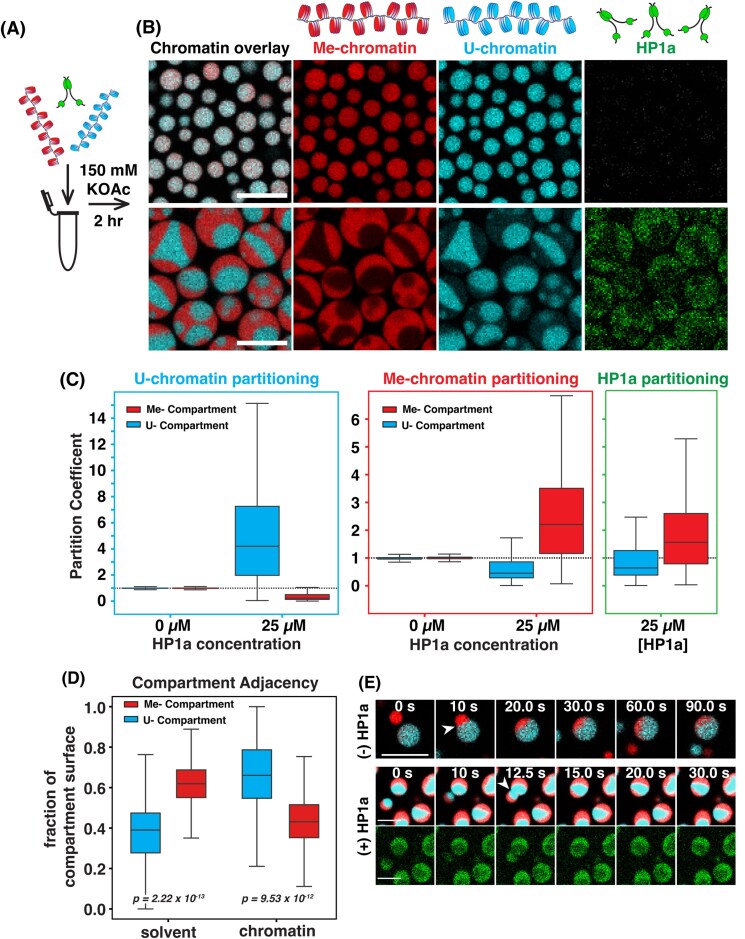 Figure 1
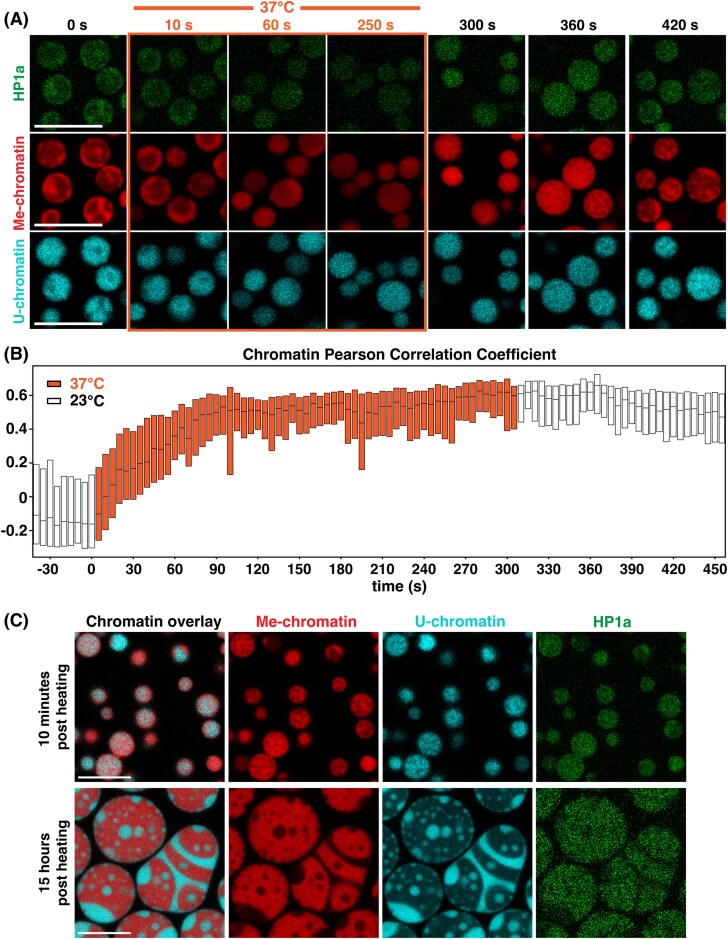 Figure 2
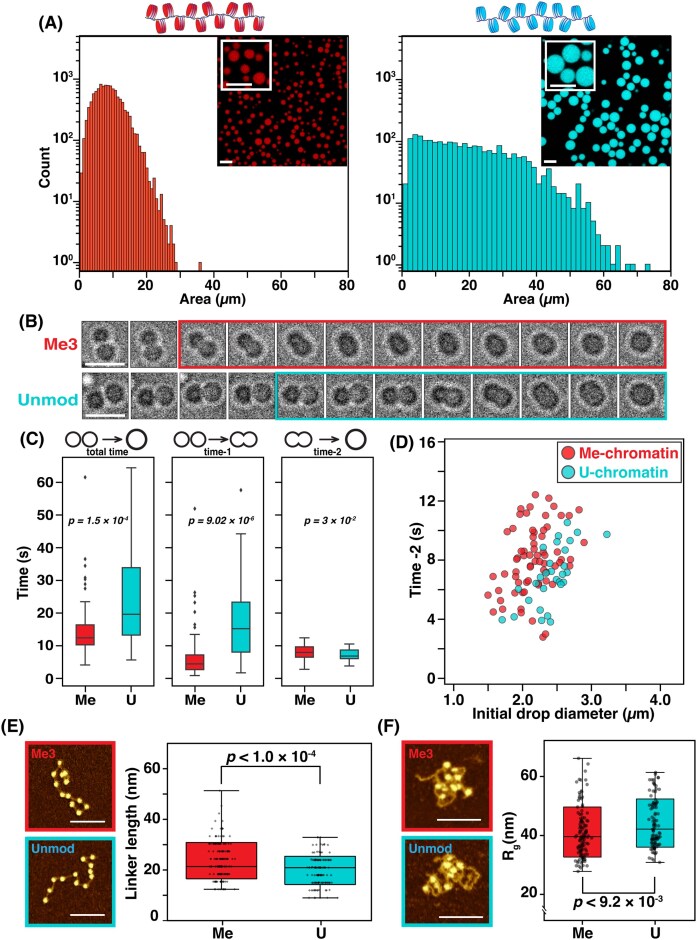 Figure 3
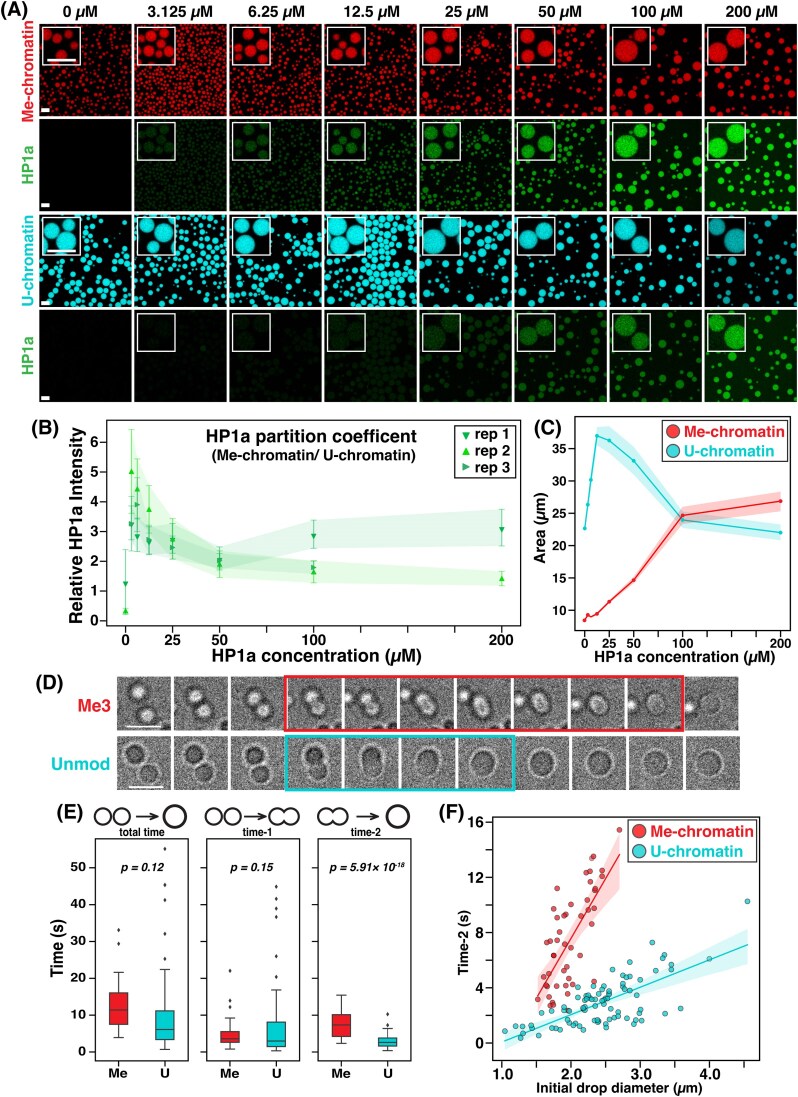 Figure 4
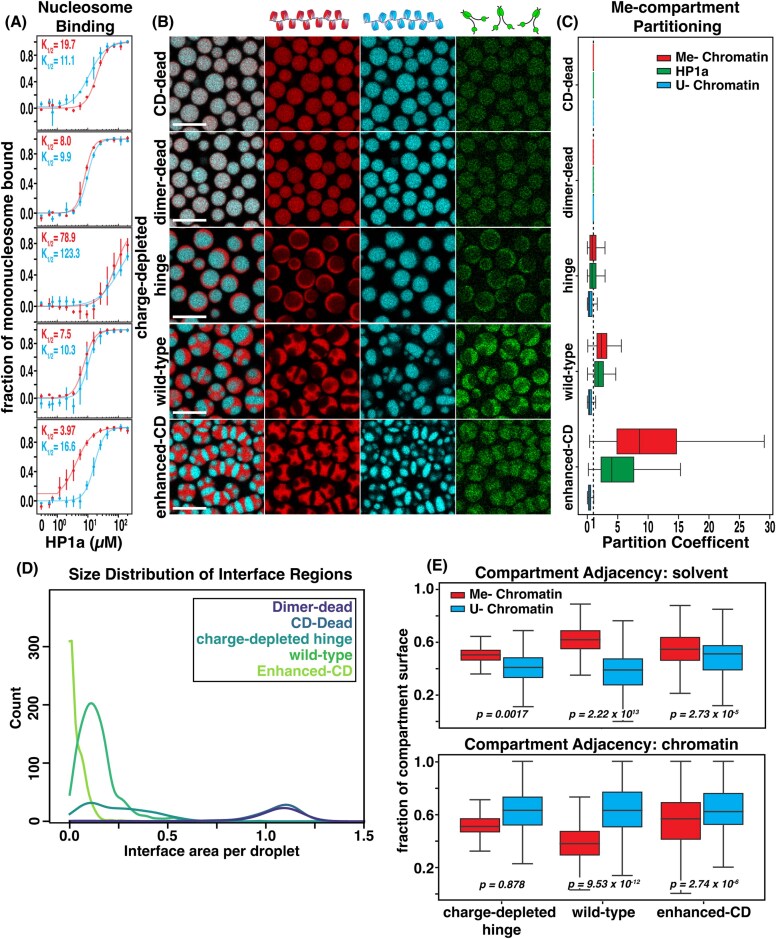 Figure 5
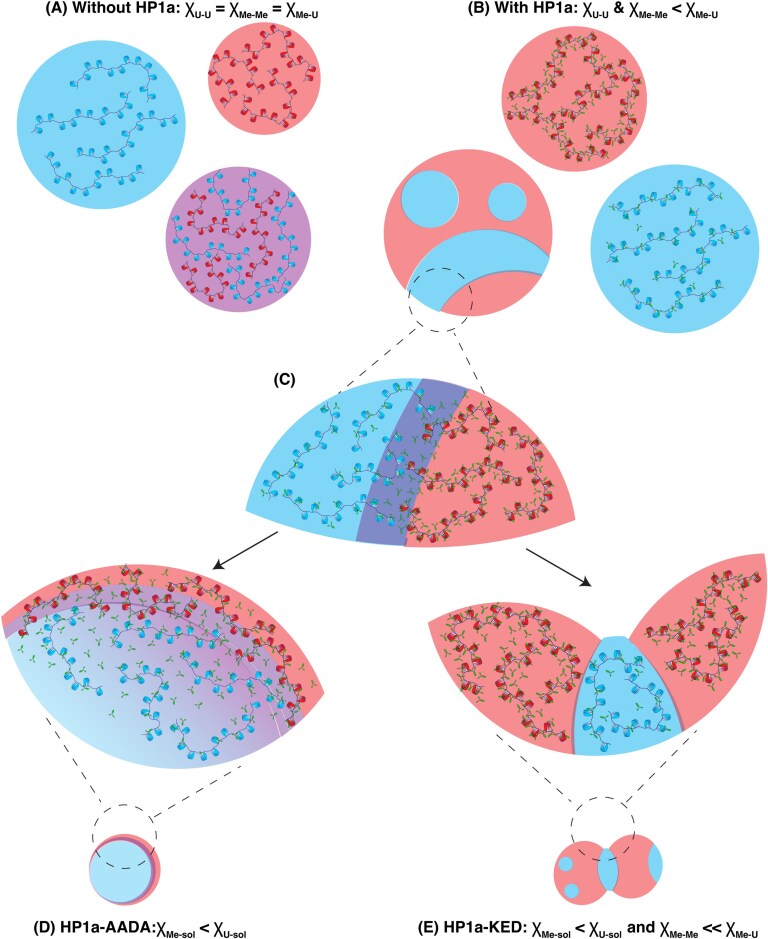 Figure 6
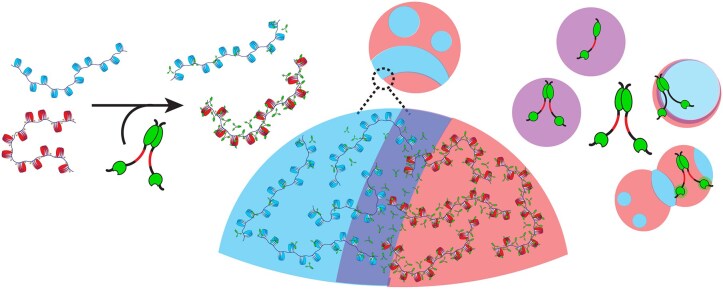 Figure 7
Peer Reviews
No public reviews on file for this paper yet. If you reviewed it on a platform where reviews are public (OpenReview, ICLR, NeurIPS, ICML), you can paste yours below so the community can read it here.
Videos
No videos yet. Explain this paper in a talk, walkthrough, or lecture? Add one.
Taxonomy
TopicsGenomics and Chromatin Dynamics · Chromosomal and Genetic Variations · Nuclear Structure and Function