Advance Microbiota Transplantation: A Novel Addition–Subtraction Paradigm for Optimising Faecal Microbiota Transplantation
Haojia Lin, Zelin Feng, Qiuyue Tu, Huizhen Li, Yanru Zhang, Xinyue Wei, Qinghua Yi, Hetong Zhang, Yu Wang, Xiaoqin Li, Yueting Li, Jun Huang, Zehan Chen, Hongtian Shentu, Anjiang Wang, Ye Chen, Xiaolong He, Xiaocang Cao

TL;DR
The paper introduces a new framework for improving faecal microbiota transplantation by optimizing donor and recipient factors before, during, and after the procedure.
Contribution
The novel 'addition–subtraction' paradigm in Advance Microbiota Transplantation aims to enhance FMT predictability and efficacy.
Findings
AMT integrates donor and recipient optimization to address FMT limitations.
The addition–subtraction strategy is proposed to shape AMT across transplant phases.
Six under-reported items in FMT research were identified, affecting reproducibility.
Abstract
Faecal microbiota transplantation (FMT) is highly effective for recurrent Clostridioides difficile infection but yields inconsistent benefits in chronic indications. As a crude whole‐microbiota transplant, FMT contains numerous undefined active components, complicating efforts to ensure treatment predictability and stability. Therefore, we propose Advance Microbiota Transplantation (AMT), a comprehensive, phase‐based hypothesis that employs an addition–subtraction strategy throughout the pre‐, peri‐ and post‐transplant stages. AMT comprises donor and recipient pre‐treatment, procedural optimisation and post‐transplant adjuvant interventions to mitigate donor variability, ecological resistance, procedural heterogeneity and unstable engraftment. Through a systematic synthesis of current evidence‐based FMT research, we explored how the addition–subtraction strategy can be operationalised…
Genes, proteins, chemicals, diseases, species, mutations and cell lines named across the full text — each resolved to its canonical identifier and authoritative record.
Click any figure to enlarge with its caption.
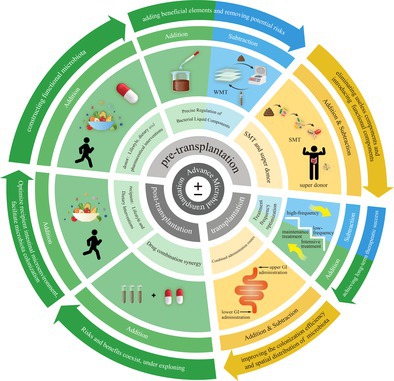 Figure 1
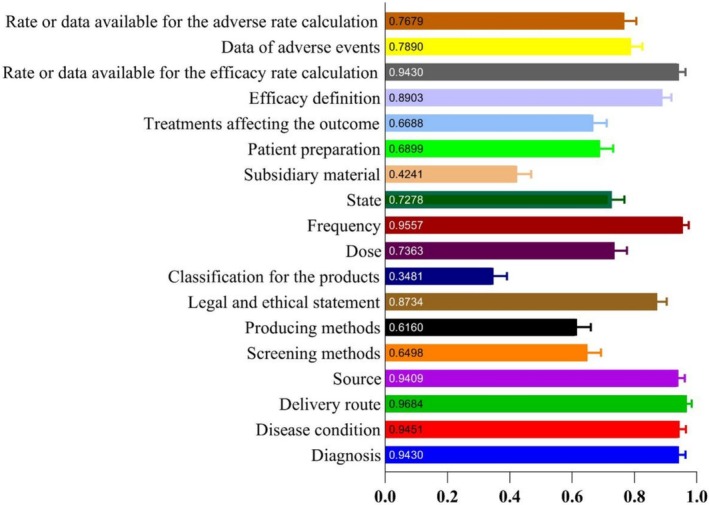 Figure 2
 Figure 3
Peer Reviews
No public reviews on file for this paper yet. If you reviewed it on a platform where reviews are public (OpenReview, ICLR, NeurIPS, ICML), you can paste yours below so the community can read it here.
Videos
No videos yet. Explain this paper in a talk, walkthrough, or lecture? Add one.
Taxonomy
TopicsClostridium difficile and Clostridium perfringens research · Gut microbiota and health · Bacterial Identification and Susceptibility Testing