Successful simultaneous side by side placement of novel 6-Fr inside plastic stents for malignant hilar biliary obstruction
Yoshinori Shimamoto, Hirotsugu Maruyama, Tatsuya Kurokawa, Yuki Ishikawa-Kakiya, Kojiro Tanoue, Yasuhiro Fujiwara

Abstract
Genes, proteins, chemicals, diseases, species, mutations and cell lines named across the full text — each resolved to its canonical identifier and authoritative record.
Click any figure to enlarge with its caption.
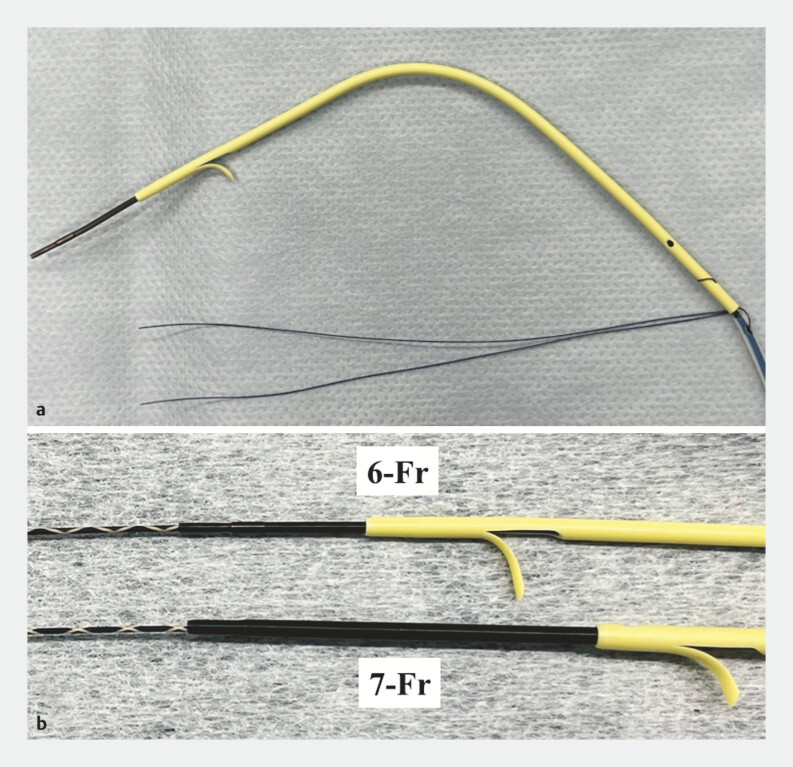 Fig. 1
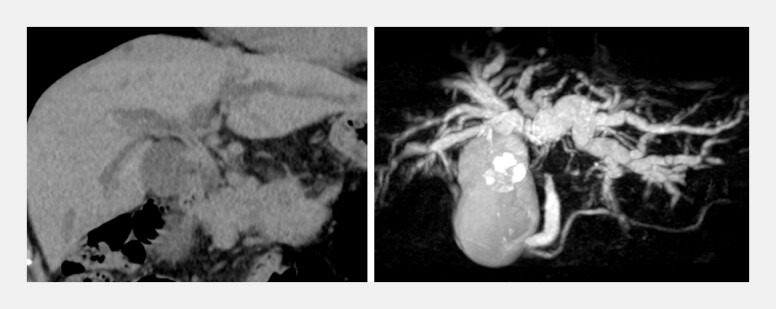 Fig. 2
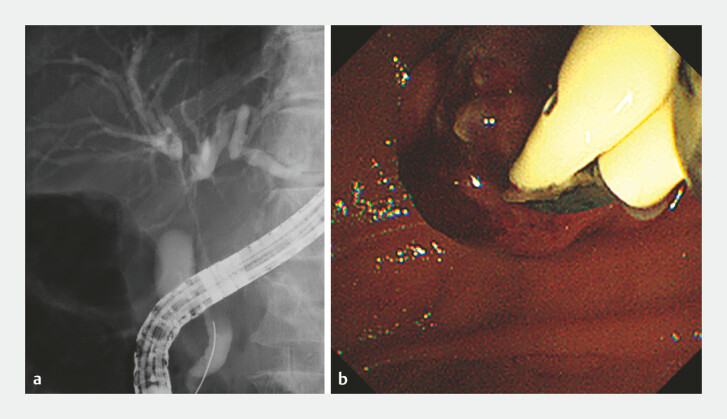 Fig. 3
Peer Reviews
No public reviews on file for this paper yet. If you reviewed it on a platform where reviews are public (OpenReview, ICLR, NeurIPS, ICML), you can paste yours below so the community can read it here.
Videos
No videos yet. Explain this paper in a talk, walkthrough, or lecture? Add one.
Taxonomy
TopicsGallbladder and Bile Duct Disorders · Esophageal and GI Pathology · Pancreatic and Hepatic Oncology Research
Inside plastic stents (ISs) are widely used for malignant hilar biliary obstruction 1 2 . In Japan, 7-Fr ISs are typically used, and when multiple stents are required, they are inserted sequentially. However, the placement of the second and subsequent ISs can be challenging due to severe tumor-related strictures and interference with the previously placed stent. Problems associated with placing an additional IS include proximal migration 3 4 5 , the need for additional devices, and segmental cholangitis if the stent placement fails. Clinically, the occurrence of segmental cholangitis is a major issue as it requires repeated reinterventions and must therefore be avoided. Thus, endoscopists should aim for smooth stent deployment and timely completion of the procedure.
To meet these clinical needs, a new 6-Fr IS (Olympus Optical Co., Tokyo, Japan) was developed ( Fig. 1 ). Here, we report the successful simultaneous bilateral placement of this newly designed 6-Fr IS.
A new 6-Fr inside plastic stent. a This stent is an integrated delivery system with a thin, flexible, and middle-bend configuration. b The step differences at the interfaces between the guidewire (0.025-inch), inner catheter, and stent were minimal.
A 78-year-old man with malignant hilar obstruction secondary to cholangiocarcinoma was referred for jaundice. Computed tomography and magnetic resonance cholangiopancreatography revealed a hilar stricture with marked bilateral intrahepatic duct dilatation ( Fig. 2 ). During endoscopic retrograde cholangiopancreatography ( Video 1 ), a 0.025-inch guidewire was inserted into the common bile duct, and fluoroscopy demonstrated a bismuth type IIIa hilar obstruction. Guidewires were then advanced into the left and anterior bile ducts. Two novel 6-Fr ISs were simultaneously introduced through the 4.2-mm working channel of a duodenoscope and successfully deployed in parallel without interference between the stents or with the guidewires ( Fig. 3 ). The patient’s jaundice improved, and no adverse events occurred.
Computed tomography and magnetic resonance cholangiopancreatography revealed the wall thickening of the hilar bile duct accompanied by bilateral intrahepatic bile duct dilatation.
Simultaneous side-by-side deployment of novel 6-Fr inside plastic stents for malignant hilar biliary obstruction.Video 1
Stent placement. a Fluoroscopy demonstrated a bismuth type IIIa hilar obstruction. b Two novel 6-Fr inside plastic stents (ISs) were simultaneously introduced through the 4.2-mm working channel of a duodenoscope.
This IS has minimal steps between the stent, inner sheath, and guidewire, reducing insertion resistance and facilitating smooth passage through biliary strictures. Simultaneous parallel placement using this novel stent may shorten procedure time, improve technical success, and serve as a promising option for future practice.
Endoscopy_UCTN_Code_TTT_1AR_2AZ Endoscopy_UCTN_Code_CCL_1AZ_2AC
The reference list from the paper itself. Each links out to its DOI / PubMed record.
- 1Kanno Y Ito K Nakahara K Suprapapillary placement of plastic versus metal stents for malignant biliary hilar obstructions: a multicenter, randomized trial Gastrointest Endosc 20239821122110.1016/j.gie.2023.03.00736907528 · doi ↗ · pubmed ↗
- 2Okuno M Iwata K Iwashita T Utility of bilateral intraductal plastic stent for malignant hilar biliary obstruction compared with bilateral self-expandable metal stent: A propensity score-matched cohort analysis Gastrointest Endosc 20239877678637392955 10.1016/j.gie.2023.06.053 · doi ↗ · pubmed ↗
- 3Ban T Kubota Y Takahama T Two-devices-in-one-channel method for preventing the preceding stent migration in case of multiple indwelling biliary inside plastic stents Endoscopy 202254 E 948E 94910.1055/a-1881-392635835149 PMC 9736809 · doi ↗ · pubmed ↗
- 4Mandai K Nakamura S Securing threads with a novel clip to prevent preceding stent migration in multiple biliary inside plastic stents Dig Endosc 20243650850910.1111/den.1477138353322 · doi ↗ · pubmed ↗
- 5Hirata Y Hatada M Miyara K Slip-knot thread method for performing anchor-wire technique to prevent proximal dislocation of preceding stent in placement of multiple biliary inside plastic stents Endoscopy 202557 E 62E 6310.1055/a-2512-526439848277 PMC 11756994 · doi ↗ · pubmed ↗