Applications of Chatbots in Improving Patient Care Outcomes: A scoping review
Mohammadhiwa Abdekhoda, Afsaneh Dehnad

TL;DR
This review explores how chatbots can improve patient care outcomes through AI-driven healthcare applications, highlighting their potential and challenges.
Contribution
A scoping review identifying key themes and challenges in chatbot applications for healthcare from 2018 to 2024.
Findings
Chatbots can improve access to healthcare, patient education, and chronic disease management.
Key challenges include data security and system integration in chatbot deployment.
Seven themes were identified, including telehealth, communication, and administrative support.
Abstract
This review explored the application of chatbots in healthcare, focusing on patient monitoring, personalised care and medical services. It examined the potential of chatbots to improve patient outcomes through artificial intelligence-driven technologies, addressing challenges such as data security and system integration. This scoping review, conducted from January to March 2025, adhered to the PRISMA-ScR guidelines. A thorough literature search was performed across Web of Science, Scopus and PubMed, using keywords such as “patient care”, “outcome”, and “chatbot*”. After screening for relevance and applying inclusion criteria, a total of 70 articles were analysed, focusing on chatbots' roles in improving patient care outcomes, data management and communication. Data charting was conducted by using a data extraction form to capture study characteristics, chatbot applications, outcomes and…
Genes, proteins, chemicals, diseases, species, mutations and cell lines named across the full text — each resolved to its canonical identifier and authoritative record.
Click any figure to enlarge with its caption.
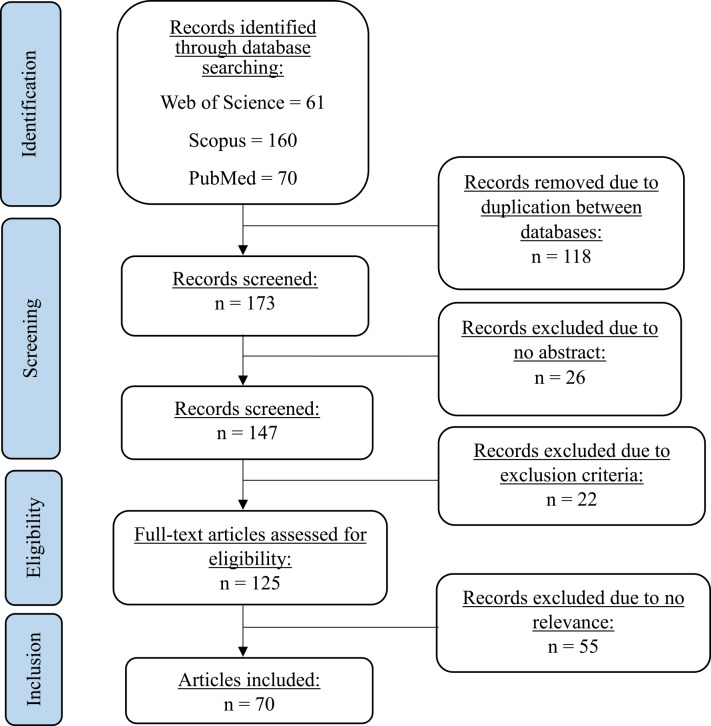 Fig. 1
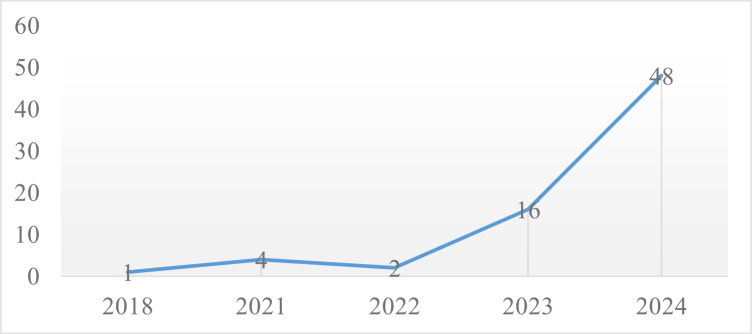 Fig. 2
| Theme | Subtheme | Theme explanation |
|---|---|---|
| Increasing access to healthcare |
Increase access to healthcare Improved access to healthcare system Reducing healthcare burden | This category focuses on how chatbots can enhance patient access to healthcare services and reduce barriers to receiving medical care, ultimately alleviating the burden on healthcare systems. |
| Patient education and awareness |
Patient education Personalised patient Education materials Improved readability and accessibility Personalised health education Enhancing patient understanding | This category highlights patient education by providing personalised and accessible information to help patients better understand their health conditions and treatment options. |
| Supporting clinical decision-making |
Decision support Enhanced decision support Clinical decision support Personalised treatment recommendations Supporting clinical integration Enhancing decision-making | This category emphasises the use of chatbots to assist healthcare professionals in making clinical decisions by providing treatment suggestions, supporting clinical integration and enhancing decision-making processes. |
| Improving patient-healthcare professional communication |
Improve communications between patients and healthcare professionals Enhancing patient understanding Improving adherence to medical recommendations Answering patient questions | This category remarks how chatbots can improve communication between patients and healthcare professionals, enhancing understanding and helping patients follow medical recommendations more effectively. |
| Chronic disease and symptom management |
Chronic disease management Automated symptom triage Chronic disease management Risk stratification Triage suggestions | This category focuses on how chatbots can help the management of chronic diseases by providing automated symptom triage, offering suggestions for risk stratification and assisting in long-term disease management. |
| Telehealth and remote monitoring |
Telemedicine Telehealth Remote patient monitoring Telehealth integration | This category discusses the role of chatbots in telehealth and remote monitoring, allowing healthcare professionals to monitor patients from a distance, providing consultations and offering timely interventions when necessary. |
| Administrative support and workflow optimisation |
Empowerment and engagement Enhancing patient engagement Personalised patient interaction Patient empowerment Improving patient-centred communication | This category focuses on how chatbots can engage patients by empowering them with personalised information, fostering better patient-centred communication and increasing their active involvement in their healthcare decisions. |
Peer Reviews
No public reviews on file for this paper yet. If you reviewed it on a platform where reviews are public (OpenReview, ICLR, NeurIPS, ICML), you can paste yours below so the community can read it here.
Videos
No videos yet. Explain this paper in a talk, walkthrough, or lecture? Add one.
Taxonomy
TopicsDigital Mental Health Interventions · Artificial Intelligence in Healthcare and Education · AI in Service Interactions
1. Introduction
Chatbots have become increasingly important in healthcare by enhancing patient monitoring, medical services and overall care delivery.^1^ As health management becomes increasingly personalised, strategies that enable individuals to monitor, assess and manage their own well-being are receiving considerable attention. Patient-generated health data collected via wearable devices and Internet of Things technologies enable continuous monitoring of conditions such as sleep apnoea and heart rhythm disorders. However, the effective use of these data requires integrated analytical approaches and active user engagement, which can be facilitated through chatbot technologies.^2^
Recent progress in artificial intelligence (AI), especially in natural language processing and machine learning, has driven the widespread use of chatbots in healthcare. These systems deliver patient-focused services including symptom evaluation, health education, medication reminders, appointment coordination and chronic disease management.^34^ In addition to supporting patients, chatbots assist healthcare professionals by streamlining administrative tasks, reducing workload as well as improving efficiency and quality of service delivery.^4^
As conversational agents, chatbots enhance accessibility, personalisation and efficiency by simulating human interaction. They are primarily delivered through smartphone applications and rely on text-based inputs and outputs to support treatment monitoring, healthcare services and patient education.^5^ Regarding mHealth, chatbots play multiple roles such as patient education, promoting behaviour change, supporting medication adherence, managing chronic conditions and providing mental health assistance. Through personalised interactions, patients can ask questions, obtain feedback and maintain ongoing dialogue, which strengthens their engagement and leads to improved health outcomes.^6^
One of the major advantages of chatbots is their ability to provide continuous, round-the-clock support, which is particularly valuable for individuals with chronic conditions requiring constant care. By offering reminders, guidance and immediate responses, chatbots improve access to care while reducing healthcare providers' workloads.^7^ Therefore, chatbots are becoming established as key components of today's healthcare infrastructure. Evolving from a futuristic idea into a practical innovation, chatbots now equip patients with medical information, tailored guidance and self-management resources, while allowing healthcare professionals to concentrate on more complex clinical responsibilities.^8^
Although the advantages are clear, a number of obstacles persist. Ethical issues, inclusivity and equitable access across diverse populations are critical to securing the efficacy of implementation processes.^3^ Misinformation, staff shortages and inefficiencies in patient management are only some of the challenges. The deployment of AI-based chatbots and digital health portals offers potential solutions to these issues by strengthening information access, enabling timely disease recognition and ensuring sustainable enhancements in patient services.^9^
The deficiencies associated with chatbot technologies cannot be overlooked. Key concerns include inaccurate or incomplete responses due to reliance on predefined algorithms, limited empathy, particularly in mental health contexts and issues related to data privacy, security, user trust and regulatory compliance.^710^ Additional barriers, such as algorithmic bias, interoperability, scalability, usability and seamless integration into existing healthcare infrastructures, remain significant obstacles, which require timely intervention.^11^
Patient outcomes, defined as measurable changes in health status or quality of life resulting from healthcare interventions, encompass clinical improvements, functional capability, overall well-being, patient satisfaction level and economic impacts.^12^ Despite the growing use of chatbots in healthcare, evidence on their long-term effects on patient outcomes remains insufficient and fragmented. This highlights a critical gap in understanding how chatbots influence clinical and experiential outcomes across diverse healthcare contexts. To address this gap, the present study employs a scoping review methodology to systematically synthesise existing evidence on chatbot applications, focusing on their impact on patient care outcomes. By identifying key opportunities, challenges and research trends, this scoping review can contribute practical insights for guiding future scholarly inquiry, technological development and implementation planning.
2. Methods
This scoping review was conducted from January to March 2025 and observed the PRISMA-ScR guideline. The literature search was conducted across three databases: Web of Science (WoS), Scopus and PubMed, focusing on studies published between 2011 and 2024.
The search employed the following keywords and their synonyms based on MeSH: “patient care” AND “Outcome” AND “Chatbot*”. In WoS, the following search strategy was used: TI= (“patient care” OR “care”) AND TS= (“Chatbot” OR “Chatbots”) AND TS= (outcome) and AB= (“patient care” AND “outcome ”) OR TI= (“Chatbot* ” AND “care”). The full electronic search strategy for Web of Science (WOS) was: (TI=(“patient care” OR “care”) AND TS=(“Chatbot” OR “Chatbots”) AND TS=(outcome))
OR (AB=(“patient care” AND “outcome”)) OR (TI=(“Chatbot*” AND “care”))
In Scopus, it was: TITLE-ABS-KEY (“patient care” OR “care”) AND TITLE-ABS-KEY (“Chatbot” OR “Chatbots”) AND TITLE-ABS-KEY (outcome), and TITLE-ABS-KEY (“patient care” AND “outcome ”) AND “Chat bot” OR TITLE ((“patient care” AND “outcome”).
In PubMed, we used TITLE-ABS (“patient care” OR “care”) AND TITLE-ABS (“Chatbot” OR “Chatbots”) AND TITLE-ABS-KEY (outcome) and TITLE/ABS (“patient care” AND “outcome ”) AND “Chat bot” OR TITLE ((“patient care” AND “outcome”).
The inclusion criteria were: (1) articles investigating the use of chatbots in improving patient care outcomes; (2) studies focusing on chatbots' roles in data processing and management, including data comprehension and communication; (3) publications written in English; and (4) studies conducted between 2011 and 2024. The exclusion criteria were: (1) articles discussing theoretical aspects of chatbots in care improvement and (2) conference papers, irrelevant erratum articles and letters to the editor.
In the final analysis, data from the included articles were collected, including bibliographic details such as the article title, authors, year of publication and the journal in which the article was published. Additionally, to analyse the contribution of different countries to the scientific output in this field, the names of countries were extracted according to the authors' affiliations.
All retrieved articles were independently screened by two expert reviewers for relevance to the study objectives. In case of disagreement, a third expert reviewer was consulted. The screening process was repeated twice to ensure consistency and accuracy in selecting relevant studies. Data charting was performed by using a predefined extraction form. Two reviewers independently charted the data from the included studies. Any discrepancies were resolved through discussion and a third reviewer was consulted when consensus could not be reached. The extracted data were subsequently verified to ensure accuracy and consistency prior to analysis.
The charted data were synthesised by using a descriptive thematic approach. An inductive process was employed to identify themes emerging directly from the extracted data. Initially, the data were reviewed and coded, and the frequency of occurrence of key concepts and applications was calculated. Based on these frequencies, related codes were grouped into preliminary themes representing the main areas of application.
To enhance the rigor and validity of the synthesis, the preliminary themes were reviewed and validated by a specialist in health information management, who evaluated the relevance, clarity and coherence of the themes derived from the frequency-based analysis. Following this validation process, 7 main themes were finalised. This approach ensured that the synthesized results were systematic, transparent and well-aligned with the objectives of the review. Copilot was employed to gather supplementary references for the introduction and to check the manuscript's grammar mistakes.
3. Results
A total of 291 articles were identified through database searches (WoS = 61, Scopus = 160, PubMed = 70). After removing 118 duplicate records, 173 unique articles remained. Among these, 26 articles without abstracts were excluded, leaving 147 articles for further screening and eligibility assessment. The excluded articles lacked both an accessible abstract and full text, which prevented any meaningful assessment of their relevance and data extraction. Consequently, they were excluded from the review. During this phase, 22 articles were excluded for not meeting the inclusion criteria.
Subsequently, 125 full-text articles were evaluated for eligibility, of which 55 were excluded due to irrelevant topics, insufficient details, or failure to address the specific applications of chatbots in enhancing patient care outcomes. Ultimately, 70 articles met the criteria and were included in the final analysis [Fig. 1].
Search strategy and inclusion process.
The significant initiation of chatbot studies began in 2018. Research activity increased in 2023 and peaked in 2024. This increase shows the number of publications addressing chatbot applications in improving patients care outcome in this period of publication has increased [Fig. 2].
Trend of publications on application of chatbots in healthcare from 2018 to April 2024.
Articles were published in 43 countries including the USA (50 articles), India (9 articles), Germany (6 articles), Switzerland, Ireland and Iraq (3 articles each) and other countries (each with 1 or 2 articles). Based on the latest classification of the World Trade Bank in 2019–2020, 57 studies were conducted in high-income countries, 11 studies in average-to-high income countries and 6 studies in average-to-low income countries. These findings suggest that there has been a higher intention to investigate chatbot' applications in improving patients care outcomes in high-income countries.
The themes and sub-themes of chatbot applications in improving patient care outcomes can be categorised in 7 main themes: (1) increasing access to healthcare, (2) patient education and awareness (3) supporting clinical decision-making, (4) improving patient-healthcare professional communication, (5) chronic disease and symptom management, (6) telehealth and remote monitoring and (7) administrative support and workflow optimisation. A total of 32 sub-themes were extracted from the studies which were subsequently categorised into the above 7 themes [Table 1].
The identified themes can be defined as follows: (1) increasing access to healthcare examines how chatbots can improve patients' access to healthcare services and minimise obstacles to receiving medical care, thereby easing the strain on healthcare systems; (2) patient education and awareness focuses on enhancing patient education by delivering tailored and easily accessible information, empowering patients to gain a deeper understanding of their health conditions and available treatment options; (3) supporting clinical decision-making emphasises leveraging chatbots to aid healthcare professionals in clinical decision-making by offering treatment recommendations, facilitating clinical integration and improving the overall decision-making process; (4) improving patient-healthcare professional communication explores how chatbots can facilitate better communication between patients and healthcare professionals, improving mutual understanding and supporting patients in adhering more effectively to medical recommendations; (5) chronic disease and symptom management highlights the role of chatbots in managing chronic diseases by enabling automated symptom assessment, supporting risk stratification and assisting with long-term disease management; (6) telehealth and remote monitoring examines the role of chatbots in telehealth and remote monitoring, enabling healthcare professionals to track patients remotely, deliver consultations and provide timely interventions as needed; and (7) administrative support and workflow optimisation emphasises how chatbots can enhance patient engagement by delivering personalised information, promoting patient-centred communication and encouraging active participation in healthcare decision-making.
4. Discussion
The study findings highlight the pivotal role of chatbots in enhancing patient care outcomes, revealing key trends, geographical distributions and thematic applications. The rise in publications from 2018 to 2024, peaking in 2023 and 2024, underscores a growing interest in leveraging chatbot technologies in healthcare. This trend corresponds with advancements in AI and the increasing demand for efficient, scalable healthcare solutions, particularly during the COVID-19 pandemic, which accelerated digital health adoption.
The geographical distribution of studies, with a significant concentration in high-income countries (56 studies), reflects disparities in access to advanced technological infrastructure and resources necessary for implementing chatbot solutions. This imbalance emphasises the need for initiatives to promote technology adoption in low- and middle-income countries, where chatbots could address critical gaps in healthcare access and delivery.
The study categorises chatbot applications into 7 themes, each reflecting unique contributions to improving patient care outcomes. These themes, enriched by 32 sub-themes, underscore the diverse and multifaceted roles of chatbots in healthcare. Below is a detailed exploration of each theme:
4.1. Increasing access to healthcare
Access to chatbots can enhance patient access to healthcare by reducing logistical and systemic barriers. Chatbots offer round the clock support, address language and literacy challenges as well as provide healthcare information to patients in remote areas, thereby helping reduce reliance on in-person visits and alleviate pressure on healthcare systems. A study in 2024 showed that chatbots improved healthcare access by overcoming barriers such as limited provider availability and long wait times.^13^ A study in 2021 also demonstrated that chatbots helped reduce healthcare system strain and play a crucial role during pandemics.^14^ However, research suggests that integrating chatbots in healthcare requires careful evaluation of their accuracy, ethical implications and practical use in clinical settings.^15^ Therefore, chatbots are essential in improving healthcare access and efficiency, but their integration needs to be carefully assessed for challenges such as accuracy, ethics and system impact.
4.2. Patient education and awareness
Patient education plays a crucial role in healthcare provision. It empowers them to take an active role in their health, leading to better outcomes such as educating patients about their conditions, treatments and self-care strategies. Moreover, when patients understand potential risks and benefits, they can make more informed decisions about their own care and are more likely to adhere to prescribed treatment plans and observe healthy lifestyle and preventive measures, leading to better health outcomes.^1617^
Chatbots play a vital role in improving patient health literacy by offering personalised and easily accessible health information. This is carried out by providing educational resources tailored to individual needs, empowering patients to gain a better understanding of their conditions and treatment choices. Yang et al. highlighted the need for customising patient education materials according to their comprehension levels.^18^ Shlobin and Rosseau and Nieva-Posso et al. focused on enhancing patient education to improve understanding.^1920^ Nagarajan et al. and Lee and Kim underscored the advantages of personalised guidance for boosting patient engagement and education.^2122^ Kral et al. stressed the importance of ongoing training for healthcare providers.^23^ Halawani et al. and Goktas et al. emphasised the role of tailored materials in enhancing comprehension and adherence.^2425^ Arbanas examined the combined effects of education and monitoring on patient outcomes.^26^ These studies suggest that integrating personalised education, continuous healthcare provider training and patient monitoring can significantly enhance patient engagement, understanding and adherence to treatment, which ultimately improves overall health outcomes.
4.3. Supporting clinical decision-making
The incorporation of chatbots into clinical workflows, helps healthcare professionals make well-informed decisions. By processing extensive medical data and offering real-time recommendations, chatbots improve the accuracy and efficiency of clinical practices. Xie et al. discussed the potential of large language models (LLMs), specifically ChatGPT, to enhance self-directed learning and support junior doctors in clinical decision-making.^27^ Smaiel et al. and Gakuba et al. concentrated on AI's role in aiding clinical decision-making processes.^2829^ Fonseca et al. and Edalati et al. also highlighted the importance of AI tools in supporting clinical decision-making.^3031^ Al-Ashwal et al. examined how AI systems can assist with clinical decisions.^32^ These studies collectively suggest that AI, particularly LLMs, can significantly enhance clinical decision-making by offering crucial support and boosting the learning and decision-making abilities of healthcare professionals, especially junior doctors, leading to more informed, efficient and accurate clinical practices.
4.4. Improving patient-healthcare professional communication
Effective communication is a fundamental aspect of healthcare delivery; integrating chatbots has been shown to bridge communication gaps, fostering mutual understanding and adherence to medical advice. Streamlining communication enhances efficiency in healthcare interactions, while focusing on both patient-directed and provider-directed strategies improves overall communication effectiveness.^333435^ Patient-centred approaches emphasise the importance of fostering understanding and care through tailored communication methods.^363738^ Enhancing doctor-patient interactions and enriching patient communication further address key challenges in healthcare communication.^3940^ Additionally, strategies to overcome barriers in communication are crucial for achieving better engagement and outcomes.^41^ Thus, adopting streamlined, patient-centred and tailored communication strategies supported by chatbots and other technologies, can significantly improve the quality of interactions in healthcare. These approaches enhance patient satisfaction, strengthen provider relationships and ultimately lead to more effective and efficient care delivery.
4.5. Chronic disease and symptom management
Chatbots play a critical role in chronic disease management by automating routine tasks, supporting long-term care and improving patient engagement. It shows the capacity of chatbots to assess symptoms, monitor disease progression and enhance patient care through timely interventions. Recent studies have demonstrated the impact of technology on chronic disease management, emphasising improved outcomes and sustained care strategies.^4243^ Key advancements include symptom analysis, guidance and triage, which streamline diagnostic and treatment processes.^1544^ Additionally, efforts to enhance symptom monitoring and assessment contribute to early detection and timely responses to health issues.^4546^ So, the integration of chatbots into chronic disease management can revolutionise healthcare by offering scalable, efficient and patient-centric solutions. Their ability to automate routine care, support symptom analysis and provide timely guidance enables improved disease monitoring and early interventions. This approach not only enhances patient outcomes but also alleviates the workload on healthcare providers, contributing to more efficient and effective care delivery systems.
4.6. Telehealth and remote monitoring
Chatbots in telehealth play a transformative role, extending their utility beyond traditional consultations to enable remote patient monitoring and timely interventions. This theme highlights their versatility in virtual healthcare settings. Recent research demonstrates the importance of telehealth and remote monitoring systems in modern healthcare delivery. Integrating telehealth improves accessibility and ensures continuity of care.^43^ Remote monitoring technologies offer innovative methods to track patient health and facilitate prompt interventions.^47^ Advanced monitoring and management systems enhance disease control and care efficiency, while alert-based systems boost response times and patient safety.^3648^ Strengthening monitoring and follow-up processes has further contributed to improved health outcomes and sustainable care.^384146^ Therefore, integrating chatbots into telehealth can revolutionise patient care by enabling continuous monitoring, timely alerts and efficient follow-ups. These capabilities enhance patient safety, optimise healthcare provider workflows and improve health outcomes. By bridging the gap between patients and providers in virtual environments, chatbots contribute to more accessible, proactive and personalised healthcare delivery.
4.7. Administrative support and workflow optimisation
Chatbots are transforming healthcare by optimising workflows, automating administrative tasks and enhancing operational efficiency. Their ability to engage patients effectively while streamlining processes reduces the workload on healthcare staff and improves access to care. Recent studies emphasise the pivotal role of AI in reducing workloads, highlighting its potential in reducing alleviate administrative burdens and supporting clinical decision-making.^49^ AI systems improve patient engagement, enhance access to critical information and facilitate routine tasks such as report generation, documentation and data summarisation.^3350^ Moreover, AI-driven tools contribute to administrative and research efficiency, optimising workflows and resource allocation.^3439^
The integration of chatbots and AI tools into healthcare administration offers significant benefits, including time savings, improved accuracy and better allocation of human resources. By automating repetitive tasks, healthcare providers can focus more on patient care and clinical decision-making. Additionally, the improved flow of information fosters patient satisfaction and engagement. However, these advancements bring challenges, such as ensuring data security, addressing technological accessibility for diverse populations and adapting tools to fit cultural and ethical contexts.^9^
Strategically implemented, chatbots and AI can act as catalysts for transforming healthcare delivery. They hold particular promise for underserved populations, where resource limitations and staff shortages are critical issues. Addressing challenges such as data privacy and ensuring equitable access to these technologies will be essential for maximising their impact. Ultimately, chatbots can contribute to global health equity by improving efficiency, reducing barriers to care and enhancing patient-provider interactions.^51^
However, these findings also underscore some challenges. The uneven global distribution of studies suggests the need for more equitable resource allocation and research efforts across diverse economic contexts. Additionally, while chatbots hold immense promise, their efficacy depends on addressing concerns related to data privacy, cultural adaptability and integration with existing healthcare systems.
Future research should explore the long-term impacts of chatbot use on patient outcomes, assess their economic viability and investigate barriers to their adoption in underrepresented regions. By addressing these gaps, stakeholders can harness chatbots' full potential to transform global healthcare.
4.8. Limitations
Despite following a rigorous scoping review methodology, this study has several limitations. Three major databases (Web of Science, Scopus, and PubMed) were searched while relevant studies indexed elsewhere or in the ‘gray' literature may have been missed. In addition, data extraction and thematic synthesis, although systematically performed and validated by experts, inherently involves a degree of subjectivity, which could introduce potential bias in theme identification and interpretation. Finally, the heterogeneity of study designs, settings and outcomes in the included articles can limit the generalisability of the findings. These limitations should be considered when interpreting the results and applying them to broader healthcare contexts.
5. Conclusions
This review demonstrates that chatbots have considerable potential to enhance patient care outcomes by improving healthcare accessibility, supporting patient education, facilitating clinical decision-making and optimising administrative processes. Their applications in chronic disease management, telehealth and remote monitoring further contribute to better health outcomes and more efficient care delivery. While challenges such as uneven global research distribution, data privacy concerns, ethical considerations and the need for cultural adaptation remain. Addressing these issues is essential to maximise the benefits of chatbot integration. By strategically implementing chatbots, particularly in underserved populations, healthcare systems can leverage their potential to improve patient outcomes, enhance care quality and reduce disparities. Future research should focus on evaluating long-term impacts, economic feasibility and strategies to overcome adoption barriers in diverse healthcare contexts.
Authors' Contribution
Mohammadhiwa Abdekhoda: Conceptualization, Methodology, Data collection, Data collection, Writing- original draft preparation. Afsaneh Dehnad: Data curation, Writing- review and editing, visualization.
Acknowledgement
We would like to thank our colleagues who supported us throughout the research and, with their valuable insights, helped pave the way for the next steps.
Ethics Statement
Ethical approval for this study was obtained from the ethics committee of Tabriz University of Medical Sciences (IR.TBZMED.REC: 75986).
Generative AI Declaration
We respectfully clarify that Microsoft Copilot was used for learning about additional references and, when necessary, for correcting and refining the language of some sentences.
Conflict of Interest
The authors declare no conflicts of interest.
Funding
This study was funded by Tabriz University of Medical Sciences (Grant Number: 75986).
Data Availability
Data are available upon reasonable request from the corresponding author.
The reference list from the paper itself. Each links out to its DOI / PubMed record.
- 1Wah K Ng J. Revolutionizing e-Health: The Transformative Role of AI-Powered Hybrid Chatbots in Healthcare Solutions. Front Public Health 2025; 13:1530799. https://doi.org/10.3389/fpubh.2025.1530799.10.3389/fpubh.2025.153079940017541 PMC 11865260 · doi ↗ · pubmed ↗
- 2Sheth A Shekarpour S Yip HY. Extending patient-chatbot experience with internet-of-things and background knowledge: case studies with healthcare applications. IEEE Intell Syst 2019; 34:24–30. https://doi.org/10.1109/mis.2019.2905748.10.1109/MIS.2019.290574834690576 PMC 8536202 · doi ↗ · pubmed ↗
- 3Chakravarthy SKS DJRPR. Application of Natural Language Processing for Creating Chatbots in Healthcare. Int J Res Publ Rev 2024; 5:1472–81. https://doi.org/10.55248/gengpi.5.0124.0212.10.55248/gengpi.5.0124.0212 · doi ↗
- 4Laymouna M Ma Y Lessard D Schuster T Engler K Lebouché B. Roles, users, benefits, and limitations of chatbots in health care: rapid review. J Med Internet Res 2024; 26:e 56930. https://doi.org/10.2196/56930.10.2196/5693039042446 PMC 11303905 · doi ↗ · pubmed ↗
- 5Tudor Car L{Dhinagaran DA, Kyaw BM, Kowatsch T, Joty S, Theng Y-L Conversational agents in health care: scoping review and conceptual analysis. J Med Internet Res 2020; 22:e 17158. https://doi.org/10.2196/17158.10.2196/1715832763886 PMC 7442948 · doi ↗ · pubmed ↗
- 6Haque MR Rubya S. An overview of chatbot-based mobile mental health apps: insights from app description and user reviews. JMIR Mhealth Uhealth 2023; 11:e 44838. https://doi.org/10.2196/44838.10.2196/4483837213181 PMC 10242473 · doi ↗ · pubmed ↗
- 7Chowdhury MN-U-R Haque A Soliman H, Eds. Chatbots: a game changer in mhealth. 2023 sixth international Symposium on Computer, Consumer and Control (IS 3C). Taichung, Taiwan:IEEE Intell Syst, 2023.
- 8Catherine AT Towfek S Abdelhamid A. An overview of the evolution and impact of chatbots in modern healthcare services. Mesopotamian J Artif Intell Healthc 2023; 2023:71–5. https://doi.org/10.58496/MJAIH/2023/014.10.58496/MJAIH/2023/014 · doi ↗