Tranexamic acid in spinal surgery: a stratified protocol from the surgeon's point of view
D. Rodríguez, J. Melero, A. Pont, V. Calvet, G. Ruiz, L. Campana, M.C. Raya, C. Jiménez, E. Vila, U. Rodríguez, D. Bartolomé, A. Del Arco, G. Vilá, A. Isart, D. Manzano, J. Lafuente

TL;DR
This study proposes a tailored protocol for using tranexamic acid in spinal surgery to reduce blood loss and improve patient outcomes.
Contribution
A stratified protocol for TXA use in spinal surgery based on patient and procedure-specific risk factors is developed and validated.
Findings
TXA significantly reduced mortality without causing complications in high-risk spinal surgeries.
TXA was particularly effective in cases involving deformities, metastasis, and multilevel procedures.
The protocol integrates patient and surgical factors to guide TXA administration and reduce transfusion needs.
Abstract
Intraoperative bleeding in spinal surgery remains a major concern, given its association with increased morbidity, prolonged hospitalization, and greater transfusion requirements. Tranexamic acid (TXA), a synthetic antifibrinolytic, has shown consistent efficacy in minimizing blood loss across diverse surgical contexts. Nevertheless, its application in spinal surgery must be individualized, taking into account bleeding risk, surgical complexity, and patient comorbidities. Following the creation of a dedicated Spine Unit, our objective was to design and validate a protocol for TXA administration and blood transfusion (BT) specific to spinal procedures. We retrospectively reviewed 1223 spinal surgeries in 1059 patients aged over 13 years, conducted from April 2018 to April 2023. TXA use was guided by a stratified bleeding risk model incorporating surgical approach, use of minimally…
Genes, proteins, chemicals, diseases, species, mutations and cell lines named across the full text — each resolved to its canonical identifier and authoritative record.
Click any figure to enlarge with its caption.
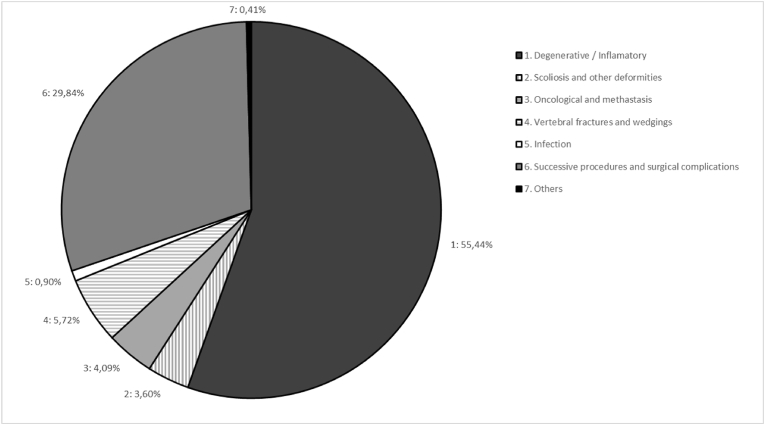 Figure 1
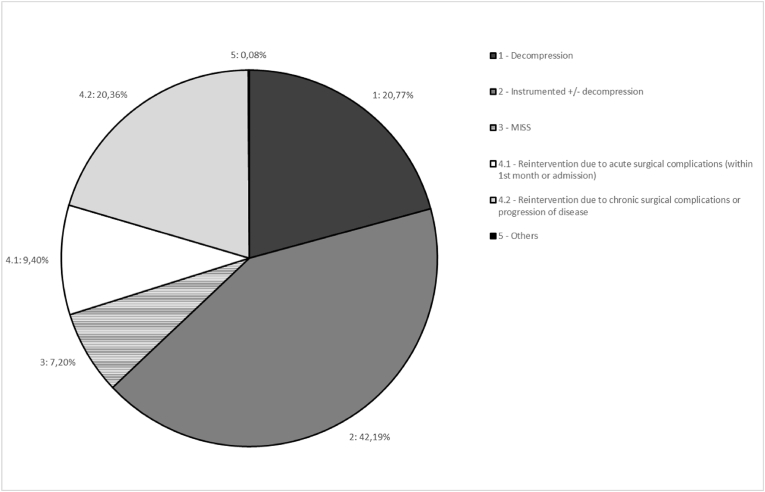 Figure 2
Peer Reviews
No public reviews on file for this paper yet. If you reviewed it on a platform where reviews are public (OpenReview, ICLR, NeurIPS, ICML), you can paste yours below so the community can read it here.
Videos
No videos yet. Explain this paper in a talk, walkthrough, or lecture? Add one.
Taxonomy
TopicsBlood transfusion and management · Proteoglycans and glycosaminoglycans research · Inflammatory Biomarkers in Disease Prognosis