Prospective Multicenter Propensity Score-matched Comparison of Ultrasound-guided Versus Endoscopic Carpal Tunnel Release
Victor M. Marwin, Johnny T. Nelson, James F. Watt, James R. Verheyden, Paul E. Perry, Lance G. Warhold, David J. Carl, M.J. Palmer, Steven R. Niedermeier, Larry E. Miller, Jenna M. Godfrey

TL;DR
This study compares two methods for treating carpal tunnel syndrome and finds that ultrasound-guided surgery offers better patient satisfaction and less opioid use, though it takes longer.
Contribution
A prospective, multicenter, propensity score-matched comparison of UGCTR and ECTR in real-world clinical settings.
Findings
UGCTR was associated with higher overall and wound satisfaction and lower opioid use compared to ECTR.
ECTR had a shorter procedure time but required more frequent suture closure and longer incisions.
Both UGCTR and ECTR showed significant clinical improvement at 3 months with no serious adverse events.
Abstract
To compare 3-month clinical outcomes of patients treated with ultrasound-guided carpal tunnel release (UGCTR) or endoscopic carpal tunnel release (ECTR) in routine clinical practice. This prospective multicenter observational study enrolled patients with carpal tunnel syndrome who were treated with UGCTR or ECTR by experienced surgeons. Outcomes included Boston Carpal Tunnel Questionnaire Symptom Severity Scale and Functional Status Scale, pain severity (0–10 scale), opioid use, health-related quality of life, overall satisfaction, wound satisfaction, and adverse events through 3 months. Propensity score matching was performed to balance patient characteristics between groups. Among 372 matched patients (186 per group), UGCTR was more commonly performed under wide-awake local anesthesia with no tourniquet (85.5% vs 30.1%), had a shorter incision length (5 vs 12 mm), and required less…
Genes, proteins, chemicals, diseases, species, mutations and cell lines named across the full text — each resolved to its canonical identifier and authoritative record.
Click any figure to enlarge with its caption.
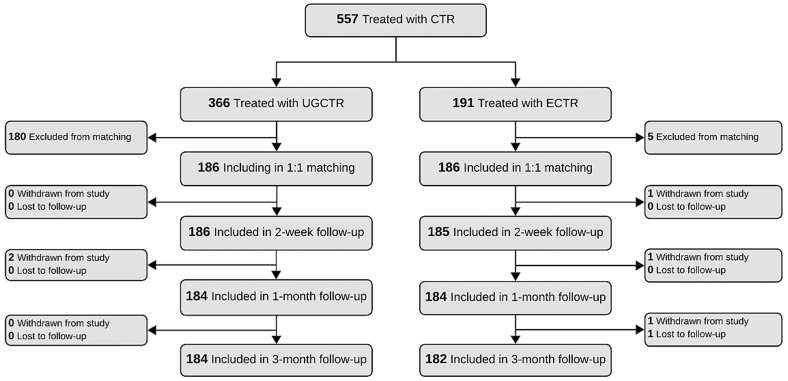 Figure 1
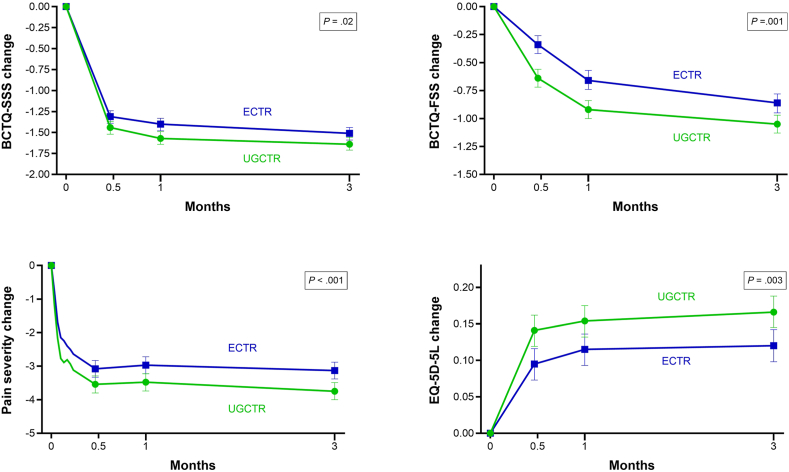 Figure 2
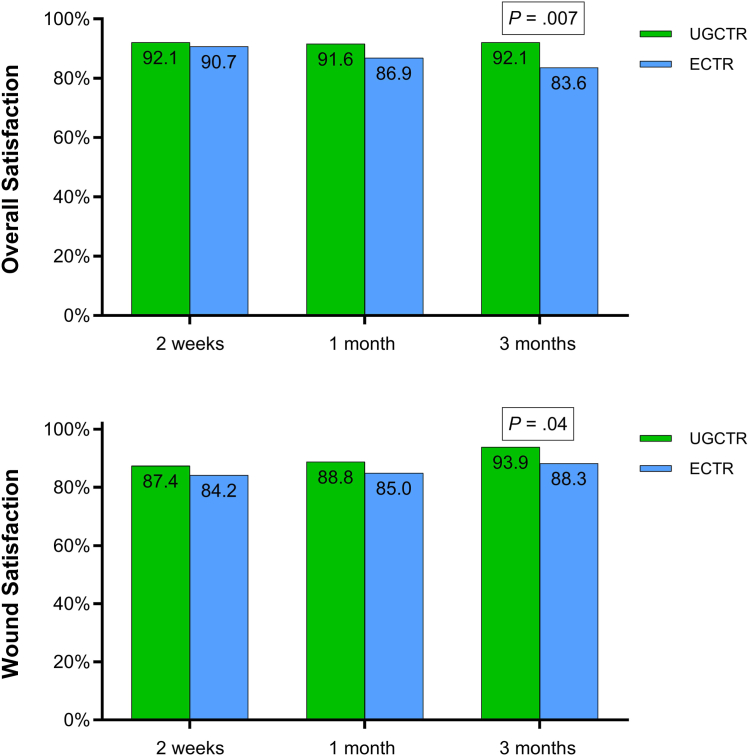 Figure 3
Peer Reviews
No public reviews on file for this paper yet. If you reviewed it on a platform where reviews are public (OpenReview, ICLR, NeurIPS, ICML), you can paste yours below so the community can read it here.
Videos
No videos yet. Explain this paper in a talk, walkthrough, or lecture? Add one.
Taxonomy
TopicsPeripheral Nerve Disorders · Orthopedic Surgery and Rehabilitation · Diagnosis and Treatment of Venous Diseases