Erector spinae plane block versus thoracic paravertebral block in pediatric patients undergoing percutaneous nephrolithotomy: a prospective randomized clinical trial
Fatma Nabil, Ahmed M. Mandour, Amr M. Abdelgawad, Deiaaeldin M. Tamer, Ahmed A. Shahat, Mohamed Anwar, Hany M. Osman

TL;DR
This study compared two anesthesia techniques in children undergoing kidney stone surgery and found similar pain relief but faster block placement with one method.
Contribution
The study provides a direct comparison of ESPB and thoracic PVB in pediatric PCNL surgery, focusing on pain management and procedural efficiency.
Findings
ESPB and thoracic PVB showed similar time to first rescue analgesia and analgesic consumption.
ESPB placement was significantly faster than thoracic PVB.
Intraoperative hemodynamics and sevoflurane use were comparable between groups.
Abstract
Percutaneous Nephrolithotomy (PCNL) is a well-established surgical procedure for removal of large, multiple, and complex renal calculi in children. Combining loco-regional techniques with general anesthesia has gained increasing popularity in pediatric anesthesia. The objective of this trial was to evaluate the efficacy of Erector Spinae Plane Block (ESPB) versus thoracic Paravertebral Block (PVB) in pediatric patients undergoing PCNL procedure. Fifty-six children, aged 2‒7 years, who underwent PCNL procedure under general anesthesia were randomly assigned to receive either ESPB (n = 28) or thoracic PVB (n = 28) with the same anesthetic mixture of 0.3 mL.kg-1 bupivacaine 0.25% in epinephrine 1:100000. The primary outcome was time to first rescue analgesia (nalbuphine). The time to first rescue analgesia was 15.98 ± 10.17 hours (95% CI: 12.14–19.82) in the ESPB group versus 18.18 ±…
Genes, proteins, chemicals, diseases, species, mutations and cell lines named across the full text — each resolved to its canonical identifier and authoritative record.
Click any figure to enlarge with its caption.
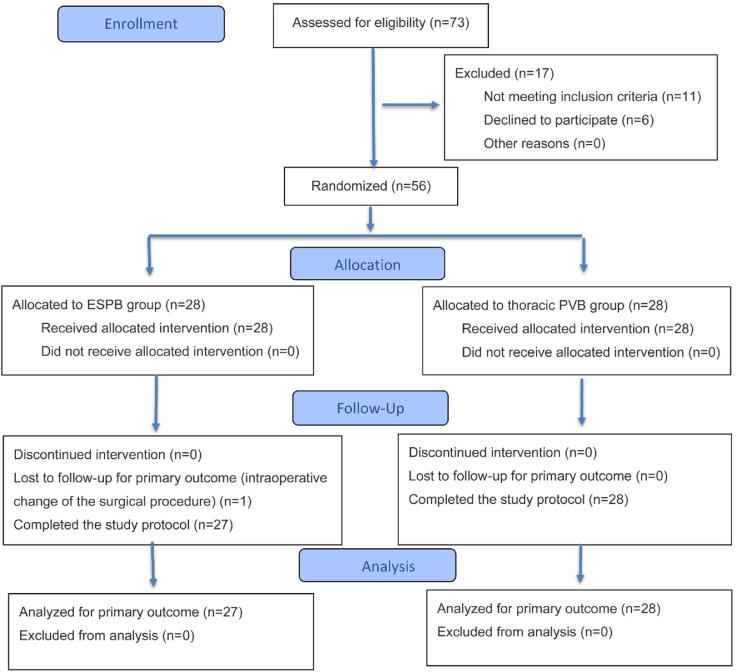 Figure 1
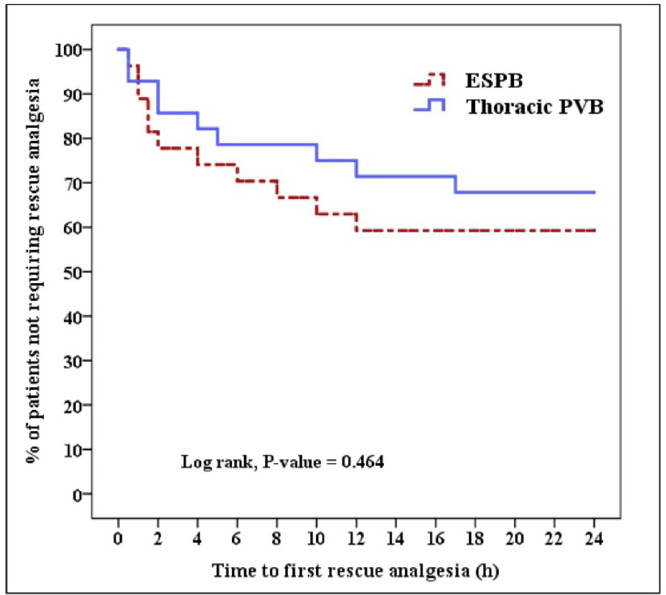 Figure 2
Peer Reviews
No public reviews on file for this paper yet. If you reviewed it on a platform where reviews are public (OpenReview, ICLR, NeurIPS, ICML), you can paste yours below so the community can read it here.
Videos
No videos yet. Explain this paper in a talk, walkthrough, or lecture? Add one.
Taxonomy
TopicsAnesthesia and Pain Management · Kidney Stones and Urolithiasis Treatments · Anesthesia and Sedative Agents