Minimally invasive cervical spine stabilization: A multicenter study of completely percutaneous pedicle screw-rod instrumentation
Jan-Helge Klingler, Lars Wessels, Christoph Scholz, Tobias Philip Schmidt, Ulf Bertram, Marc Hohenhaus, Ulrich Hubbe, Claudius Jelgersma, Nils Hecht, Ralf Watzlawick, Florian Volz, Jürgen Beck, Julia Onken, Ralph Kothe, Peter Vajkoczy, Hans Clusmann, Christian Blume

TL;DR
A new minimally invasive technique for cervical spine surgery achieves high accuracy and safety using 3D navigation, with promising results across multiple centers.
Contribution
First multicenter study demonstrating the feasibility and safety of fully percutaneous cervical pedicle screw-rod fixation with 3D navigation.
Findings
89.7% of implanted screws achieved favorable positioning with 3D navigation.
No permanent neurological deficits or wound healing complications were observed.
Mid-cervical levels (C3–C6) showed lower accuracy, highlighting a need for increased caution.
Abstract
Minimally invasive posterior cervical fixation remains technically challenging due to narrow pedicle dimensions and proximity to neurovascular structures. This multicenter study evaluates the accuracy and safety of a dedicated minimally invasive cervical pedicle screw-rod system with 3D navigation guidance. Can minimally invasive cervical pedicle screw placement achieve accuracy rates comparable to open techniques while maintaining patient safety? Retrospective multicenter analysis of 46 patients (60.7 ± 17.4 years) undergoing percutaneous cervical pedicle screw-rod instrumentation at three German university centers (01/2022–04/2024). Indications included degenerative disease (n = 21), tumors (n = 13), trauma (n = 8), and inflammation (n = 4). Primary outcome was neurological status (Frankel classification); secondary outcomes included screw accuracy (Bredow classification), surgical…
Genes, proteins, chemicals, diseases, species, mutations and cell lines named across the full text — each resolved to its canonical identifier and authoritative record.
Click any figure to enlarge with its caption.
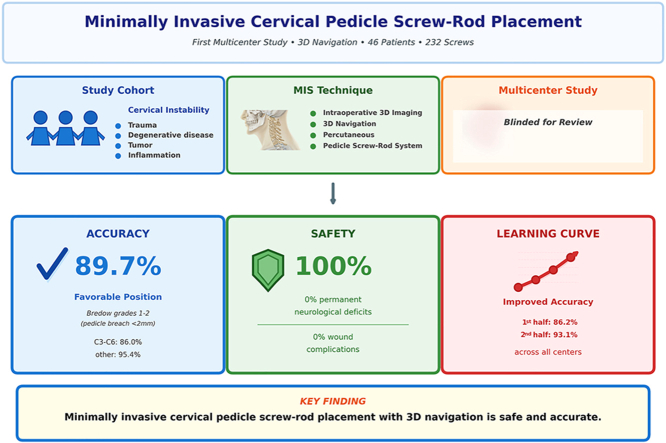 Figure 1
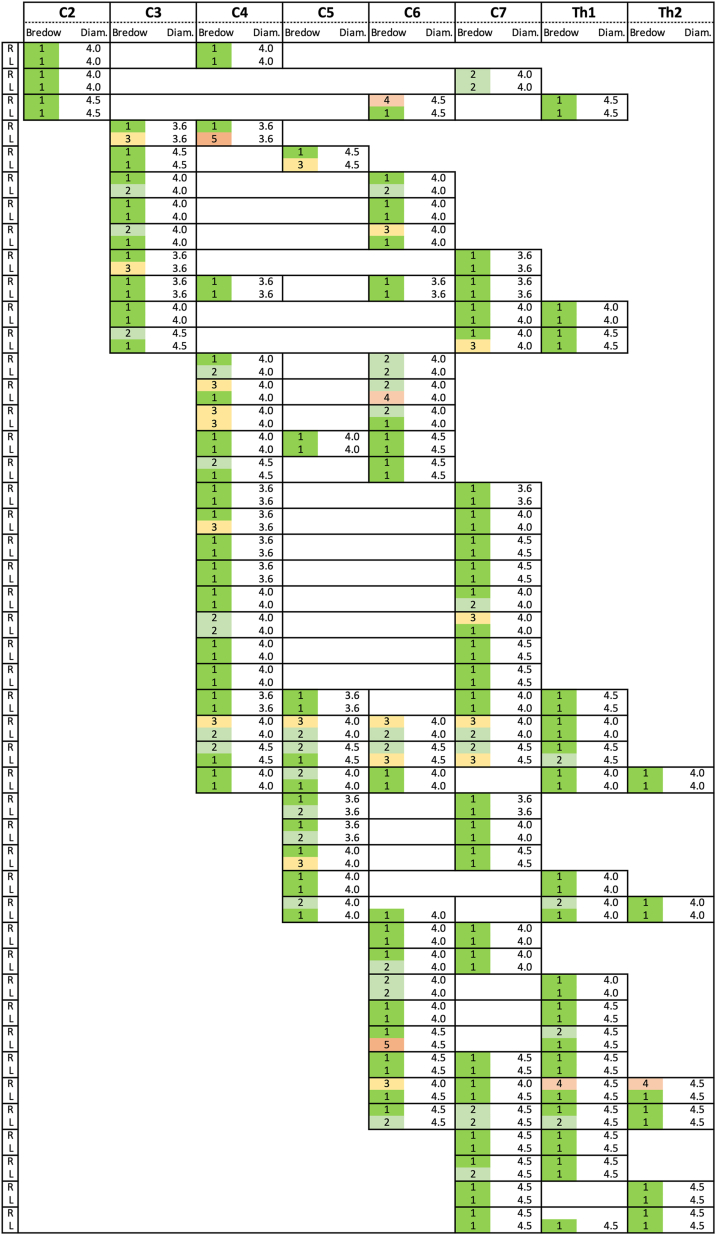 Figure 2
 Figure 3
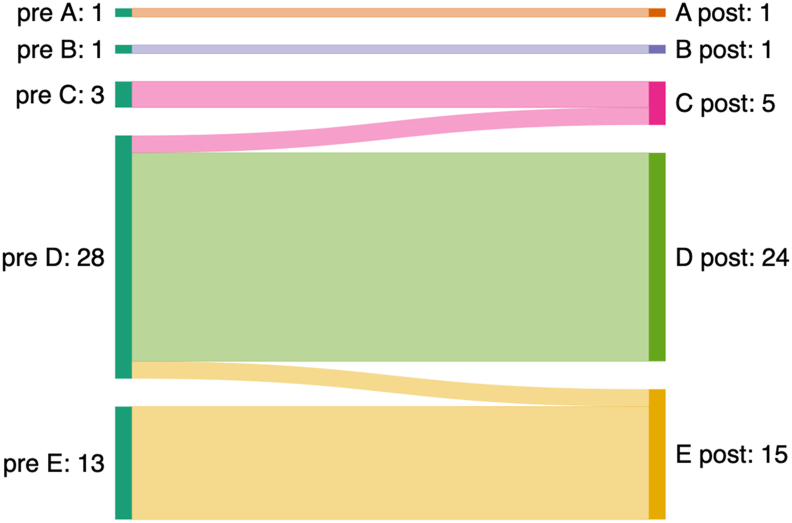 Figure 4
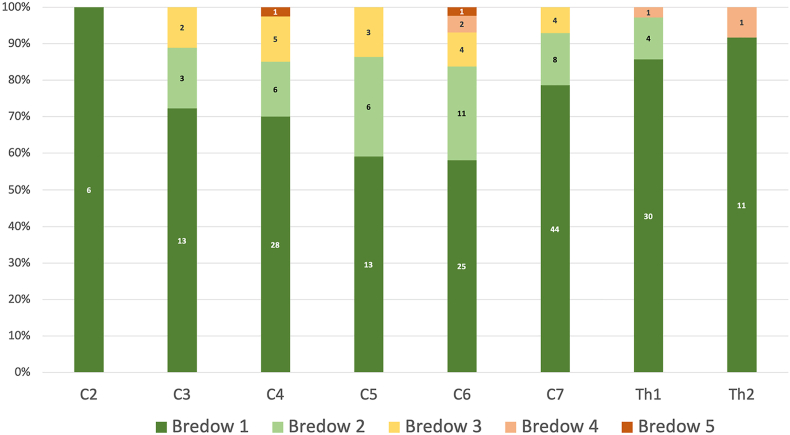 Figure 5
 Figure 6
Peer Reviews
No public reviews on file for this paper yet. If you reviewed it on a platform where reviews are public (OpenReview, ICLR, NeurIPS, ICML), you can paste yours below so the community can read it here.
Videos
No videos yet. Explain this paper in a talk, walkthrough, or lecture? Add one.
Taxonomy
TopicsSpinal Fractures and Fixation Techniques · Cervical and Thoracic Myelopathy · Management of metastatic bone disease