Epidemiological Trends and Seasonal Patterns in Childhood Type 1 Diabetes: Insights From 2001 to 2024 in Lithuania
Ingrida Stankute, Dale Marciulionyte, Rytas Ostrauskas, Aiste Cemerkaite, Gryte Leonaviciute, Robertas Kemezys, Sigita Vainiene, Kastytis Smigelskas, Rasa Verkauskiene

TL;DR
This study shows a significant rise in childhood type 1 diabetes in Lithuania over 24 years, with seasonal patterns and possible links to environmental and viral factors.
Contribution
The study provides new insights into the rapid increase and seasonal trends of childhood T1D in a genetically homogeneous population.
Findings
The incidence of T1D in Lithuanian children under 15 rose from 10.8 to 36.4 per 100,000 over 24 years.
New T1D cases peaked during autumn and winter months, possibly linked to reduced sunlight and viral infections.
The highest increase in T1D incidence was observed in children aged 10–14 years.
Abstract
Type 1 diabetes (T1D) incidence is rising globally, with significant regional variation. Data from highly homogeneous populations, such as Lithuanian, may contribute to a better understanding of contributing T1D factors. This study examines 24‐year trends in childhood T1D incidence and seasonal patterns in Lithuania. The annual incidence rates (IRs) were computed utilizing established methodologies per 100,000 children <15 years. The study included 2369 (1181 boys) patients with T1D. During 2001–2024, the mean IR was 21.4 per 100,000 < 15 years (95% CI: 20.89, 27.28). The incidence rose from 10.8 to 36.4 per 100,000 children under 15 years of age, with notable peaks observed in 2021 and 2022, temporally aligning with the highest COVID‐19 infection waves. Subgroup analysis showed the most rapid increase in young teenagers (10–14 years). Most new cases (63.5%) were diagnosed from…
Genes, proteins, chemicals, diseases, species, mutations and cell lines named across the full text — each resolved to its canonical identifier and authoritative record.
Click any figure to enlarge with its caption.
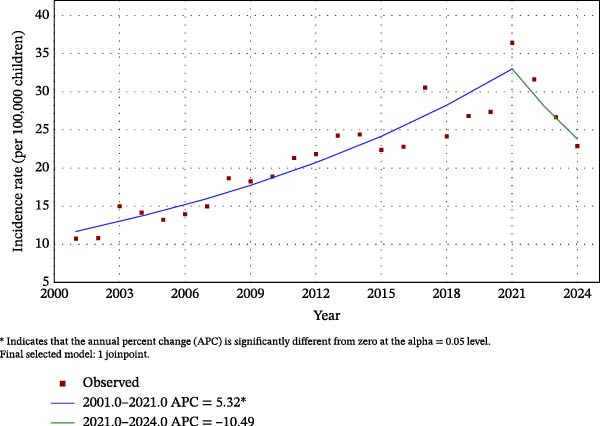 Figure 1
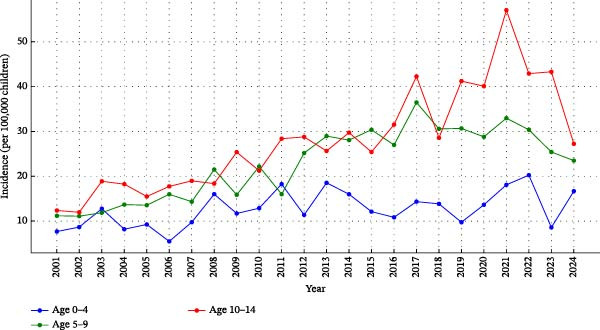 Figure 2
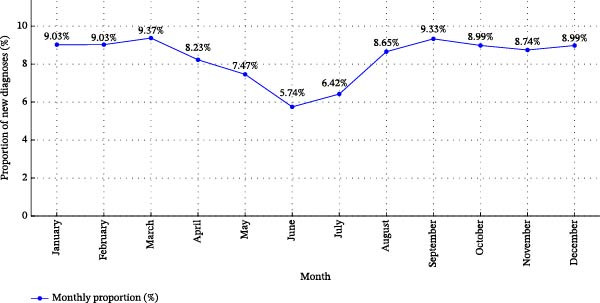 Figure 3
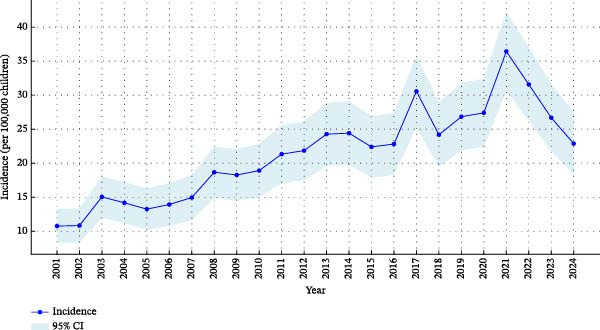 Figure 4
Peer Reviews
No public reviews on file for this paper yet. If you reviewed it on a platform where reviews are public (OpenReview, ICLR, NeurIPS, ICML), you can paste yours below so the community can read it here.
Videos
No videos yet. Explain this paper in a talk, walkthrough, or lecture? Add one.
Taxonomy
TopicsDiabetes and associated disorders · Diabetes Management and Research · Vitamin D Research Studies