Identifying recurrent stone formers with machine learning: A single‐centre observational study
Pedro Amado, Daniel G. Fuster, Matteo Bargagli, Dominik Obrist, Fiona Burkhard, Beat Roth, Francesco Clavica, Shaokai Zheng

TL;DR
This study uses machine learning to identify patients likely to experience recurrent kidney stones, aiming to improve early detection and treatment strategies.
Contribution
The novel contribution is applying machine learning to routinely collected clinical data to predict recurrent kidney stone formers more accurately than prior methods.
Findings
Machine learning models achieved a mean AUC of 0.71 in predicting recurrent kidney stone events.
Estimated glomerular filtration rate, age at first stone episode, oxalate, and pH were key predictive features.
Median imputation outperformed other data imputation techniques in model performance.
Abstract
Kidney stones affect 12% of the population over their lifetime. Recurrent kidney stones lead to repeated interventions and excessive healthcare costs. Despite progress in imaging and metabolic evaluations, models to accurately identify patients at high risk are missing. In this study, we investigate whether machine learning methods can facilitate early identification of recurrent kidney stone formers. This observational study included data from the single‐centric Bern Kidney Stone Registry. Each participant had at least one stone episode. Different data imputation techniques, such as kernel density estimation (KDE) imputation, median imputation and k‐nearest neighbour (KNN) imputation, were evaluated in a logistic regression model. Feature selection with recursive feature elimination was applied. A fivefold cross‐validation was conducted using an 80/20 split. The classification…
Genes, proteins, chemicals, diseases, species, mutations and cell lines named across the full text — each resolved to its canonical identifier and authoritative record.
Click any figure to enlarge with its caption.
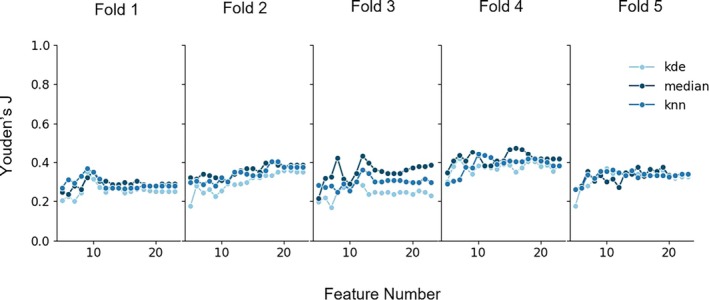 Figure 1
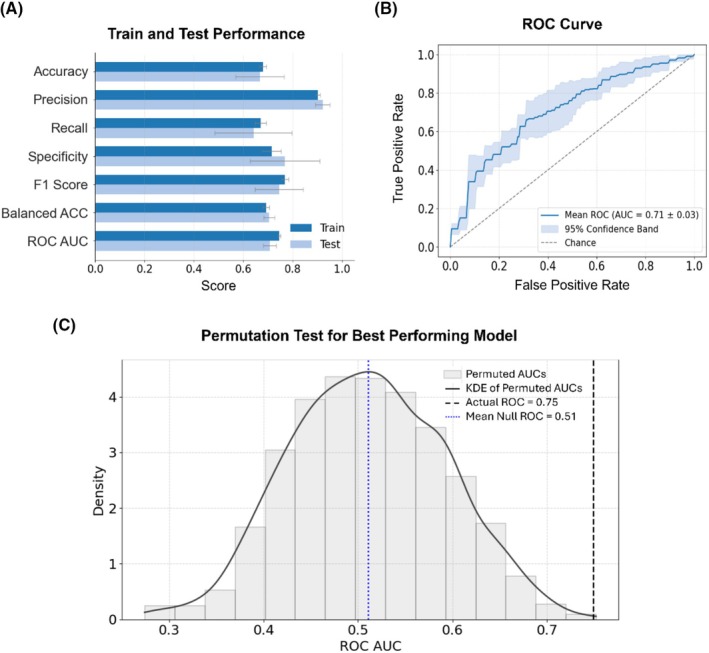 Figure 2
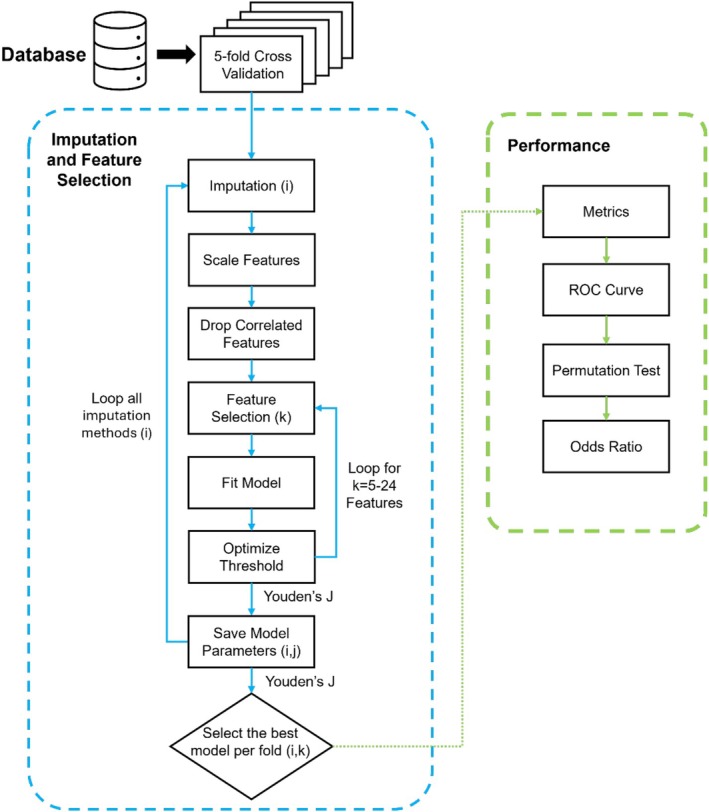 Figure 3
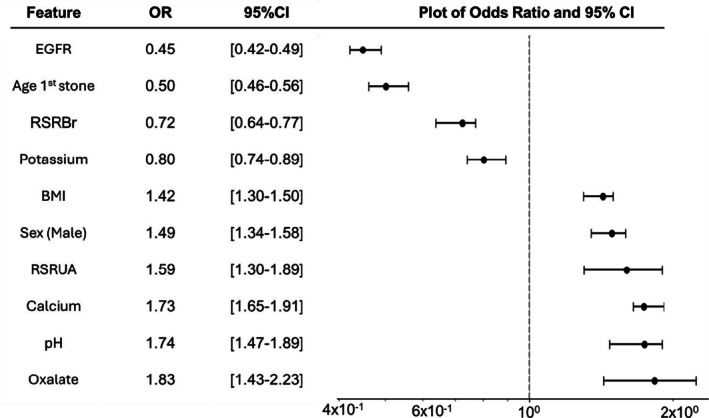 Figure 4
Peer Reviews
No public reviews on file for this paper yet. If you reviewed it on a platform where reviews are public (OpenReview, ICLR, NeurIPS, ICML), you can paste yours below so the community can read it here.
Videos
No videos yet. Explain this paper in a talk, walkthrough, or lecture? Add one.
Taxonomy
TopicsKidney Stones and Urolithiasis Treatments · Dialysis and Renal Disease Management · Pediatric Urology and Nephrology Studies