Biomechanical Assessment of Syndesmotic and Deltoid Ligament Strain in Pronation-External Rotation Type Ankle Injuries by Musculoskeletal Computer Simulation
Ola Saatvedt, Mohammad Amin Shayestehpour, Øystein Bjelland, Martin G. Gregersen, Håvard Furunes, Marius Molund

TL;DR
This study uses computer simulation to show that some ankle ligaments may not be fully damaged in certain ankle injuries, challenging traditional injury models.
Contribution
The study introduces a novel musculoskeletal computer model to simulate ankle injury mechanics and challenges traditional injury cascade theories.
Findings
Posterior inferior tibiofibular and deep posterior tibiotalar ligaments show minimal strain in simulated PER injuries.
Computer simulation reveals that not all ligaments are equally affected in PER ankle injuries.
The model suggests some ligaments may remain intact, challenging traditional views of ligament disruption.
Abstract
Suprasyndesmotic ankle fractures, commonly resulting from pronation-external rotation (PER) mechanisms, are traditionally associated with disruption of the syndesmotic ligaments, a medial malleolus fracture or complete deltoid ligament rupture. However, recent imaging and clinical studies suggest that key stabilizing ligaments may remain intact in certain cases, potentially affecting talocrural stability. This pilot study aims to evaluate modelled ligament tension patterns in PER injuries using a validated musculoskeletal computer simulation model. A musculoskeletal model of the ankle joint was developed using the AnyBody Modeling System (version 7.4), incorporating detailed anatomical structures and ligament biomechanics. The PER mechanism was simulated by applying external rotation (0-50 degrees) with the foot fixed, and ligament tensional forces was recorded for the deltoid and…
Genes, proteins, chemicals, diseases, species, mutations and cell lines named across the full text — each resolved to its canonical identifier and authoritative record.
Click any figure to enlarge with its caption.
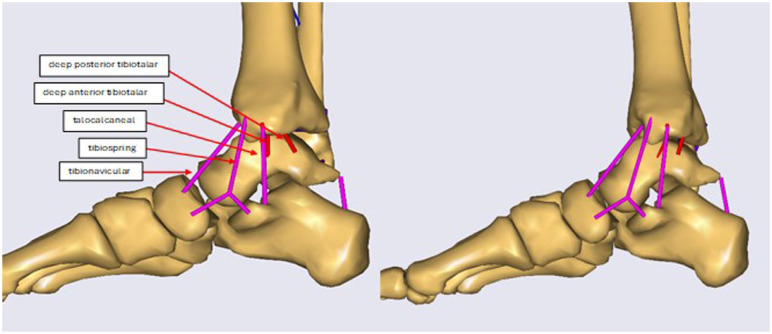 Figure 1
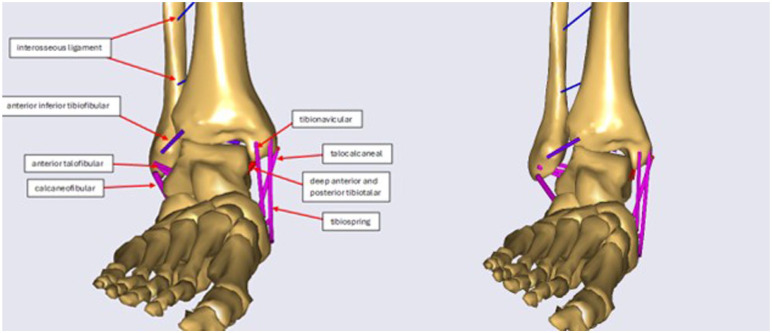 Figure 2
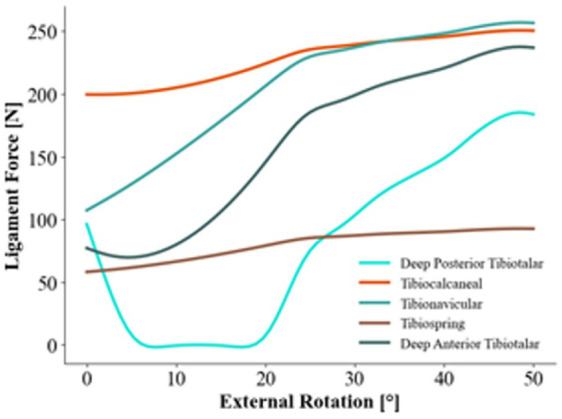 Figure 3
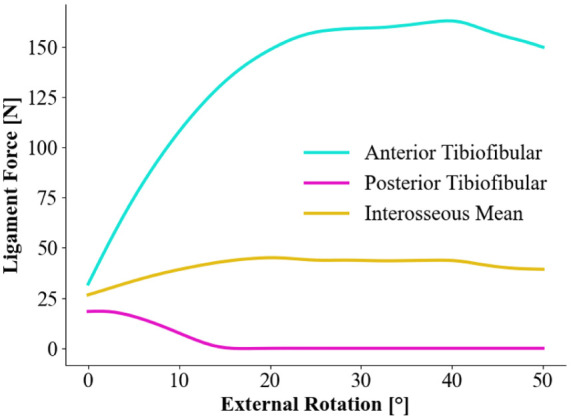 Figure 4
 Figure 5
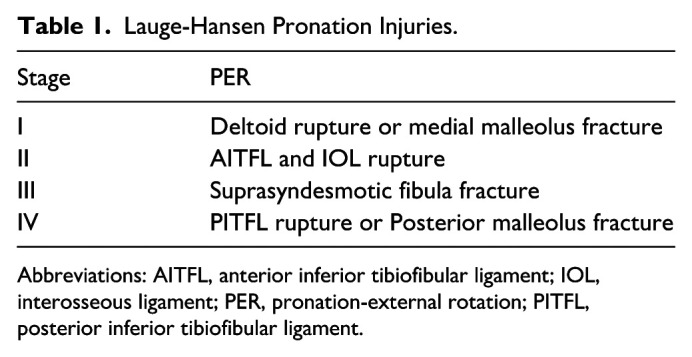 Figure 6
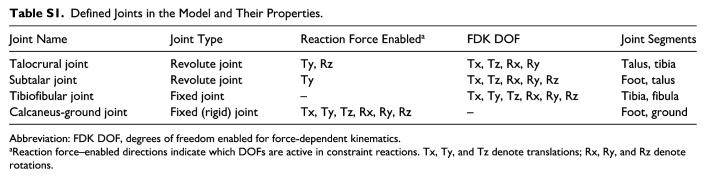 Figure 7
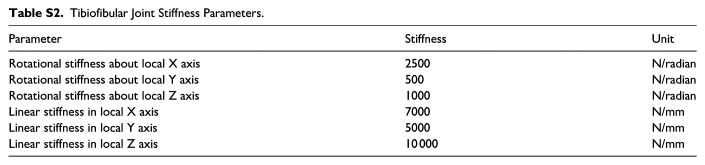 Figure 8
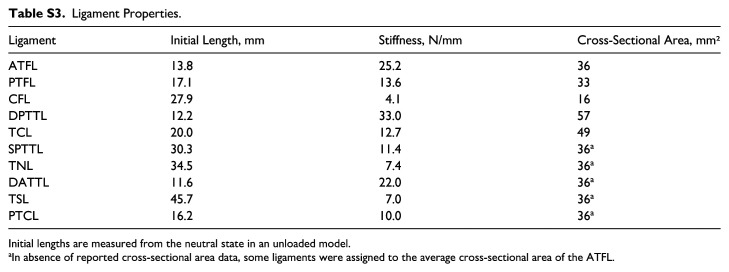 Figure 9
 Figure 10
Peer Reviews
No public reviews on file for this paper yet. If you reviewed it on a platform where reviews are public (OpenReview, ICLR, NeurIPS, ICML), you can paste yours below so the community can read it here.
Videos
No videos yet. Explain this paper in a talk, walkthrough, or lecture? Add one.
Taxonomy
TopicsFoot and Ankle Surgery · Tendon Structure and Treatment · Lower Extremity Biomechanics and Pathologies