Outcomes of Internal, External, and Hybrid Fixation in Hindfoot Charcot Neuroarthropathy: A Descriptive Systematic Review and Single-Arm Meta-analysis of Observational Studies
Karthik Chinnaswamy, Ahmed M. AlSaggaf, Ephraim Khimbele, Abdul-Hadi Kafagi, Upamanyu Nath, Justin Mooteeram, Anand Pillai

TL;DR
This study reviews outcomes of different fixation methods for hindfoot Charcot neuroarthropathy, finding that internal and hybrid fixation lead to better fusion rates but more hardware issues compared to external fixation.
Contribution
The study provides a systematic review and meta-analysis of fixation outcomes in hindfoot Charcot neuroarthropathy, highlighting differences in amputation, fusion, and complication rates.
Findings
The overall amputation rate across all fixation methods was 4.76%, with external fixation showing higher amputation rates than internal and hybrid fixation.
Internal and hybrid fixation achieved higher fusion rates (84.9% and 85.8%) compared to external fixation (68.2%).
External fixation was associated with more pin tract problems, while internal fixation had higher hardware failure and revision rates.
Abstract
Charcot neuroarthropathy (CN) of the hindfoot often requires internal fixation (IF), external fixation (EF), or hybrid constructs. This descriptive systematic review and single-arm meta-analysis summarizes outcomes of these strategies, focusing on amputation, fusion, ambulation, and complications. Following PRISMA guidelines, 30 studies with 957 patients undergoing hindfoot or ankle reconstruction were included. A single-arm meta-analysis assessed amputation and fusion rates; qualitative analysis examined ambulation, infection, ulceration, hardware failure, and revision. Heterogeneity was quantified with I² and τ². Under random effects models, the overall amputation rate across all fixation methods was 4.76% (95% CI: 1.79%-8.62%), and the pooled fusion rate was 80.8% (95% CI: 73.6%-87.1%). By fixation type, EF cohorts showed numerically higher amputation rates (8.11%; 95% CI:…
Genes, proteins, chemicals, diseases, species, mutations and cell lines named across the full text — each resolved to its canonical identifier and authoritative record.
Click any figure to enlarge with its caption.
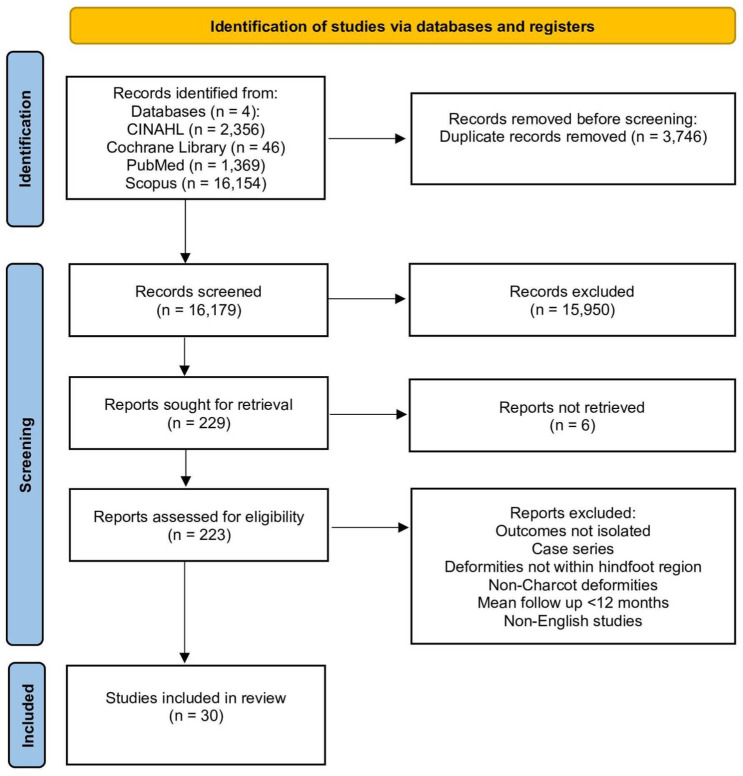 Figure 1
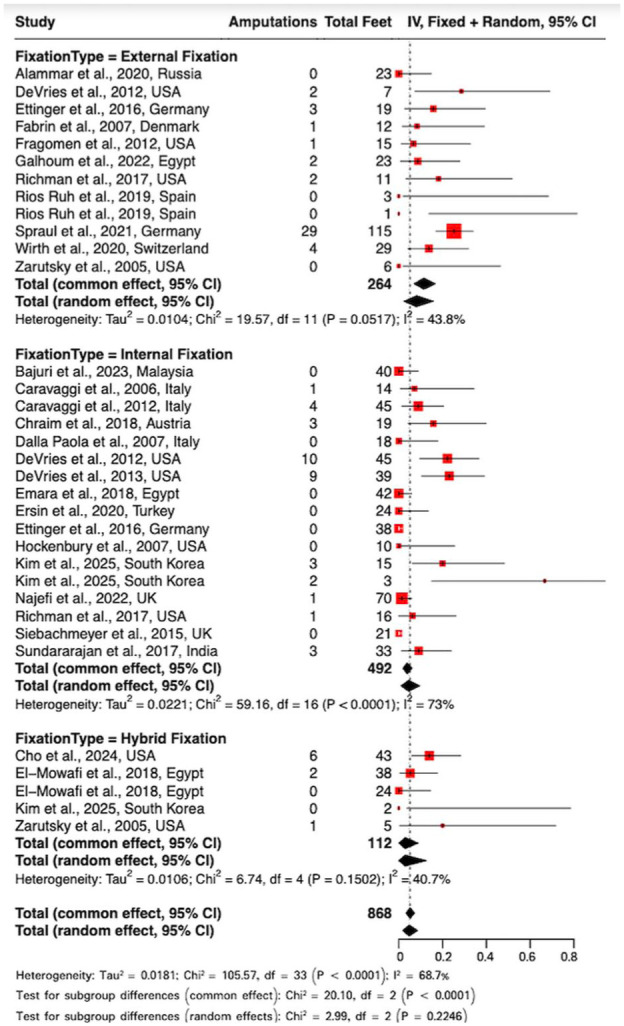 Figure 2
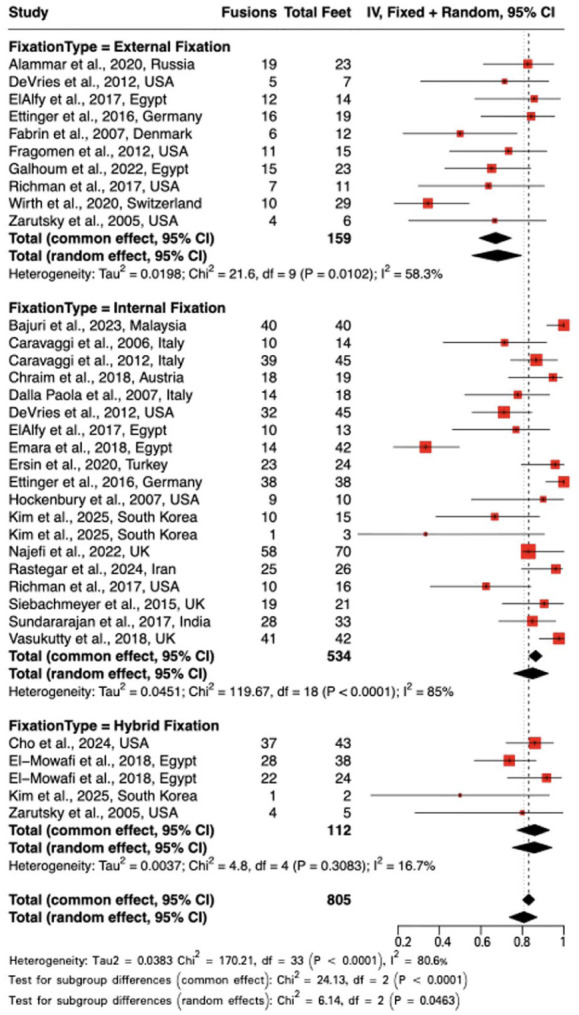 Figure 3
 Figure 4
 Figure 5
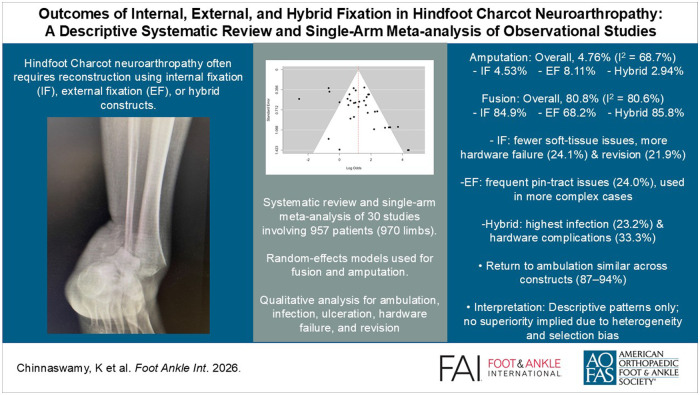 Figure 6
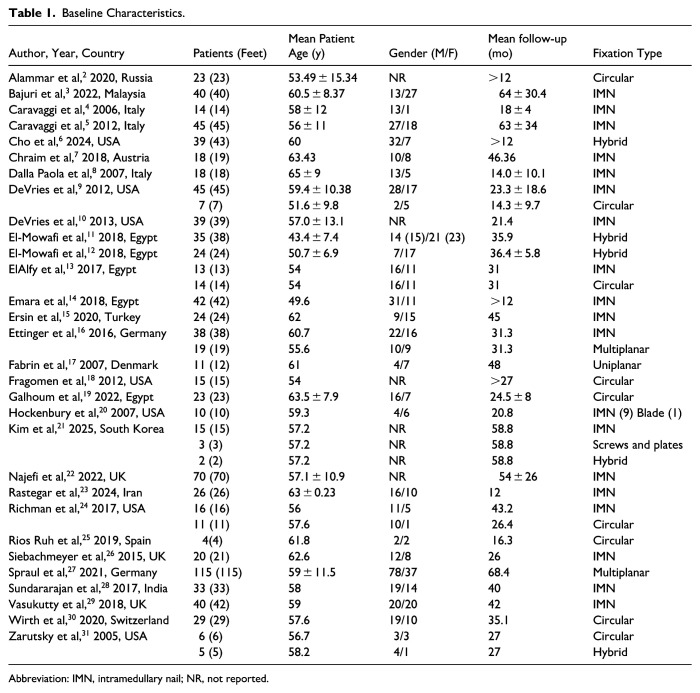 Figure 7
 Figure 8
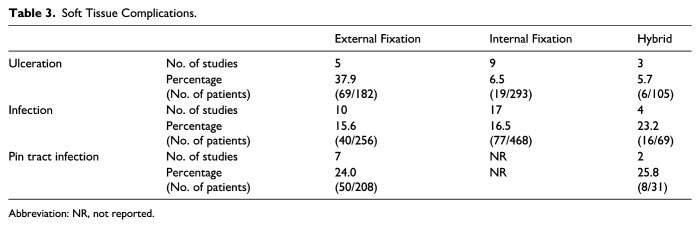 Figure 9
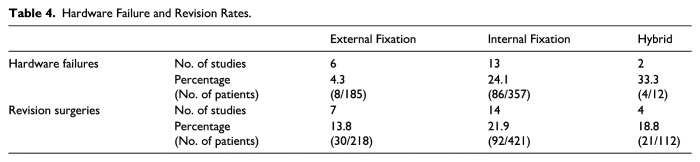 Figure 10
Peer Reviews
No public reviews on file for this paper yet. If you reviewed it on a platform where reviews are public (OpenReview, ICLR, NeurIPS, ICML), you can paste yours below so the community can read it here.
Videos
No videos yet. Explain this paper in a talk, walkthrough, or lecture? Add one.
Taxonomy
TopicsDiabetic Foot Ulcer Assessment and Management · Foot and Ankle Surgery · Peripheral Artery Disease Management