Association of the Triglyceride–Glucose Index With Gallstone Disease: A Systematic Review and Meta‐Analysis of Observational Studies
Nirupma Gupta, Sushma Narsing Katkuri, Rekha Arcot, Sachin Kumar, Sushma Verma, Sorabh Lakhanpal, Sanjay Kumar, Jeffrin Reneus Paul, Prakasini Satapathy, Edward Mawejje

TL;DR
This study finds that higher triglyceride-glucose index values are linked to a greater risk of gallstone disease, suggesting it could be a useful and low-cost screening tool.
Contribution
The study provides the first meta-analysis linking the TyG index, a marker of insulin resistance, to an increased risk of gallstone disease.
Findings
Each one-unit increase in the TyG index was associated with a 33.2% higher odds of gallstone disease.
Participants with gallstone disease had significantly higher TyG index values compared to those without.
The pooled prevalence of gallstone disease was 10.51%, with high heterogeneity across studies.
Abstract
Gallstone disease (GSD) is a common hepatobiliary condition closely associated with metabolic disturbances. The triglyceride–glucose index (TyG index), a widely used surrogate marker of insulin resistance, has gained attention as a potential indicator of gallstone risk. This systematic review and meta‐analysis aimed to synthesize observational evidence evaluating the association between TyG index and GSD in adults. Web of Science, Embase, and PubMed were searched from inception to December 2025 for relevant observational studies. Study quality was assessed using the Newcastle–Ottawa Scale (NOS). Adjusted odds ratios (aORs), standardized mean differences (SMDs), adjusted hazard ratios (aHRs), and prevalence estimates were pooled using a random‐effects model (REM). Sensitivity analyses, subgroup analyses, and assessment of publication bias were conducted. Nine studies including more…
Genes, proteins, chemicals, diseases, species, mutations and cell lines named across the full text — each resolved to its canonical identifier and authoritative record.
Click any figure to enlarge with its caption.
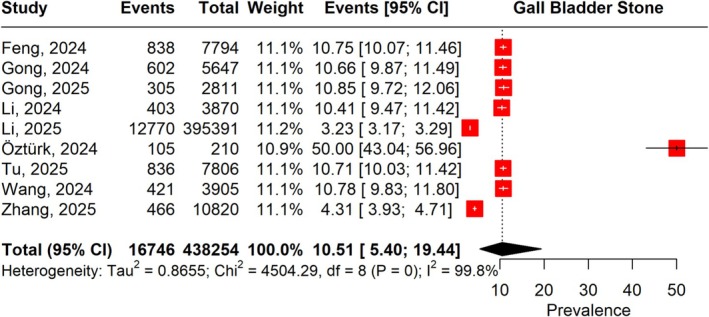 Figure 1
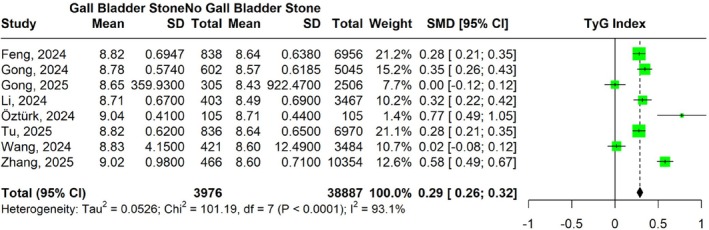 Figure 2
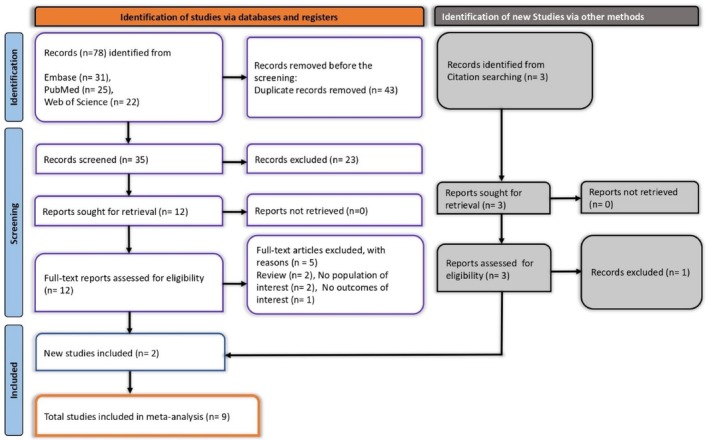 Figure 3
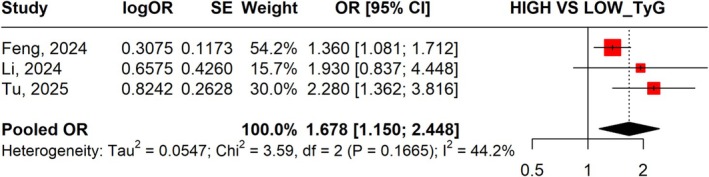 Figure 4
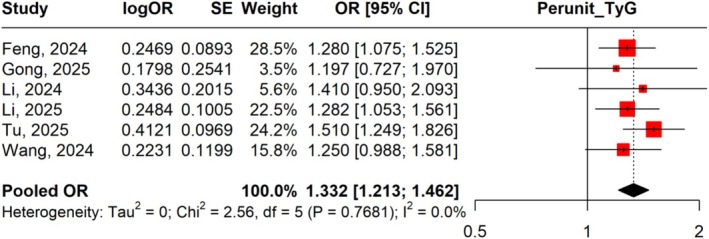 Figure 5
Peer Reviews
No public reviews on file for this paper yet. If you reviewed it on a platform where reviews are public (OpenReview, ICLR, NeurIPS, ICML), you can paste yours below so the community can read it here.
Videos
No videos yet. Explain this paper in a talk, walkthrough, or lecture? Add one.
Taxonomy
TopicsGallbladder and Bile Duct Disorders · Pancreatitis Pathology and Treatment · Pediatric Hepatobiliary Diseases and Treatments