Estimating species commonness and prevalence through unsupervised methods
Pasquale Bove, Andrea Bertini, Gianpaolo Coro

TL;DR
This paper introduces an unsupervised method to estimate how common species are in an area, improving ecological niche models using data from biodiversity databases.
Contribution
A novel, data-driven, unsupervised multi-species methodology for estimating species prevalence in ecological niche models.
Findings
A deep-learning model achieved the highest accuracy (~81–90%) in classifying species prevalence.
The methodology is scalable and reproducible, using clustering and statistical analysis for prevalence estimation.
The approach was validated in a case study of 161 species in the Massaciuccoli Lake basin.
Abstract
The prevalence of a species in a given area is crucial for estimating the environmental conditions associated with its subsistence within ecological niche models (ENMs). Prevalence is defined as the proportion of presences relative to the total number of sampled sites, reflecting prior expectation on species commonness or rarity. However, reliable estimation often faces challenges due to limited or biased occurrence data, particularly for rare or poorly monitored species. This work presents a data-driven, multi-species methodology to estimate species prevalence for use in ENMs. It leverages species occurrence records from the Global Biodiversity Information Facility and is entirely unsupervised. It utilises two clustering methods, one deep-learning model, and an ensemble model, plus statistical analysis to classify species commonness and transform classifications into prevalence…
Genes, proteins, chemicals, diseases, species, mutations and cell lines named across the full text — each resolved to its canonical identifier and authoritative record.
Click any figure to enlarge with its caption.
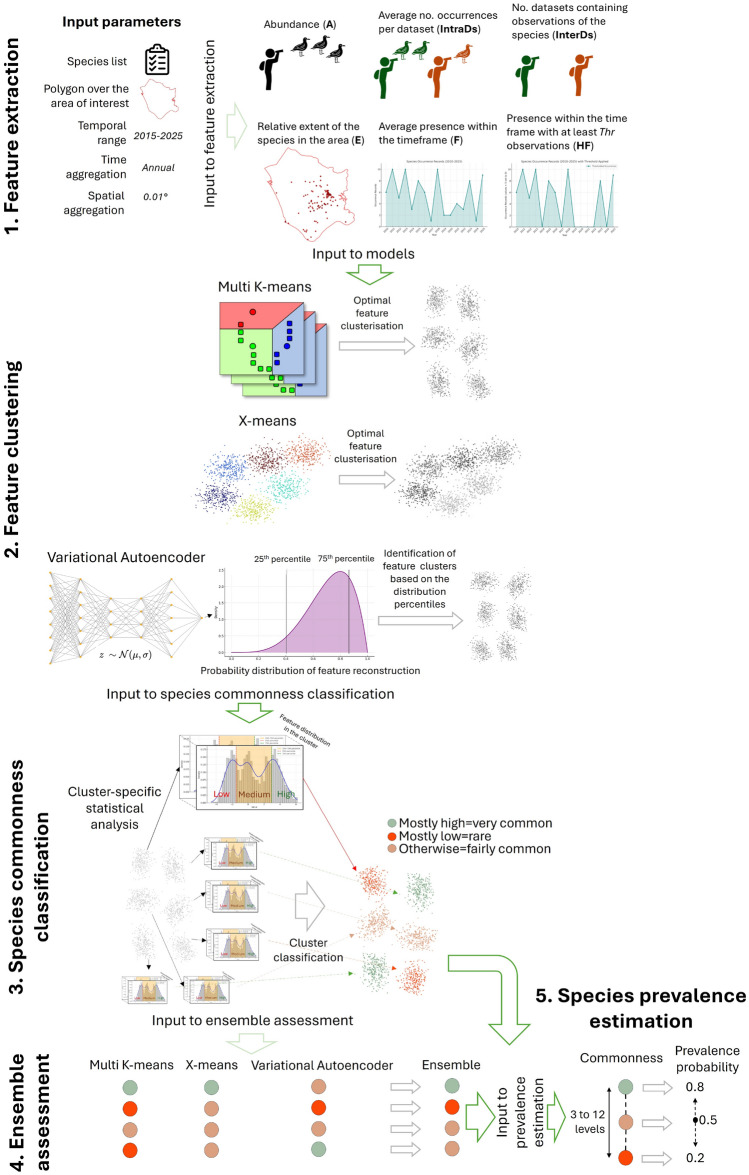 Figure 1
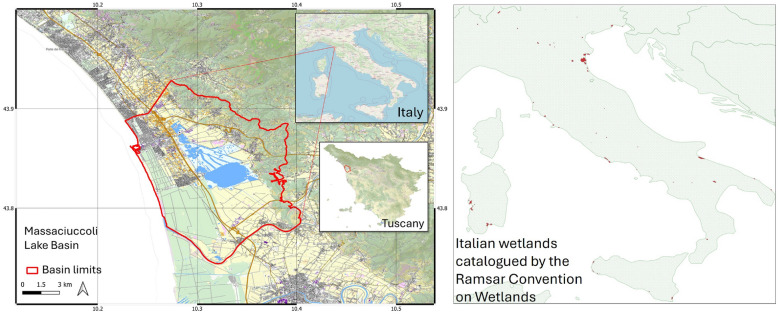 Figure 2
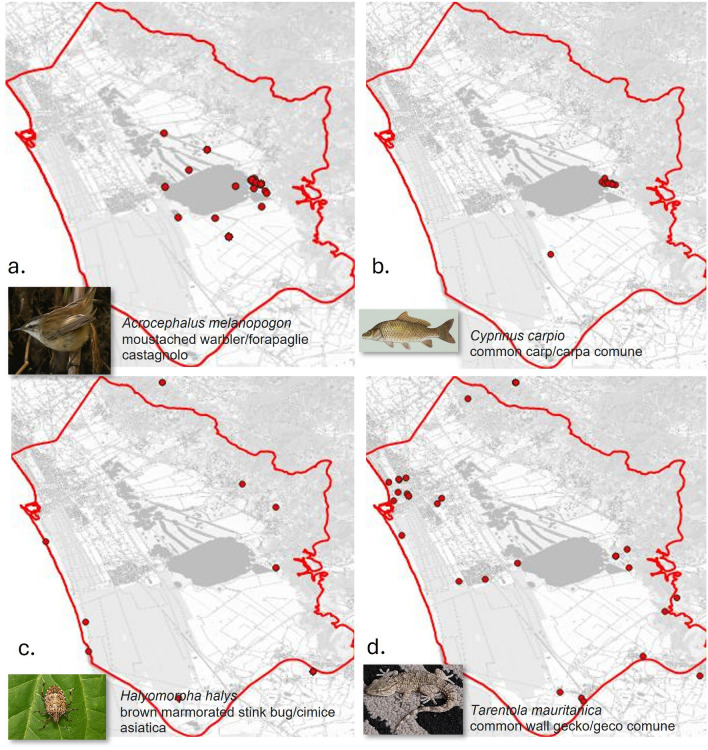 Figure 3
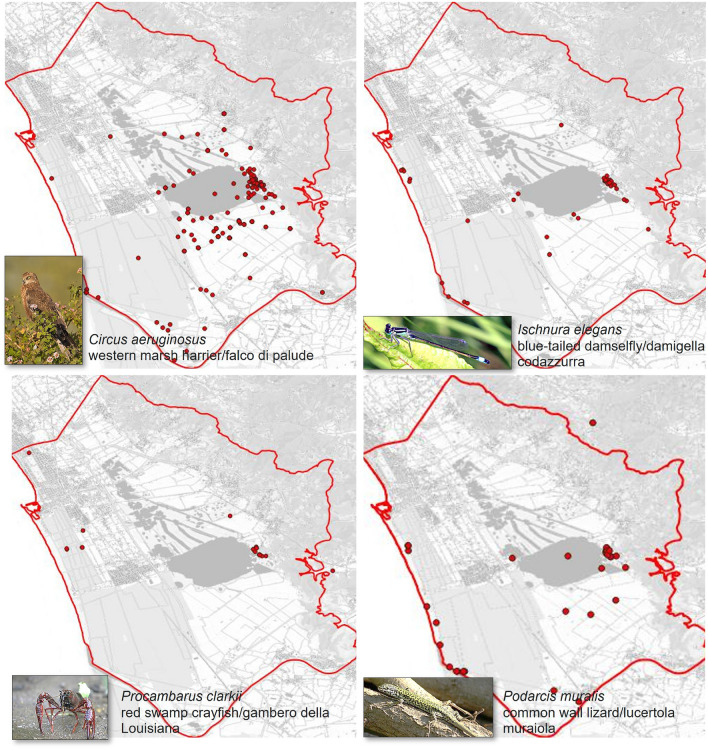 Figure 4
Peer Reviews
No public reviews on file for this paper yet. If you reviewed it on a platform where reviews are public (OpenReview, ICLR, NeurIPS, ICML), you can paste yours below so the community can read it here.
Videos
No videos yet. Explain this paper in a talk, walkthrough, or lecture? Add one.
Taxonomy
TopicsSpecies Distribution and Climate Change · Environmental DNA in Biodiversity Studies · Freshwater macroinvertebrate diversity and ecology