Increased and varied radiation during the Sun’s encounters with cold clouds in the last 10 million years
Merav Opher, Joe Giacalone, Abraham Loeb, Evan P. Economo, Alan Cummings, Jennifer Middleton, Catherine Zucker, Jesse A. Miller, Anna Nica, Maria Hatzaki

TL;DR
The Sun's encounters with cold clouds over the last 10 million years exposed Earth to intense and prolonged high-energy radiation, affecting climate and biodiversity.
Contribution
This study identifies and characterizes Heliospheric Energetic Particles (HEPs) during past solar system encounters with interstellar clouds.
Findings
Earth experienced prolonged exposure to high-energy protons during heliosphere shrinkage, much more intense than current solar events.
Galactic cosmic ray radiation during Earth's excursion outside the heliosphere was significantly stronger than today.
These radiation variations could have influenced Earth's climate and biodiversity over extended periods.
Abstract
Recent research raises the possibility that 2–3 and 6–7 million years ago, the Sun encountered massive clouds that shrank the heliosphere —the solar cocoon protecting our solar system— exposing Earth to its interstellar environment, in agreement with geological evidence from 60Fe and 244Pu isotopes. Here we show that during such encounters Earth was exposed to increased radiation in the form of high-energy particles. During periods of Earth’s immersion in the heliosphere, it received particle radiation that we name Heliospheric Energetic Particles (HEPs). The intensity of < 10 MeV protons was at least an order of magnitude more intense than today’s most extreme solar energetic particle (SEP) events. SEPs today last minutes to hours, but HEP exposure then lasted for extensive periods of several months, making it a prolonged external driver. During Earth’s excursion outside the…
Genes, proteins, chemicals, diseases, species, mutations and cell lines named across the full text — each resolved to its canonical identifier and authoritative record.
Click any figure to enlarge with its caption.
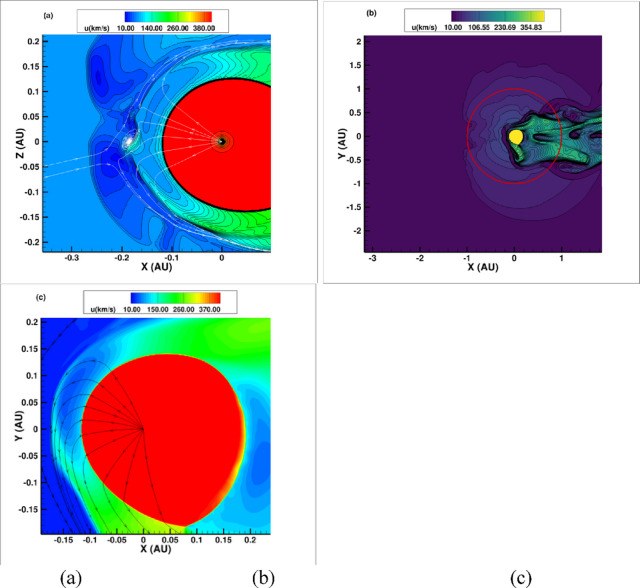 Figure 1
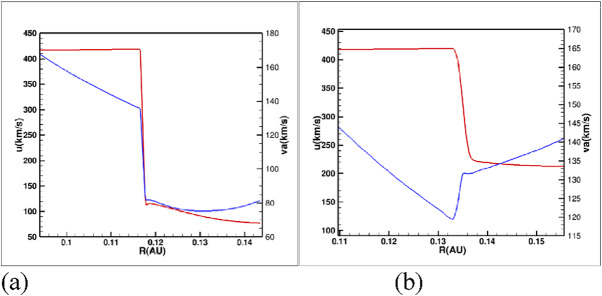 Figure 2
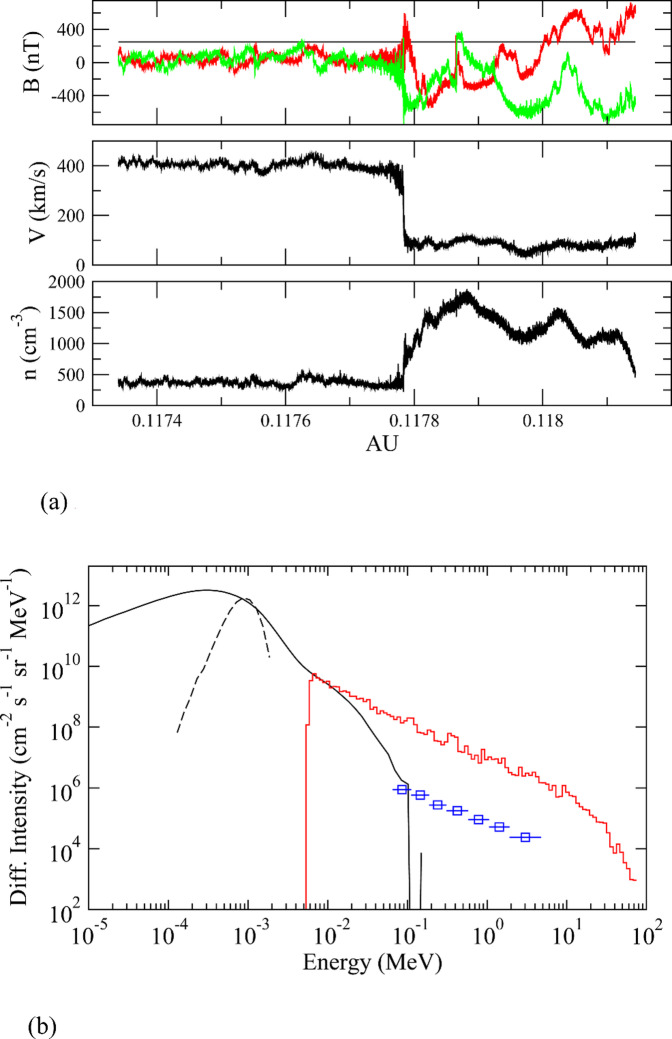 Figure 3
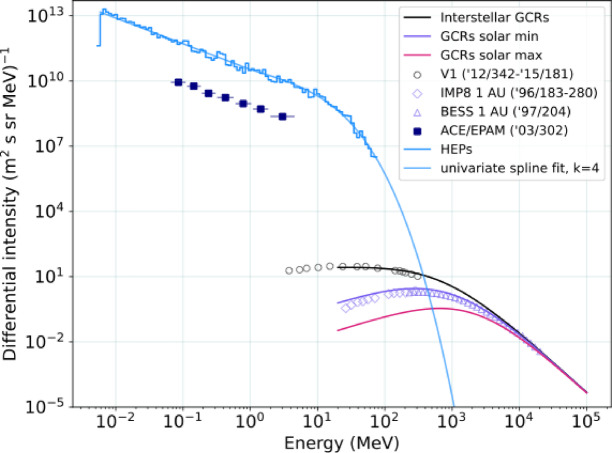 Figure 4
Peer Reviews
No public reviews on file for this paper yet. If you reviewed it on a platform where reviews are public (OpenReview, ICLR, NeurIPS, ICML), you can paste yours below so the community can read it here.
Videos
No videos yet. Explain this paper in a talk, walkthrough, or lecture? Add one.
Taxonomy
TopicsSolar and Space Plasma Dynamics · Space Science and Extraterrestrial Life · Astro and Planetary Science