Personalized ctDNA analysis for detection of residual disease and recurrence in surgically treated HNSCC patients
Susanne Flach, Christodoulos Pipinikas, Tom Huberty, Axel Lechner, Clodagh Murray, Giovanni Marsico, Karen Howarth, Christoph Walz, Lukas Käsmann, Andreas Mock, Philipp Jurmeister, Kristian Unger, Sophia Stöcklein, Gizem Abaci, Nitzan Rosenfeld, Christoph A. Reichel

TL;DR
This study shows that tracking ctDNA in HNSCC patients after surgery can detect cancer recurrence early, potentially improving treatment outcomes.
Contribution
The study demonstrates the clinical utility of personalized ctDNA analysis for early recurrence detection in HNSCC patients.
Findings
High preoperative ctDNA shedding correlates with advanced disease features and molecular markers.
Plasma ctDNA detected 91.3% of recurrences up to 500 days before clinical confirmation.
Transcriptomic analysis linked high ctDNA shedding to increased proliferation and EGFR-related pathways.
Abstract
Despite advances in multimodal therapy, survival in advanced head and neck squamous cell carcinoma (HNSCC) has improved only modestly. Tumor-informed circulating tumor DNA (ctDNA) assays allow early detection of molecular residual disease (MRD) and recurrence after curative treatment. We analyzed ctDNA in plasma from 76 and saliva from 54 HNSCC patients before and after curative-intent surgery, testing 656 plasma and 128 saliva samples longitudinally. High preoperative ctDNA shedding correlated with advanced pathological stage, lymph node involvement, adverse histologic features, and molecular markers including PD-1 expression and tumor mutational burden. Transcriptomic profiling showed associations between high shedding and increased proliferation, EGFR/MAPK pathway activity, and upregulation of EGFR-related invasion and metastasis genes. Plasma ctDNA detected ≥14 days post-surgery…
Genes, proteins, chemicals, diseases, species, mutations and cell lines named across the full text — each resolved to its canonical identifier and authoritative record.
Click any figure to enlarge with its caption.
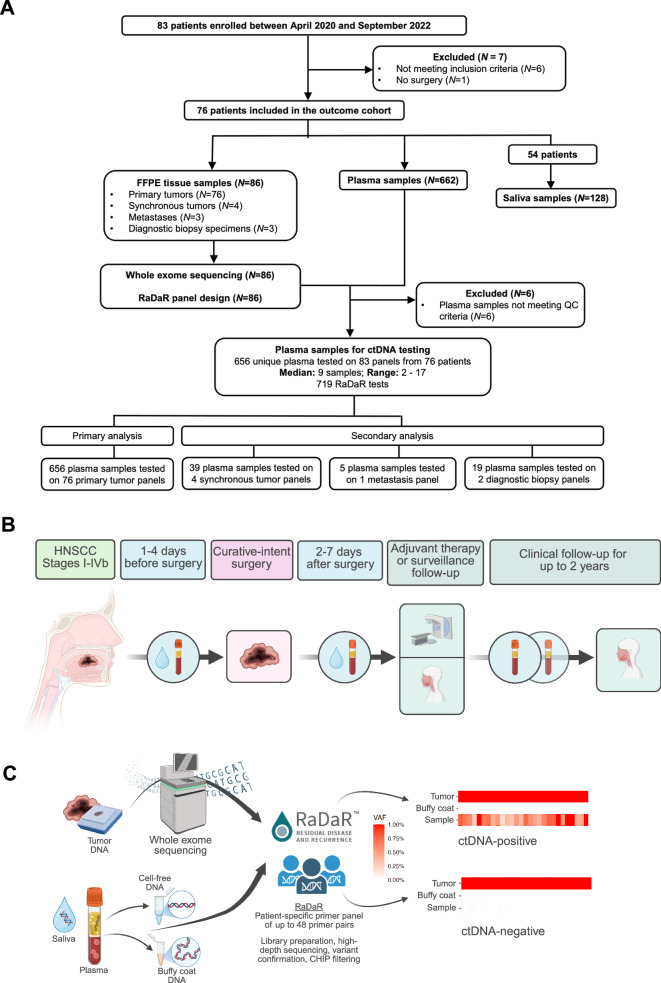 Figure 1
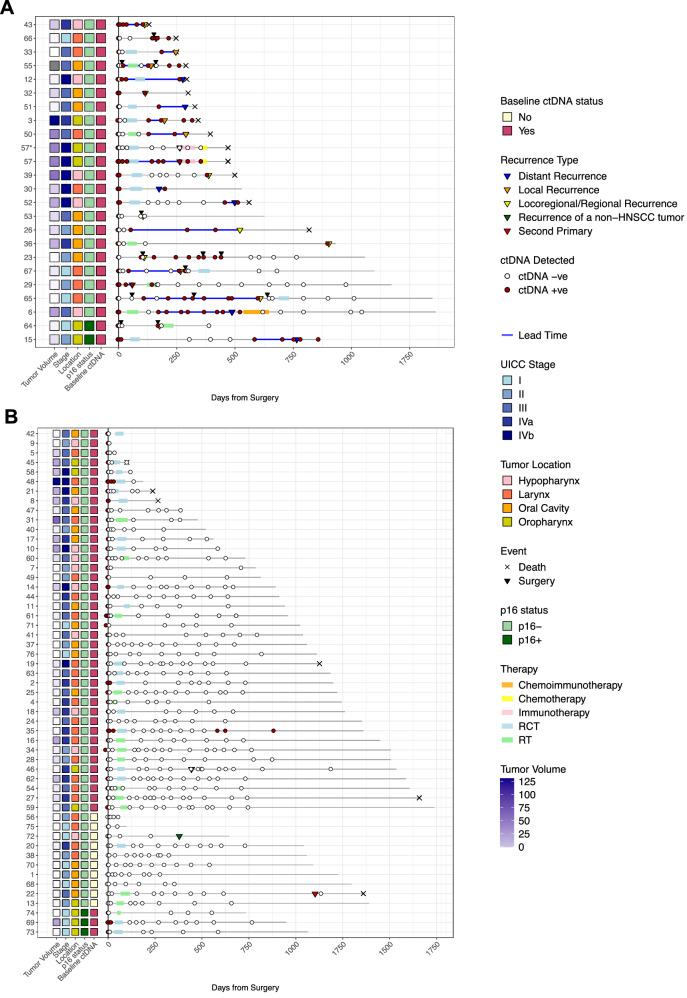 Figure 2
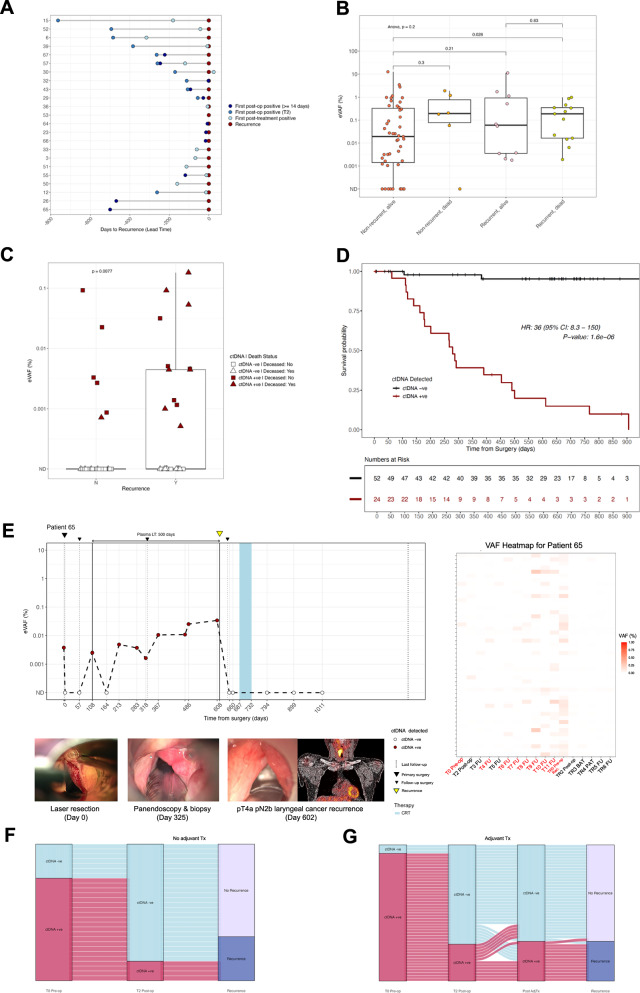 Figure 3
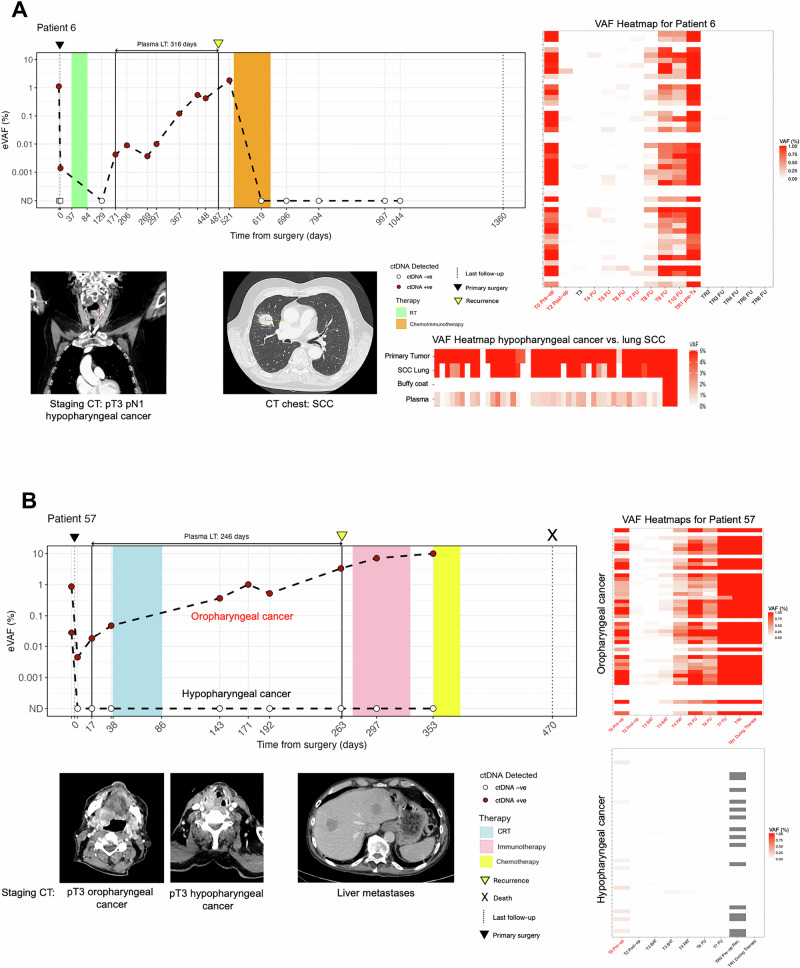 Figure 4
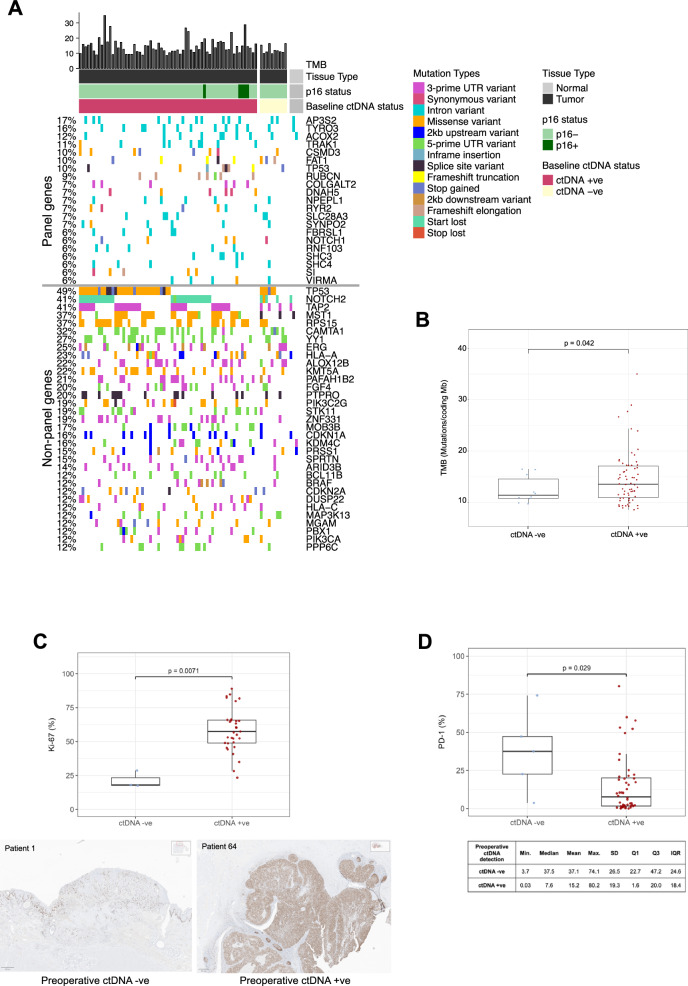 Figure 5
Peer Reviews
No public reviews on file for this paper yet. If you reviewed it on a platform where reviews are public (OpenReview, ICLR, NeurIPS, ICML), you can paste yours below so the community can read it here.
Videos
No videos yet. Explain this paper in a talk, walkthrough, or lecture? Add one.
Taxonomy
TopicsCancer Genomics and Diagnostics · Single-cell and spatial transcriptomics · Head and Neck Cancer Studies