First-in-Human Biodistribution and Dosimetry of [11C]Trimethoprim
Anthony J. Young, Robert K. Doot, Joshua K. Cho, Jonathan M. Pham, Alvaro A. Ordonez, Andres F. del Castillo, Tiffany L. Dominguez, Supritha Dugyala, Erin K. Schubert, Hsiaoju Lee, Austin R. Pantel, Robert H. Mach, David A. Mankoff, Mark A. Sellmyer

TL;DR
This study shows that [11C]trimethoprim is a safe PET imaging tool for detecting bacterial infections with low radiation exposure.
Contribution
The first-in-human study demonstrates the safety and biodistribution of [11C]trimethoprim for bacterial infection imaging.
Findings
The PET tracer [11C]TMP was well tolerated with no adverse events in participants.
Low radiation doses suggest feasibility for repeated [11C]TMP PET scans within annual limits.
Suspected infection sites showed uptake above background, supporting its use in infection detection.
Abstract
Trimethoprim (TMP) is a reversible inhibitor of the prokaryotic enzyme dihydrofolate reductase (DHFR) used for the treatment or prophylaxis of bacterial infections. [11C]trimethoprim ([11C]TMP) is a positron emission tomography (PET) imaging isotopologue of TMP. TMP binds with 30,000-fold greater affinity to bacterial DHFR over the homologous mammalian enzyme in vitro, suggesting [11C]TMP may selectively accumulate in tissues with cells expressing bacterial DHFR. This study characterizes the biodistribution and dosimetry of [11C]TMP, informing its use in imaging bacterial infections and tracking mammalian cells expressing eDHFR as a reporter gene. Four males with suspected infection, aged 59 ± 10 years old (mean ± SD) received 3 serial PET/CT scans after injection of 346 ± 305 MBq (range 129–797 MBq) of [11C]TMP. Organ activities were measured in MIM v6.7, including brain, kidneys,…
Genes, proteins, chemicals, diseases, species, mutations and cell lines named across the full text — each resolved to its canonical identifier and authoritative record.
Click any figure to enlarge with its caption.
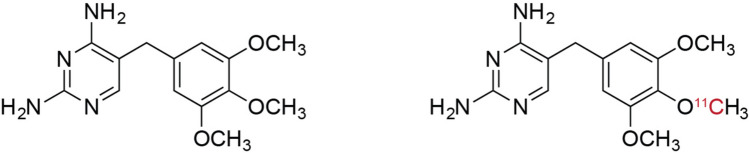 Figure 1
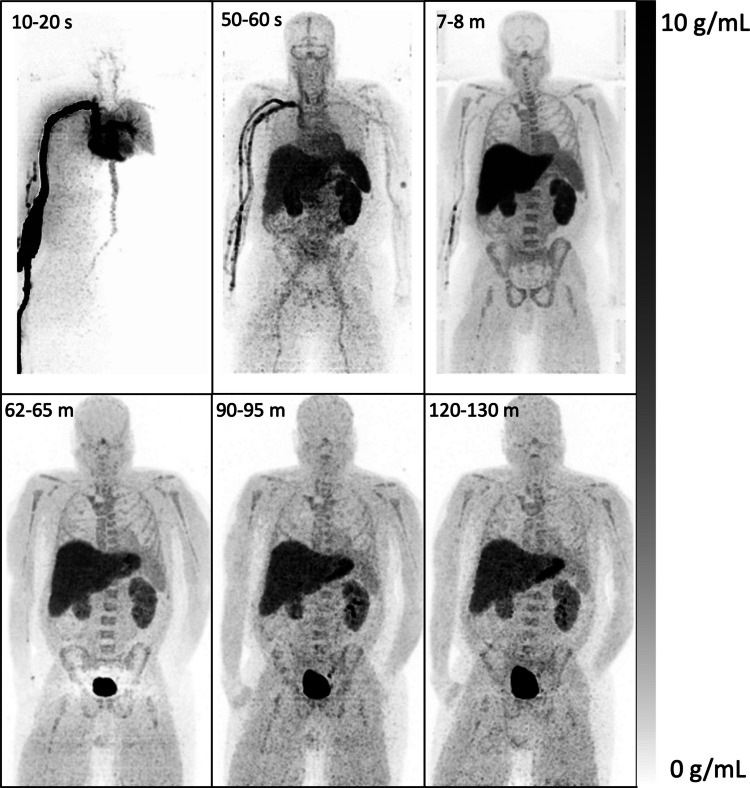 Figure 2
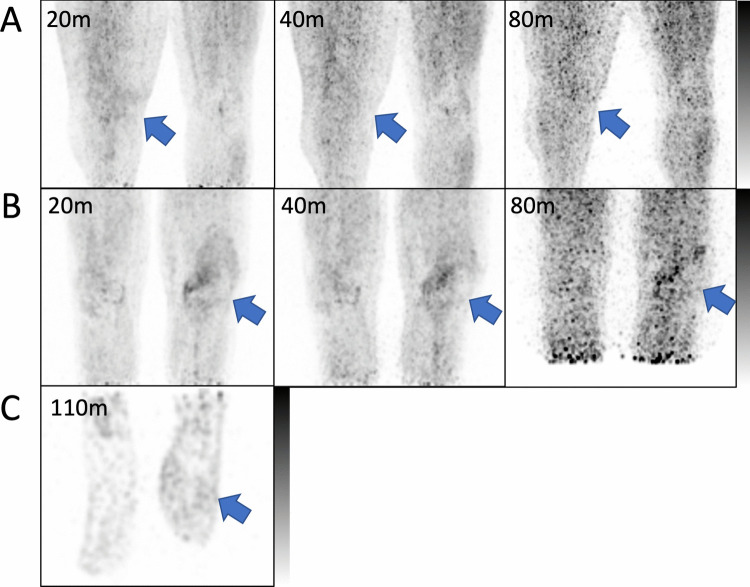 Figure 3
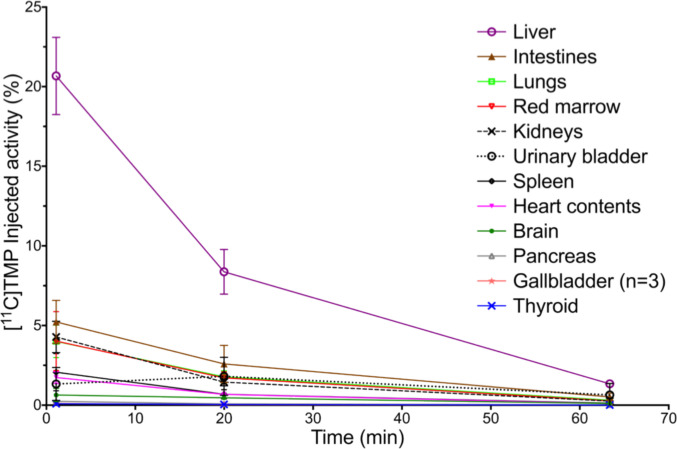 Figure 4
Peer Reviews
No public reviews on file for this paper yet. If you reviewed it on a platform where reviews are public (OpenReview, ICLR, NeurIPS, ICML), you can paste yours below so the community can read it here.
Videos
No videos yet. Explain this paper in a talk, walkthrough, or lecture? Add one.
Taxonomy
TopicsMedical Imaging Techniques and Applications · Radiopharmaceutical Chemistry and Applications · Orthopedic Infections and Treatments