Evaluation of Pafolacianine (Cytalux®) for Fluorescence-Guided Surgery in Head and Neck Squamous Cell Carcinoma: A Negative Study with Important Clinical Implications
Lucas Mani, Syeda Maria Ahmad Zaidi, Estelle Martin, Carleigh Rose Burns, Abdullah Bin Naveed, Ashtyn McAdoo, Hidenori Tanaka, Eben Rosenthal, Marisa Hom

TL;DR
A study found that pafolacianine, a fluorescence imaging agent, is not effective for guiding head and neck cancer surgery due to poor tumor targeting.
Contribution
This is the first clinical evaluation of pafolacianine in head and neck squamous cell carcinoma, revealing its limited utility due to insufficient receptor expression.
Findings
Pafolacianine showed minimal binding to HNSCC cell lines and poor tumor localization in mice.
FR-α expression was not significantly higher in tumor tissue compared to normal tissue.
Panitumumab-IRDye800CW demonstrated much stronger tumor targeting than pafolacianine.
Abstract
Pafolacianine (Cytalux®) represents the first FDA-approved tumor-specific fluorescence imaging agent, demonstrating efficacy in ovarian cancer through folate receptor-α (FR-α) targeting. Given the need for improved intraoperative margin assessment in head and neck squamous cell carcinoma (HNSCC), where positive surgical margins occur in 10–30% of cases, we investigated the potential utility of pafolacianine for fluorescence-guided surgery in HNSCC models. To evaluate the feasibility of visualizing HNSCC using pafolacianine in vitro, in vivo, and clinical tissue analysis, with comparison to fluorescence-guided surgery agents that have been successful in patients. HNSCC cell lines (FaDu, UMSCC47) were treated with escalating concentrations of pafolacianine (0–500 nM) and assessed for binding at 1 and 24 h. Nude mice bearing HNSCC xenografts (FaDu, UMSCC47) received intraperitoneal…
Genes, proteins, chemicals, diseases, species, mutations and cell lines named across the full text — each resolved to its canonical identifier and authoritative record.
Click any figure to enlarge with its caption.
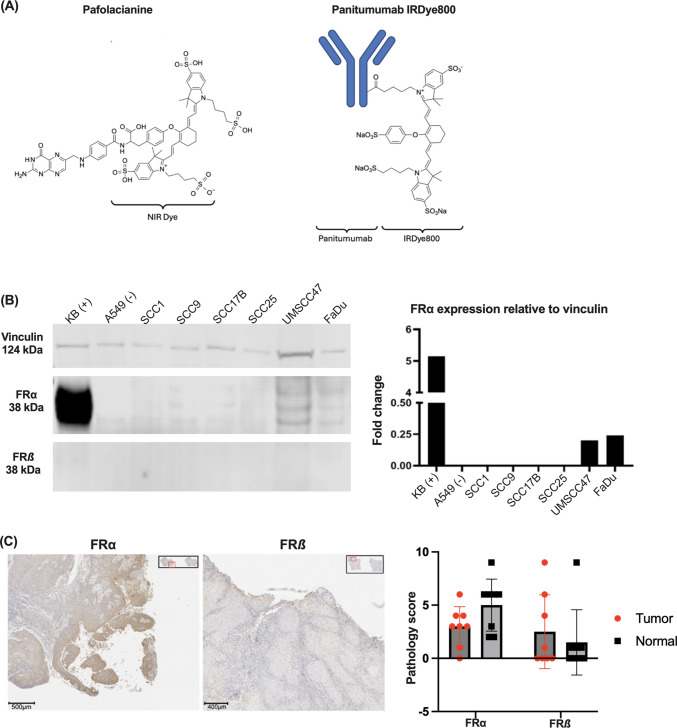 Figure 1
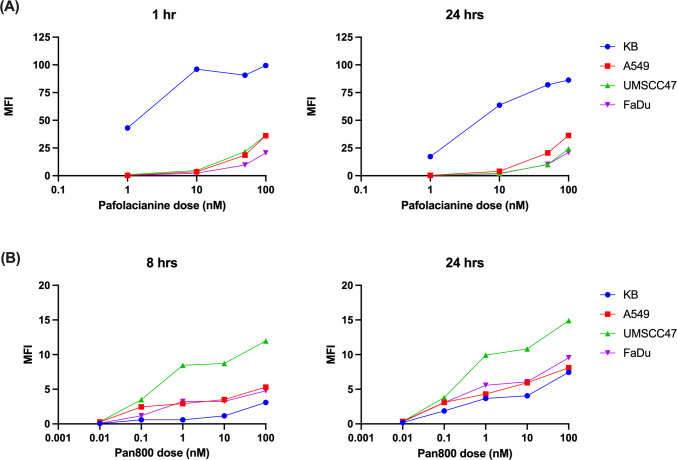 Figure 2
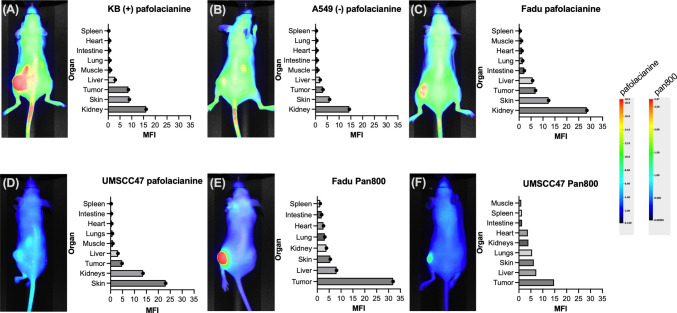 Figure 3
Peer Reviews
No public reviews on file for this paper yet. If you reviewed it on a platform where reviews are public (OpenReview, ICLR, NeurIPS, ICML), you can paste yours below so the community can read it here.
Videos
No videos yet. Explain this paper in a talk, walkthrough, or lecture? Add one.
Taxonomy
TopicsHead and Neck Cancer Studies · Photodynamic Therapy Research Studies · Esophageal Cancer Research and Treatment