Telomere-to-telomere genome assembly and multiomics analyses illustrate the high accumulation of quercetin glucosides in tetraploid Descurainia sophia
Weifeng Wu, Jianyong Wang, Chengcheng Cai, Xiaoyu Song, Hua Li, Tao Zhang, Meixin Xiong, Ying Wang, Jie Zhang, Bingbing Li, Lei Zhang, Feng Li, Mingkun Huang, Wei Li, Feng Cheng, Danyu Kong, Yi Liu

TL;DR
This study identifies the genetic basis for high quercetin glucoside accumulation in tetraploid Descurainia sophia and explains the origin of its diploid relative's genome.
Contribution
The study reveals how gene duplication and evolution of a UGT gene leads to high quercetin glucoside levels in tetraploid D. sophia.
Findings
Gene duplication and functional evolution of Dscd6AG01520 UGT gene causes high quercetin glucoside accumulation in tetraploid D. sophia.
Amino acid S213 in Dscd6AG01520 is critical for enzymatic activity.
Diploid D. sophia evolved from an ancestral crucifer karyotype through chromosome fusion and rearrangement.
Abstract
Quercetin glucosides are important phytopharmaceutical metabolites in Descurainia sophia seeds, which are widely used in traditional herbal medicine. However, the key genes involved in quercetin glucoside biosynthesis in D. sophia have not been characterized. Herein, we present the telomere-to-telomere genomes of a tetraploid D. sophia, which accumulates high levels of quercetin glucoside, and a diploid D. sophia, which accumulates only trace amounts. Multiomics analyses and uridine diphosphate glucosyltransferase (UGT) enzyme assays revealed that the gene duplication and functional evolution of Dscd6AG01520, an UGT gene, led to high quercetin-3-O-β-d-glucoside and quercetin-3,7-O-β-d-diglucoside accumulation in tetraploid D. sophia seeds. Further UGT enzyme assays with the point mutations of Dscd6AG01520 showed that S213 was a critical amino acid for the enzymatic activity of…
Genes, proteins, chemicals, diseases, species, mutations and cell lines named across the full text — each resolved to its canonical identifier and authoritative record.
Click any figure to enlarge with its caption.
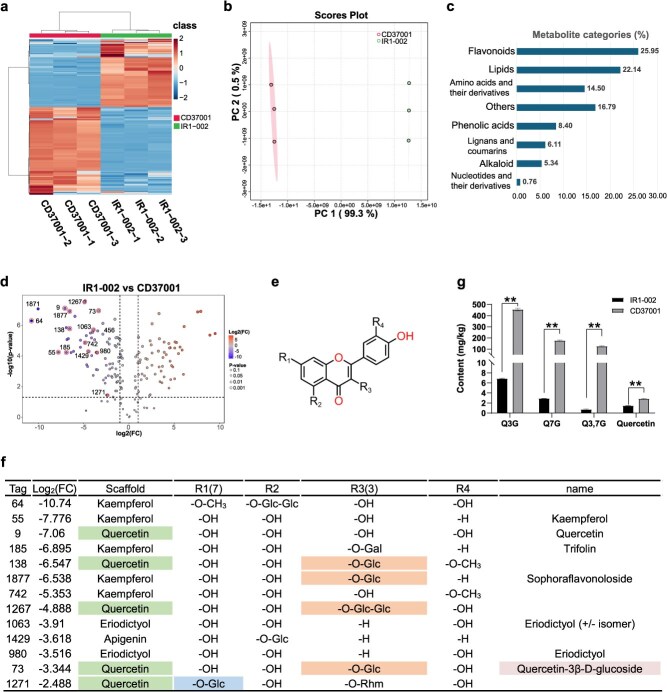 Figure 1
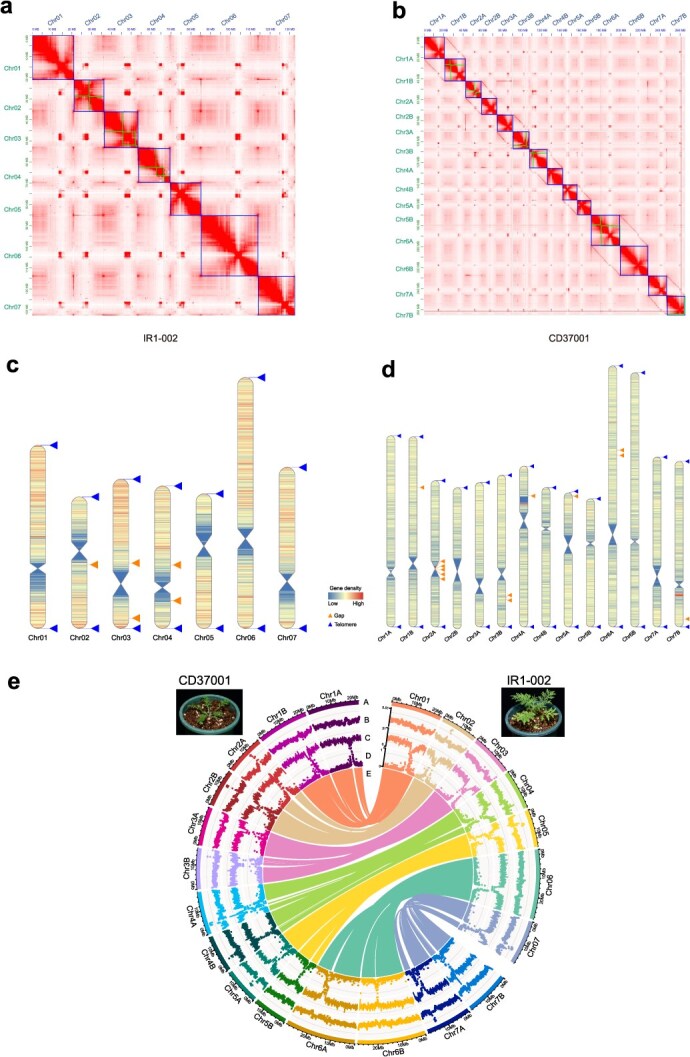 Figure 2
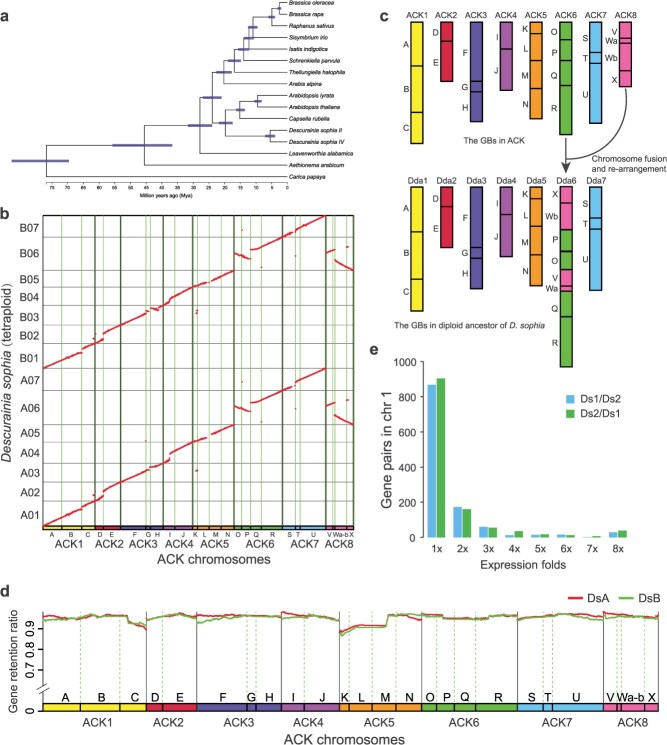 Figure 3
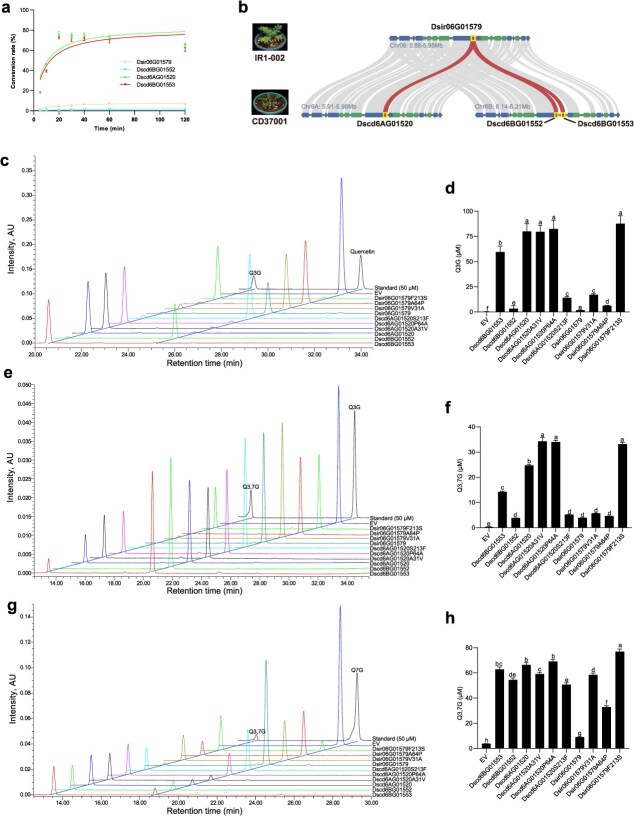 Figure 4
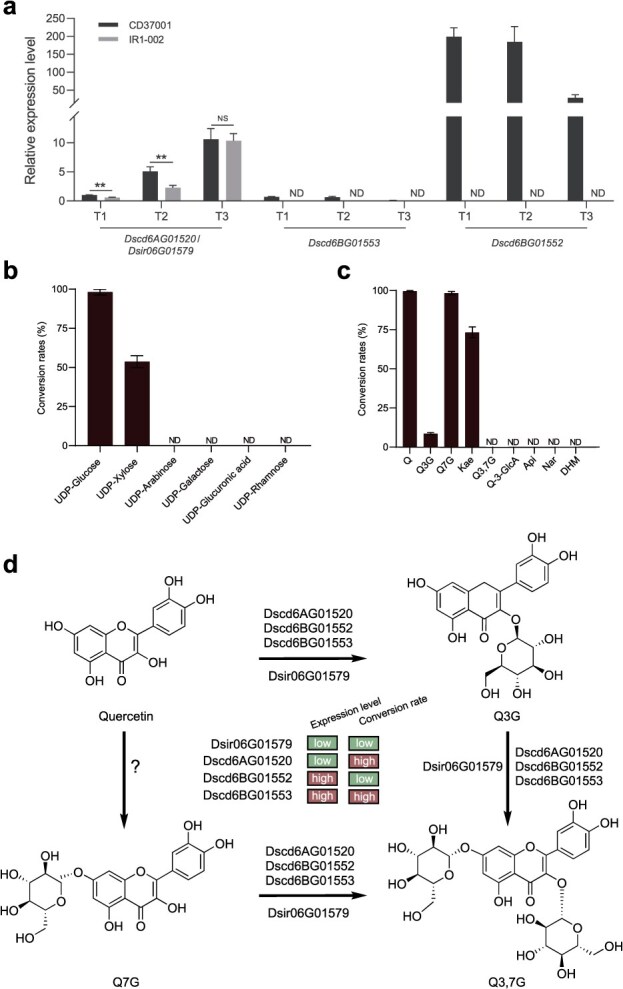 Figure 5
Peer Reviews
No public reviews on file for this paper yet. If you reviewed it on a platform where reviews are public (OpenReview, ICLR, NeurIPS, ICML), you can paste yours below so the community can read it here.
Videos
No videos yet. Explain this paper in a talk, walkthrough, or lecture? Add one.
Taxonomy
TopicsGenomics and Phylogenetic Studies · Plant Gene Expression Analysis · Chromosomal and Genetic Variations