Map-based cloning and functional characterization reveal CDF3 as the causal gene for the flowering time phenotype in Brassica rapa and Brassica napus
Qianru Ma, Zhi Zhao, Kede Liu, Huaxin Li, Youjuan Quan, Long Wang, Hongping Zhao, Damei Pei, Guoyong Tang, Liang Xu, Lu Xiao, Dezhi Du

TL;DR
Researchers identified the CDF3 gene as a key regulator of flowering time in Brassica rapa and Brassica napus, helping to explain early maturation in certain crop varieties.
Contribution
The study identifies BrCDF3 as the causal gene for flowering time in spring-type Brassica species and demonstrates its role as a negative regulator under long-day conditions.
Findings
qFTA06, a major flowering time locus, was mapped to chromosome A06 in Brassica rapa.
BrCDF3 was confirmed as a negative regulator of flowering time through gene silencing and CRISPR/Cas9 experiments.
NIL-E, carrying the BrCDF3 allele from Haoyou 11, flowered 7 days earlier than NIL-L.
Abstract
Spring-type Brassica rapa L. is a valuable genetic resource for breeding early-maturing crops, offering advantages such as early flowering and rapid maturation. However, the genetic mechanisms governing flowering time in spring-type B. rapa remain insufficiently understood. In this study, we investigated the flowering-time trait of an extremely early-maturing landrace, ‘Haoyou 11’, originating from the Qinghai-Tibetan Plateau. Initial mapping was conducted using an F2 population derived from the cross between Haoyou 11 and Dahuang (a late-flowering spring-type landrace of B. rapa). A major quantitative trait locus for flowering time, designated qFTA06, was identified within a 1.7-Mb interval on chromosome A06 using genotyping-by-sequencing and bulked segregant analysis sequencing (BSA-seq). The locus qFTA06 was subsequently fine-mapped to a 75.16-kb region with a set of near-isogenic…
Genes, proteins, chemicals, diseases, species, mutations and cell lines named across the full text — each resolved to its canonical identifier and authoritative record.
Click any figure to enlarge with its caption.
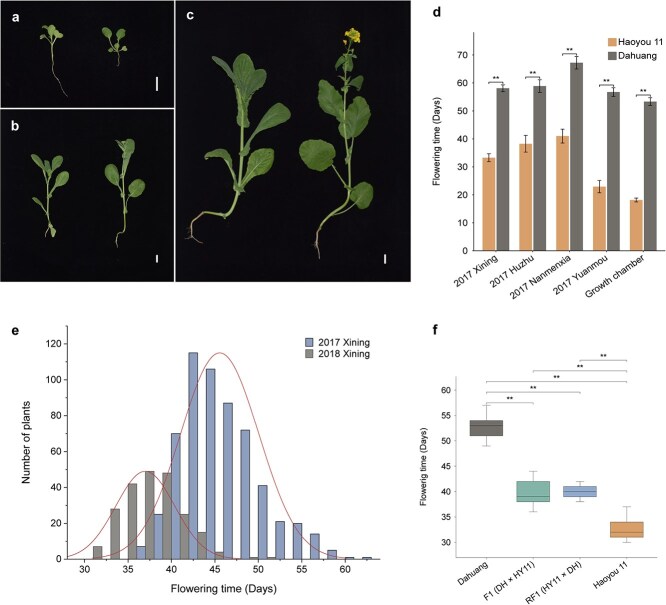 Figure 1
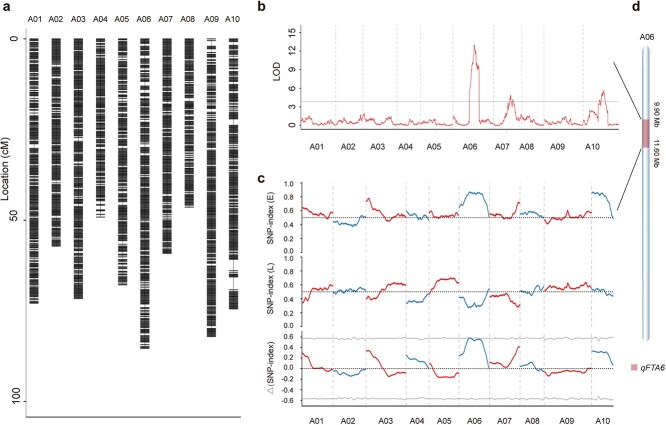 Figure 2
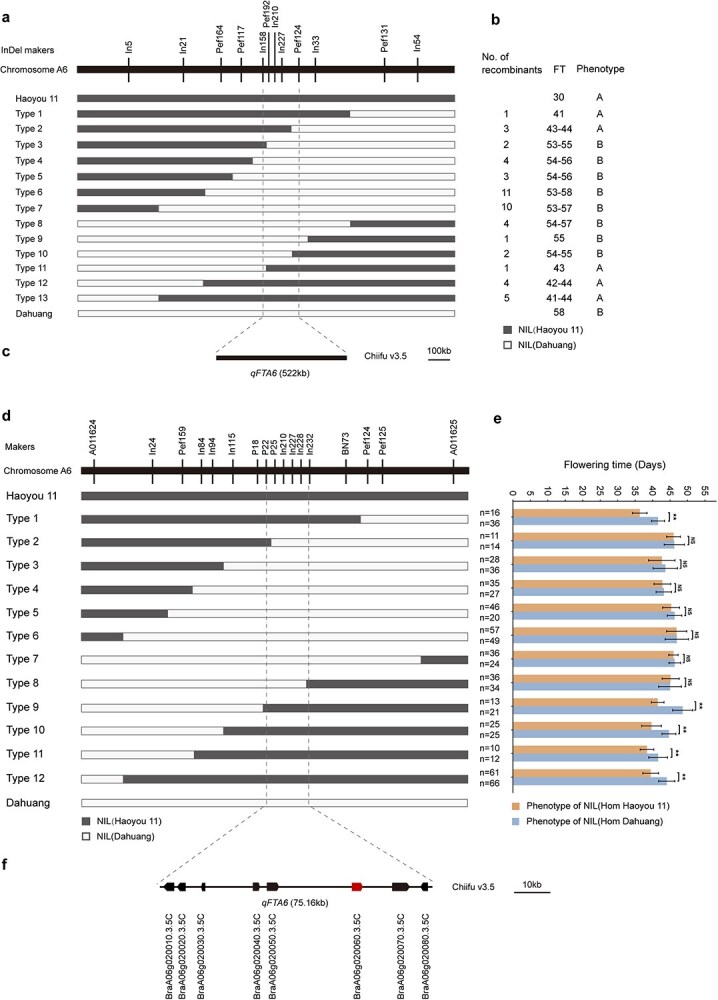 Figure 3
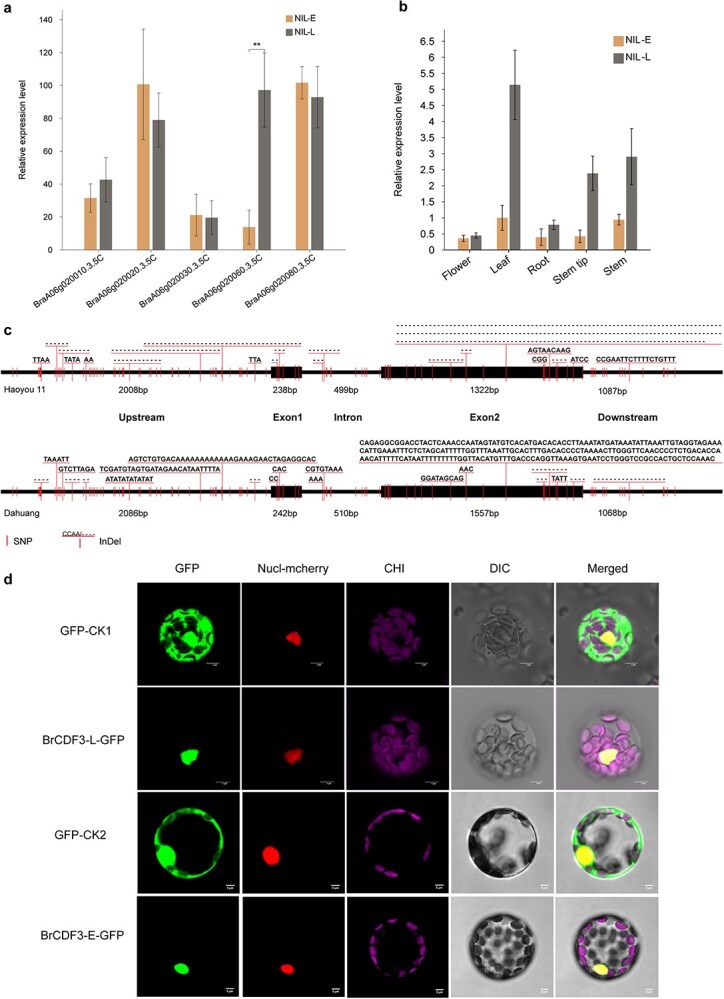 Figure 4
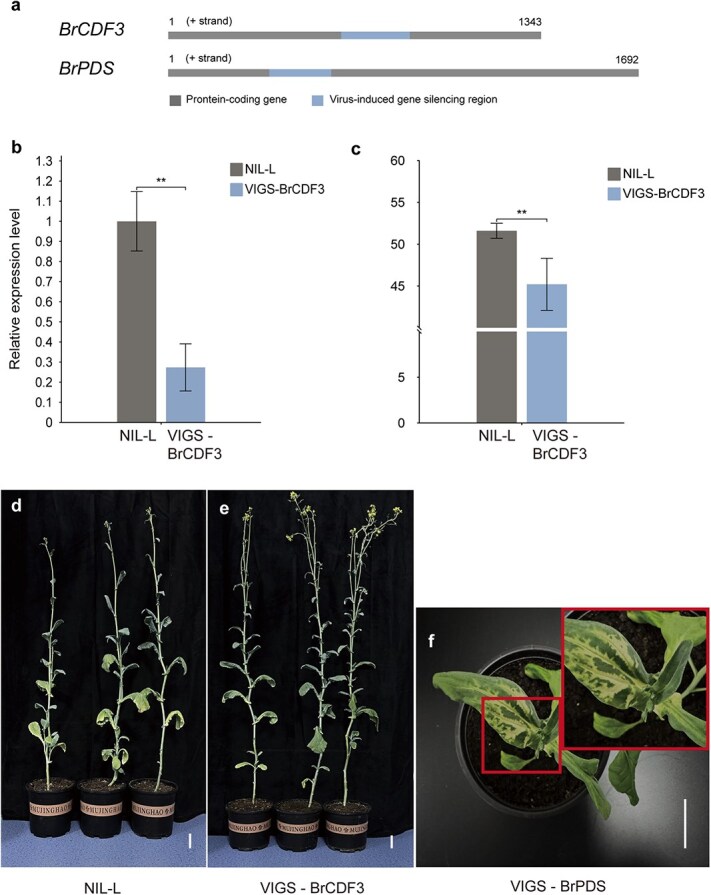 Figure 5
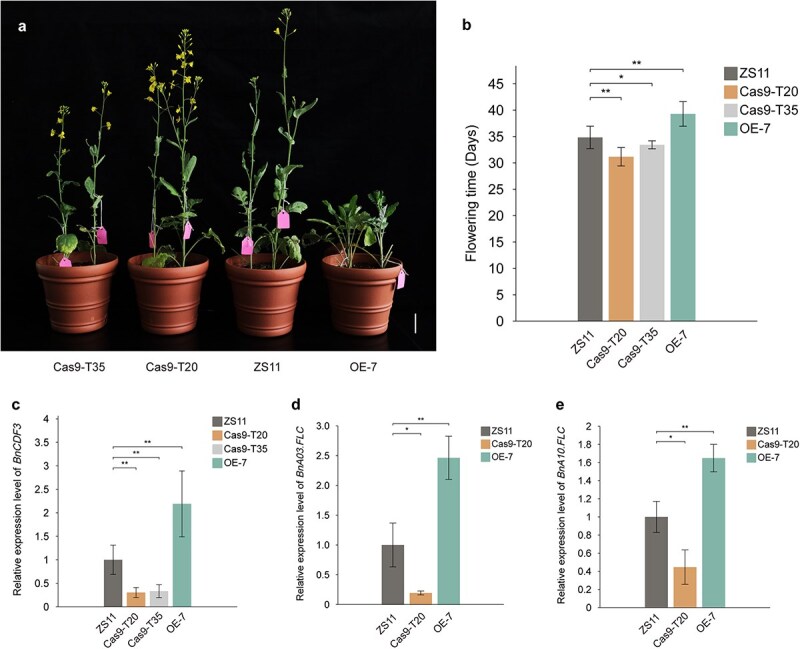 Figure 6
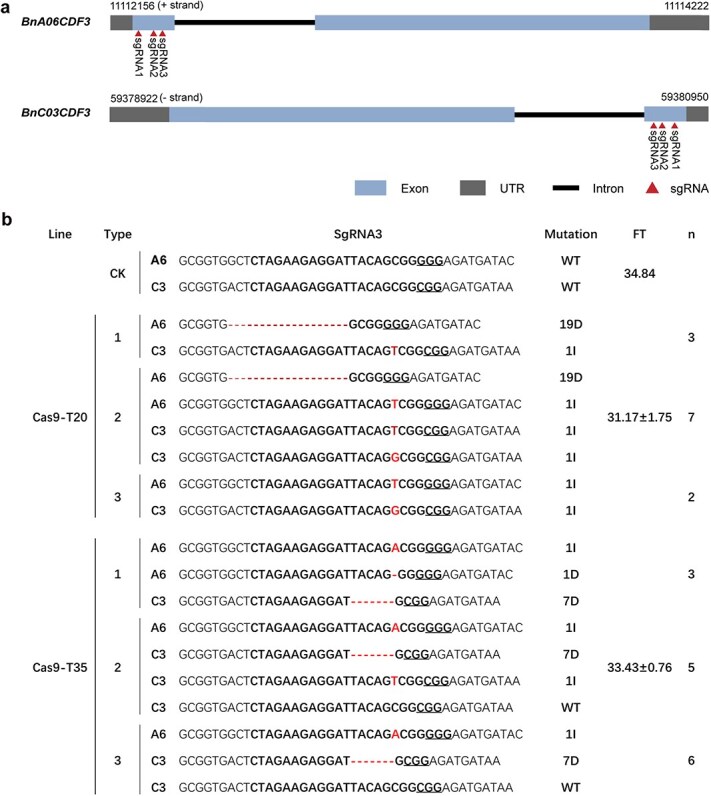 Figure 7
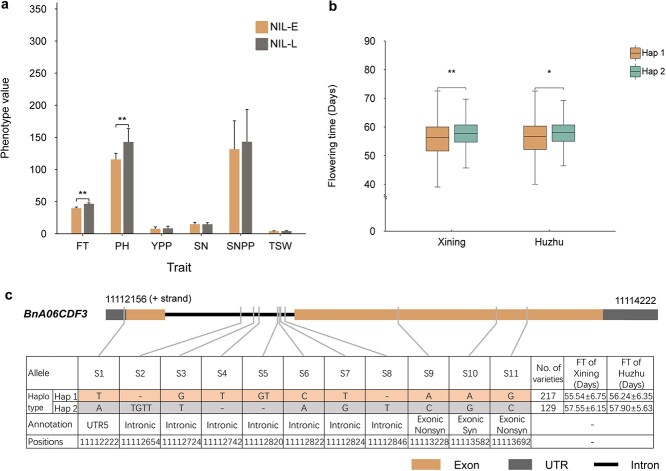 Figure 8
Peer Reviews
No public reviews on file for this paper yet. If you reviewed it on a platform where reviews are public (OpenReview, ICLR, NeurIPS, ICML), you can paste yours below so the community can read it here.
Videos
No videos yet. Explain this paper in a talk, walkthrough, or lecture? Add one.
Taxonomy
TopicsPlant Molecular Biology Research · Nitrogen and Sulfur Effects on Brassica · Lipid metabolism and biosynthesis