Modulation of NMDA Receptor and TRPM4 Activity in Hippocampal Neurons with the NMDA Receptor/TRPM4 Interface Inhibitor Brophenexin
Jordan Casby, Rachel K. Allen, Ezequiel Marron Fernandez de Velasco, Stanley A. Thayer

TL;DR
This study shows that brophenexin inhibits NMDA receptor activity in hippocampal neurons and has a modest effect on TRPM4, which may help protect neurons from damage.
Contribution
The study identifies brophenexin as a non-competitive and reversible inhibitor of NMDA receptors with additional effects on TRPM4.
Findings
Brophenexin inhibits NMDA receptor-mediated calcium influx in a non-competitive and reversible manner.
Brophenexin also modestly inhibits TRPM4-dependent activity in hippocampal neurons.
Recovery from brophenexin inhibition involves endosomal trafficking and homeostatic responses.
Abstract
Excitotoxic signaling mediated by N-methyl-D-aspartate receptors (NMDARs) is inhibited by NMDAR/TRPM4 complex inhibitors such as brophenexin (BPN). We used rat hippocampal neurons grown in culture to determine the effects of BPN on NMDAR and TRPM4 function. NMDA evoked concentration-dependent increases in intracellular Ca2+ that were inhibited by 10 µM BPN in a non-competitive manner. In contrast, the TRPM4 inhibitor 4-chloro-2-(2-(naphthalene-1-yloxy) acetamido) benzoic acid (NBA) increased the potency of NMDA at 22 °C. BPN inhibition of NMDAR-mediated increases in Ca2+ was fully reversible and recovered by rapid (30 s) and slow (90 min) processes. The rapid phase of recovery from BPN inhibition was mediated by trafficking through recycling endosomes as indicated by blockade of this phase with bafilomycin A1 an agent that prevents endosomal acidification. The full recovery of NMDAR…
Genes, proteins, chemicals, diseases, species, mutations and cell lines named across the full text — each resolved to its canonical identifier and authoritative record.
Click any figure to enlarge with its caption.
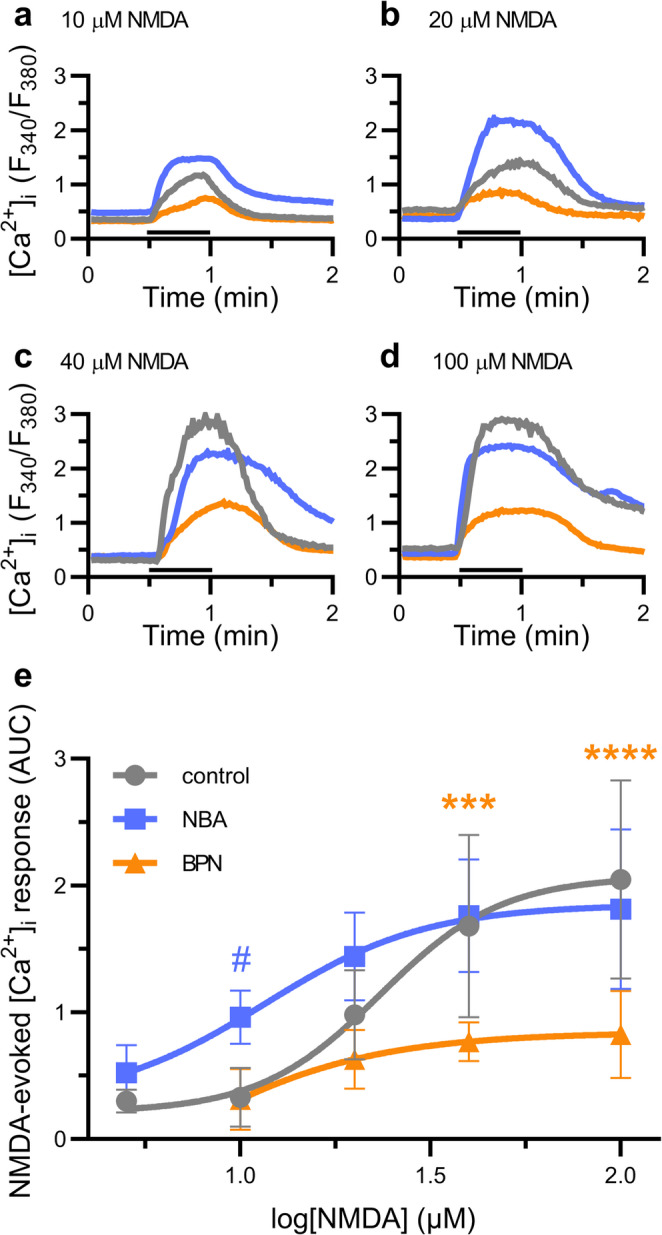 Figure 1
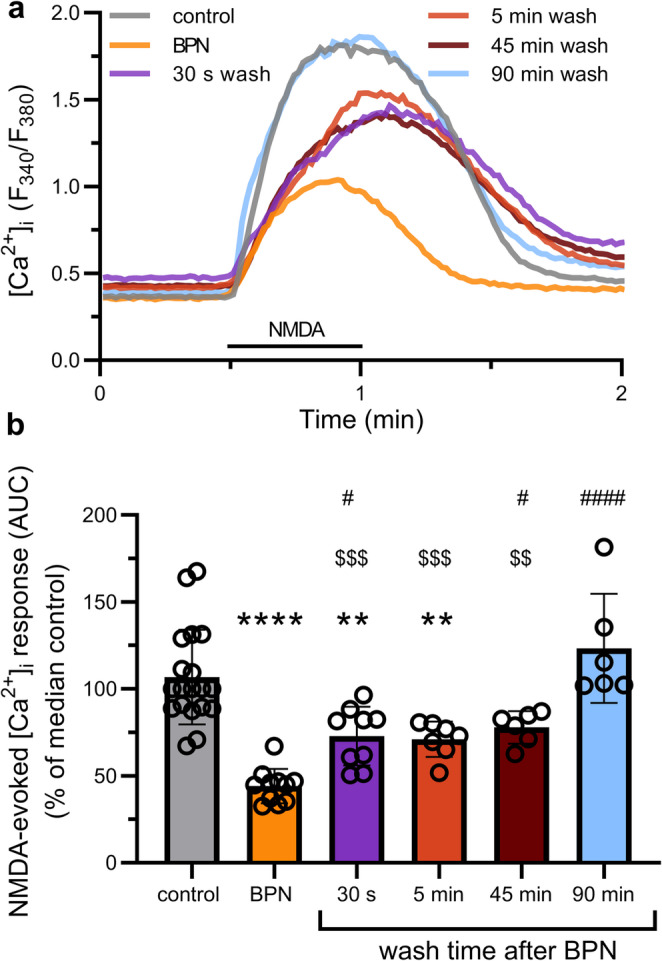 Figure 2
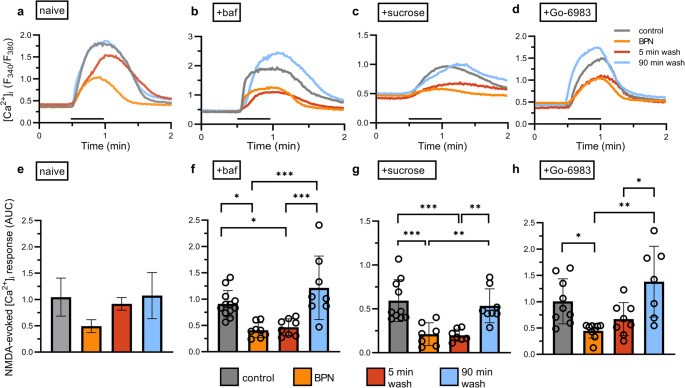 Figure 3
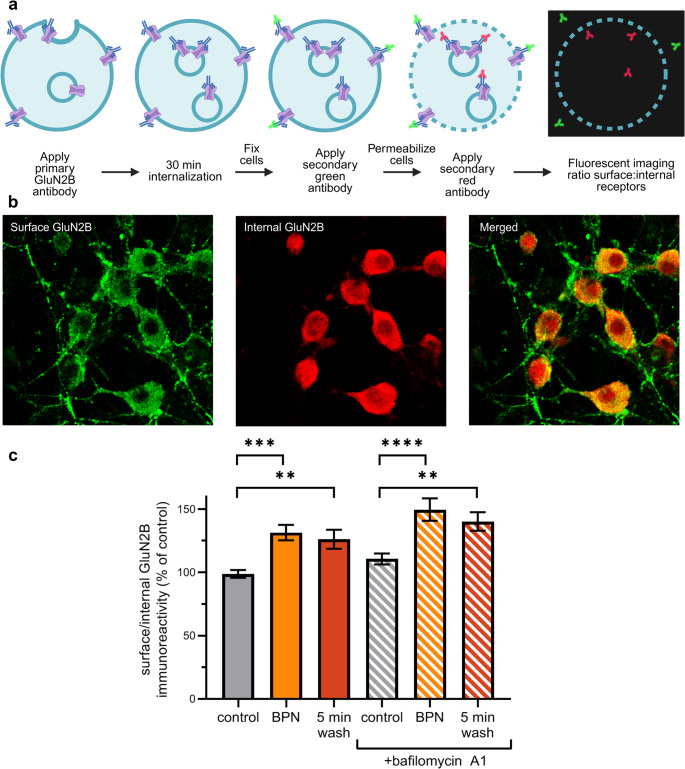 Figure 4
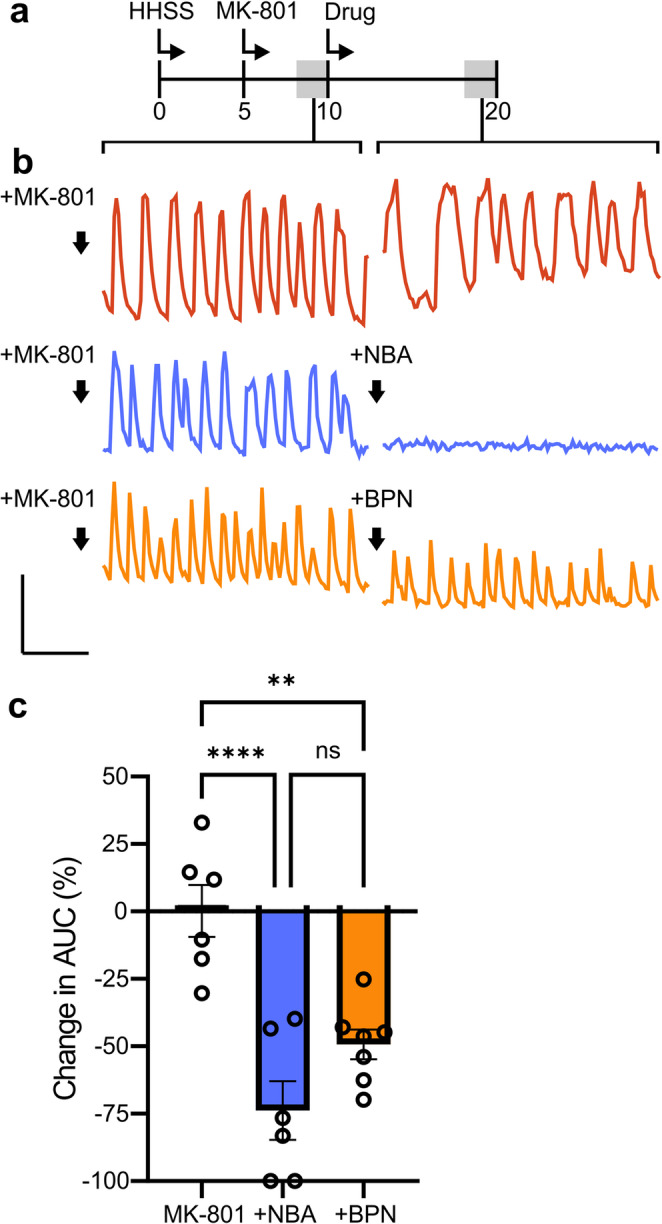 Figure 5
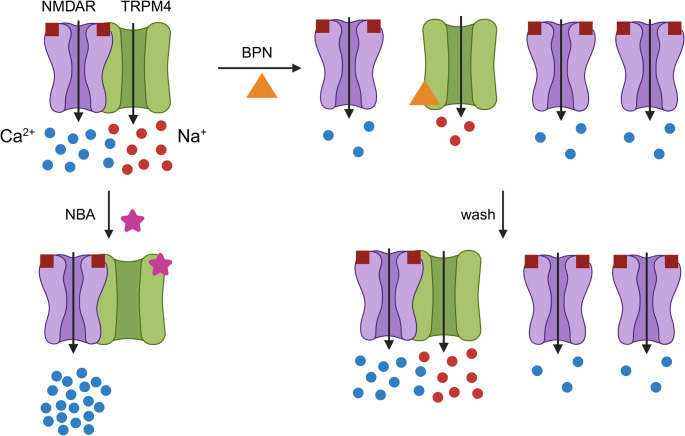 Figure 6
Peer Reviews
No public reviews on file for this paper yet. If you reviewed it on a platform where reviews are public (OpenReview, ICLR, NeurIPS, ICML), you can paste yours below so the community can read it here.
Videos
No videos yet. Explain this paper in a talk, walkthrough, or lecture? Add one.
Taxonomy
TopicsIon Channels and Receptors · Neuroscience and Neuropharmacology Research · Circadian rhythm and melatonin