Estimating the effect of hypothetical dietary protein interventions on changes in body composition of postmenopausal women over 3 years using data from the Women’s Health Initiative (WHI) Study: an emulated target trial
Jiarui Li, Luohua Jiang, Nazmus Saquib, Philippe Jean-Luc Gradidge, Simin Liu, Linda Van Horn, Phyllis A. Richey, David S. Timberlake, Hind A. Beydoun, Longjian Liu, Jie Li, Andrew O. Odegaard

TL;DR
This study estimates that higher protein diets may improve body composition in postmenopausal women, reducing fat and increasing lean tissue over three years.
Contribution
The study uses emulated target trial methods to estimate the effect of hypothetical protein interventions on body composition in postmenopausal women.
Findings
Higher protein intake (≥1.2 g/kg/day) is linked to reduced abdominal fat and increased lean tissue over 3 years.
Protein intake of ≥1.5 g/kg/day shows the greatest estimated benefits in body composition changes.
Current dietary guidelines may underestimate optimal protein levels for postmenopausal women's health.
Abstract
Postmenopausal women tend to experience significant changes in body composition, particularly abdominal adipose tissue (AAT) deposition patterns, which are hypothesized to be critical factors influencing future chronic disease risk. The level of protein intake to maintain or achieve a more favorable body composition for health in postmenopausal women is a central, largely unanswered question relating to the appropriateness of current dietary guideline recommendations for sufficient protein intake (set at 0.8 g/kg/day). To estimate the hypothetical effect of a range of protein intake levels on 3-year mean changes in body composition measures in postmenopausal women. We analyzed data from 3789 postmenopausal women aged 50–79 enrolled in the Women’s Health Initiative (WHI) to emulate a 3-year target trial of adhering to increasing levels of protein intake: ≥0.8 g/kg/d, ≥1.0 g/kg/d, ≥1.2…
Genes, proteins, chemicals, diseases, species, mutations and cell lines named across the full text — each resolved to its canonical identifier and authoritative record.
Click any figure to enlarge with its caption.
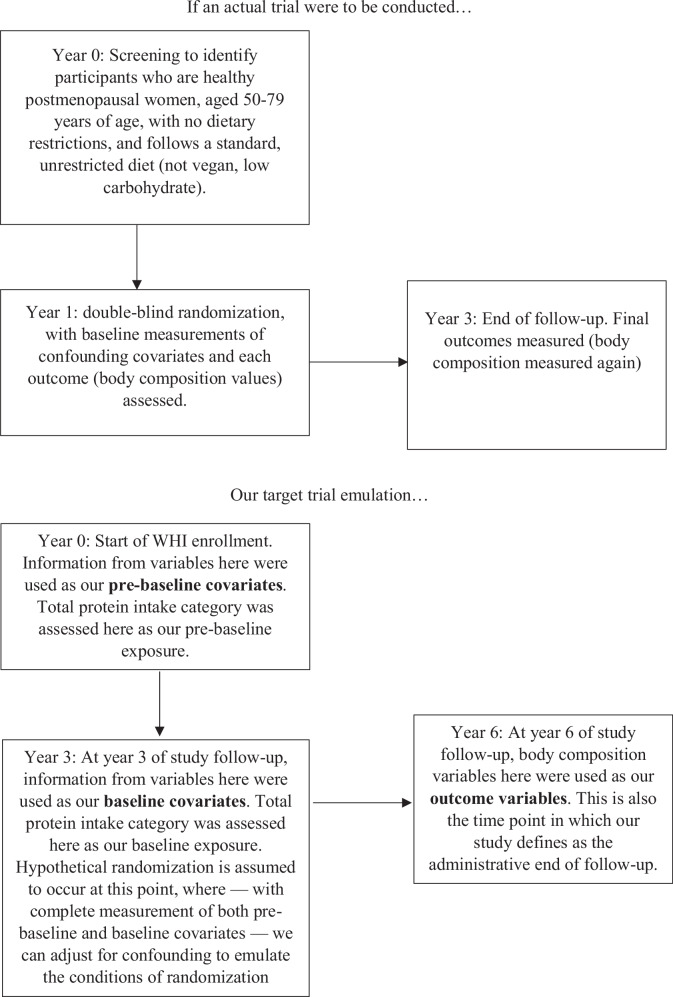 Figure 1
 Figure 2
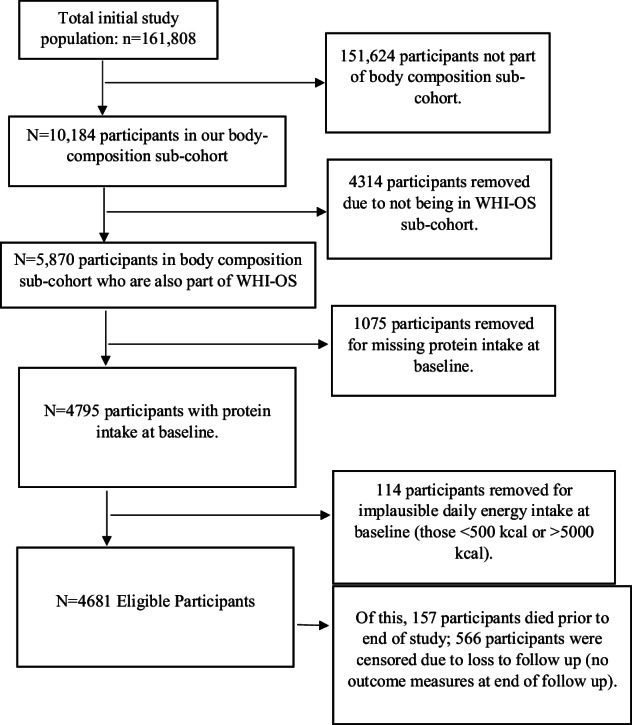 Figure 3
Peer Reviews
No public reviews on file for this paper yet. If you reviewed it on a platform where reviews are public (OpenReview, ICLR, NeurIPS, ICML), you can paste yours below so the community can read it here.
Videos
No videos yet. Explain this paper in a talk, walkthrough, or lecture? Add one.
Taxonomy
TopicsBody Composition Measurement Techniques · Nutritional Studies and Diet · Nutrition and Health in Aging