Comparative computational study of sulfur-donor additives for stabilization of FAPbI3 perovskites
Ilnar NURGALIEV, Akbarxon HAMZAYEV, Murad MARASULOV, Zavkiddin JULLIEV, Akhmad OBLAKULOV, Nigmat ASHUROV

TL;DR
This study uses computational methods to explore how sulfur-donor molecules stabilize a key material in solar cells, improving their efficiency and durability.
Contribution
The paper introduces a multiscale computational approach combining DFT and MD to identify optimal sulfur-donor additives for FAPbI3 perovskite stabilization.
Findings
SCN−, TSC, DTC, and TU stabilize FAPbI3's α-phase through Pb–S coordination and hydrogen bonding.
TU and DTC suppress trap states near band edges without causing midgap defects.
S-donors preferentially adsorb on FAPbI3 surfaces with strong hydrogen bonding and low energy.
Abstract
A multiscale computational investigation integrating density functional theory (DFT) and molecular dynamics (MD) simulations was conducted to elucidate the mechanisms through which sulfur-containing donor molecules stabilize the photoactive α-phase of formamidinium lead iodide (FAPbI3) perovskites. The binding energetics, charge-transfer behavior, and hydrogen-bonding interactions of thiourea (TU), thiosemicarbazide (TSC), thiocyanate (SCN−), and diethyldithiocarbamate (DTC) were systematically analyzed. DFT results revealed pronounced Pb–S coordination and multidentate hydrogenbonding, with binding energies following the trend SCN–>TSC>DTC>TU. Thermodynamic analysis demonstrated that these additives lower the Gibbs free energy difference, thereby stabilizing the black α-phase, with TSC, TU, and to a lesser extent DTC exhibitingthe most pronounced effects. Projected density of…
Genes, proteins, chemicals, diseases, species, mutations and cell lines named across the full text — each resolved to its canonical identifier and authoritative record.
Click any figure to enlarge with its caption.
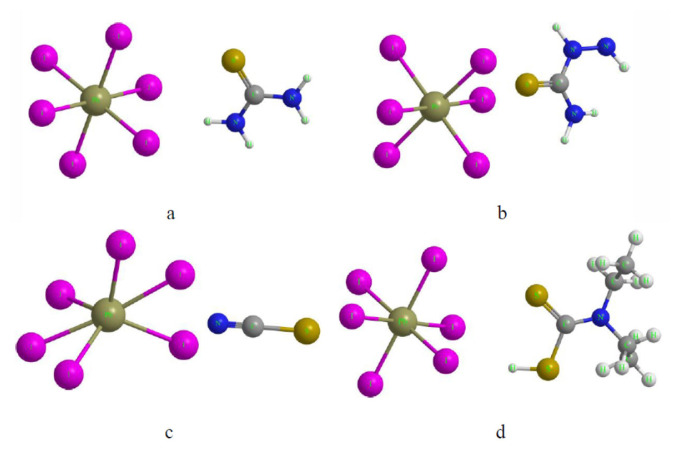 Figure 1
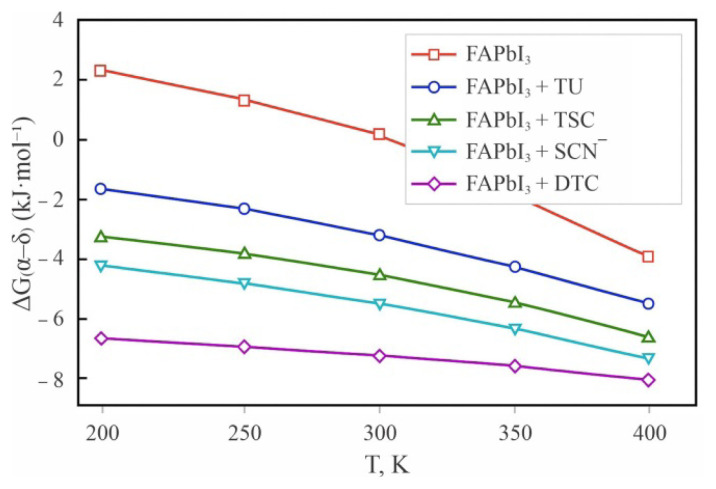 Figure 2
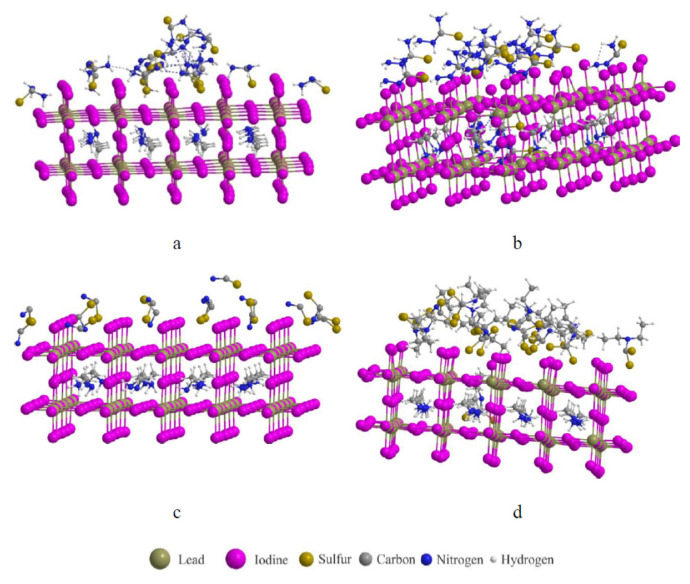 Figure 3
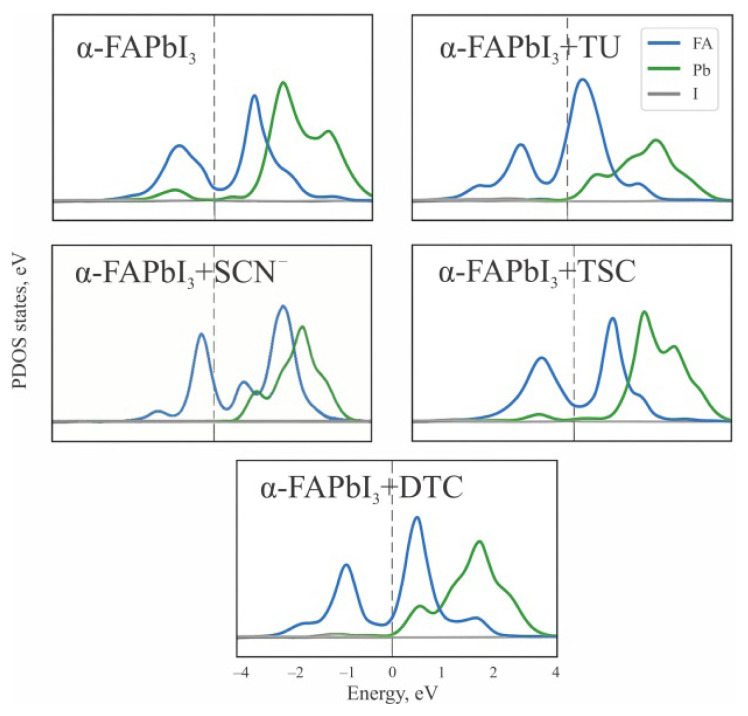 Figure 4
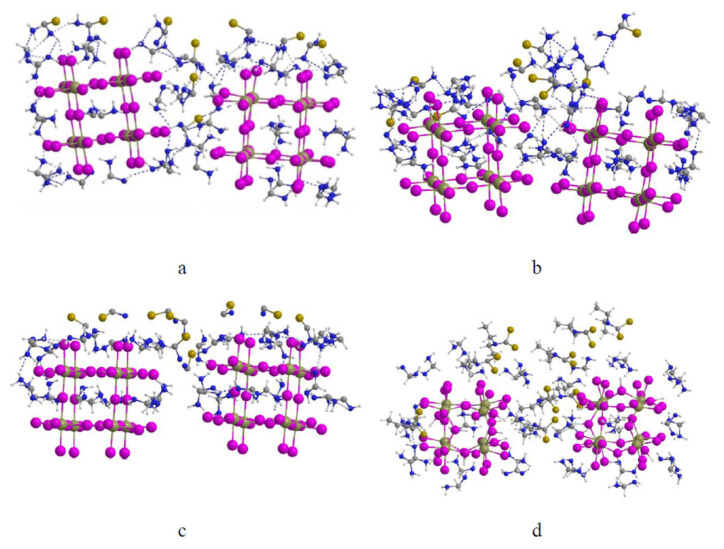 Figure 5
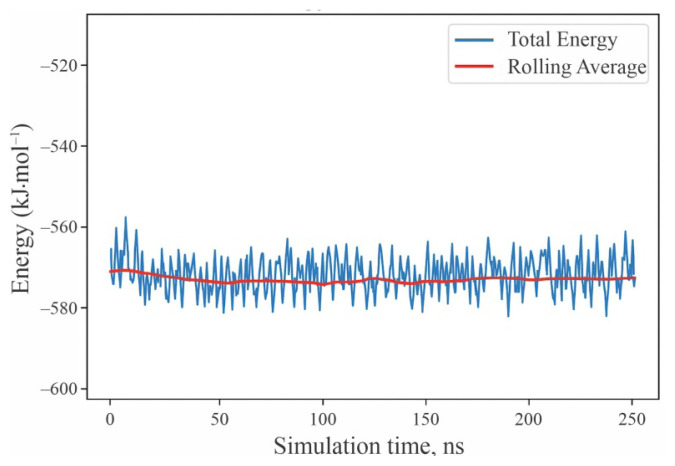 Figure 6
Peer Reviews
No public reviews on file for this paper yet. If you reviewed it on a platform where reviews are public (OpenReview, ICLR, NeurIPS, ICML), you can paste yours below so the community can read it here.
Videos
No videos yet. Explain this paper in a talk, walkthrough, or lecture? Add one.
Taxonomy
TopicsPerovskite Materials and Applications · Inorganic Chemistry and Materials · Organic and Molecular Conductors Research