Anisotropic mechanical properties of Dodecanophene nanosheets with pre-existing cracks by molecular dynamics simulation: Uncovering orientation- and temperature-induced variations
Wei Li, Mohammad Azadi, Mohammad Azadi, Mohammad Azadi, Mohammad Azadi

TL;DR
This study uses simulations to explore how cracks and temperature affect the mechanical properties of Dodecanophene nanosheets, a new type of 2D carbon material.
Contribution
The first systematic investigation of pre-existing crack effects on Dodecanophene's fracture mechanics across extreme thermal conditions.
Findings
Dodecanophene nanosheets show anisotropic mechanical properties with higher stiffness in the y-direction and superior toughness in the x-direction.
Crack orientation significantly impacts mechanical degradation, with perpendicular cracks causing greater strength loss than parallel cracks.
Temperature strongly influences toughness, increasing by 160% at 200 K and decreasing by 65% at 1000 K.
Abstract
This work presents a comprehensive molecular dynamics simulation study investigating the anisotropic mechanical response and fracture mechanisms of defective Dodecanophene nanosheets, a novel two-dimensional carbon allotrope. Using the AIREBO-M reactive force field validated against Density Functional Theory (DFT) calculations, we systematically evaluate the effects of crack orientation (0°–90°), temperature-dependent behavior (200–1000 K), and pre-existing crack size (30–60 Å) on elastic modulus, tensile strength, fracture toughness, and energy absorption. The nanosheets exhibit clear anisotropy: the y-direction shows higher stiffness (562.41 GPa) and strength (148.38 GPa), while the x-direction shows superior toughness (34.53 GPa). Crack orientation plays a critical role, with perpendicular cracks causing severe degradation (48.0–54.0%) compared to moderate losses (16–24%) for…
Genes, proteins, chemicals, diseases, species, mutations and cell lines named across the full text — each resolved to its canonical identifier and authoritative record.
Click any figure to enlarge with its caption.
 Figure 1
 Figure 2
 Figure 3
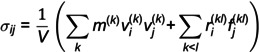 Figure 4
 Figure 5
 Figure 6
 Figure 7
 Figure 8
 Figure 9
 Figure 10
 Figure 11
 Figure 12
 Figure 13
 Figure 14
 Figure 15
 Figure 16
 Figure 17
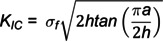 Figure 18
 Figure 19
 Figure 20
 Figure 21
 Figure 22
 Figure 23
 Figure 24
 Figure 25
 Figure 26
 Figure 27
 Figure 28
 Figure 29
 Figure 30
 Figure 31
 Figure 32
 Figure 33
 Figure 34
 Figure 35
 Figure 36
 Figure 37
 Figure 38
 Figure 39
 Figure 40
 Figure 41
 Figure 42
 Figure 43
 Figure 44
 Figure 45
 Figure 46
 Figure 47
 Figure 48
 Figure 49
 Figure 50
Peer Reviews
No public reviews on file for this paper yet. If you reviewed it on a platform where reviews are public (OpenReview, ICLR, NeurIPS, ICML), you can paste yours below so the community can read it here.
Videos
No videos yet. Explain this paper in a talk, walkthrough, or lecture? Add one.
Taxonomy
TopicsGraphene research and applications · Carbon Nanotubes in Composites · Boron and Carbon Nanomaterials Research