Significant gap between Point participation and long‑term treatment adherence: An evaluation of ivermectin MDA in the Kwanware‑Ottou persistent onchocerciasis transmission focus, Wenchi, Ghana
Rogers Nditanchou, Akinola Stephen Oluwole, Judith Saare, David Agyemang, Alexandre Chailloux, Sandra Adelaide King, Mike Yaw Osei-Atweneboana, Richard Selby, Joseph Opare, Anita Jeyam, Stephen Pye, Louise Hamill, Joseph Nelson Siewe Fodjo, Elena Schmidt, Veronique Verhoeven

TL;DR
Despite long-term ivermectin treatment, onchocerciasis transmission persists in Ghana due to low long-term adherence, with high recent participation masking poor sustained coverage.
Contribution
The study reveals a significant gap between recent and long-term treatment adherence in ivermectin MDA, using a novel approach combining satellite imagery and census data.
Findings
Point participation in ivermectin MDA was 80.3%, but effective participation (≥10 rounds) was only 53.5%.
Effective participation was strongly inversely correlated with infection prevalence (-0.74 for microfilariae, -0.79 for anti-Ov16 seroprevalence).
Remote settlements and mobile populations had lower effective participation, contributing to ongoing transmission.
Abstract
Despite more than 27 years of ivermectin mass drug administration (MDA), onchocerciasis transmission persists in the Kwanware-Ottou focus within the Wenchi Health District of Ghana. This study examined participation in ivermectin MDA over time in this transmission focus. In March 2024, two months after MDA using the community-directed treatment with ivermectin (CDTI) approach, settlements within Kwanware-Ottou focus were identified through community consultations and satellite imagery. A census was then conducted integrating an ivermectin treatment coverage evaluation survey (CES) to evaluate community participation in CDTI. Data were cleaned using STATA and analysed in R. Descriptive statistics, multiple logistic regression, and ordinal logistic regression were conducted to examine factors associated with point and effective participation in CDTI. Point participation is the percentage…
Genes, proteins, chemicals, diseases, species, mutations and cell lines named across the full text — each resolved to its canonical identifier and authoritative record.
Click any figure to enlarge with its caption.
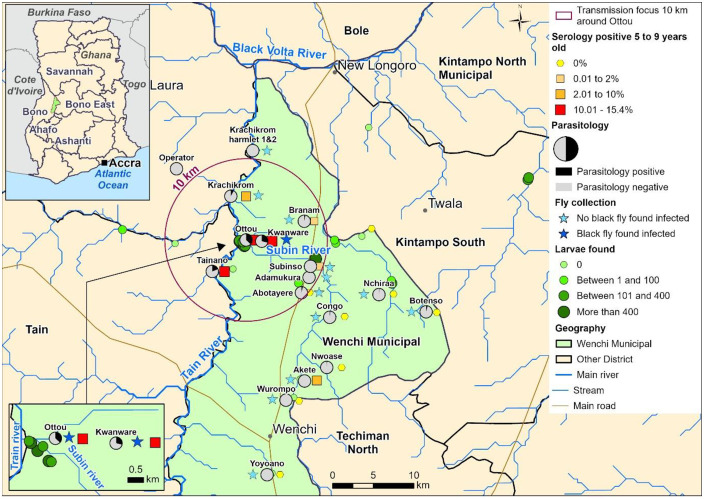 Figure 1
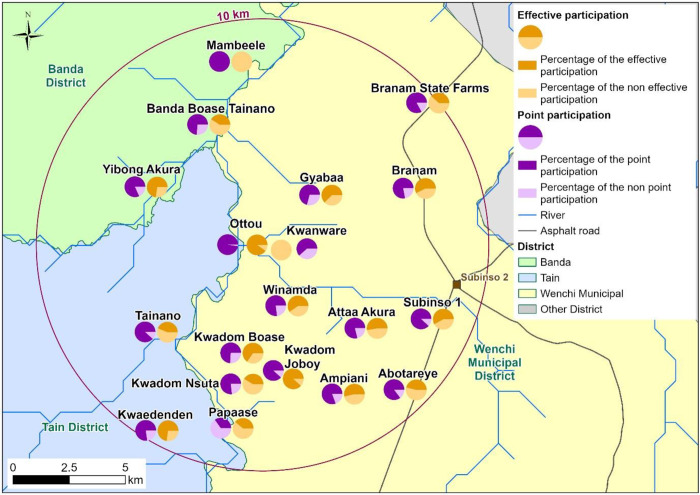 Figure 2
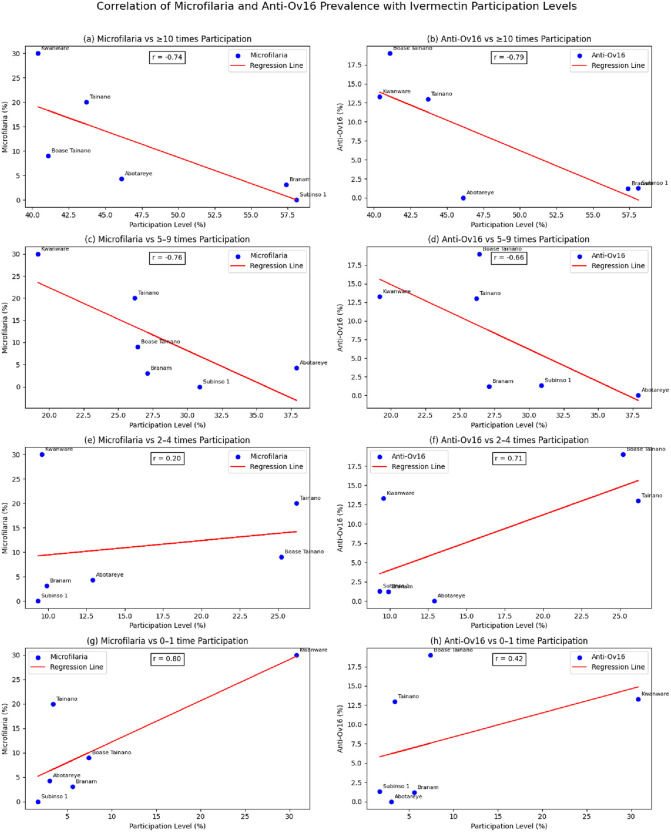 Figure 3
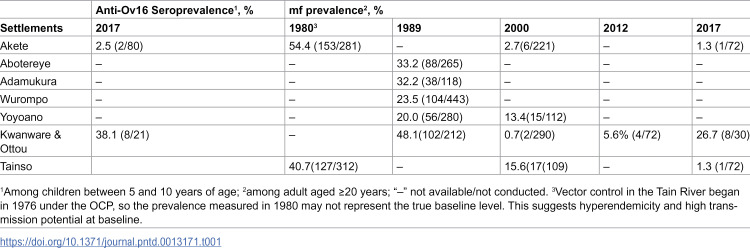 Figure 4
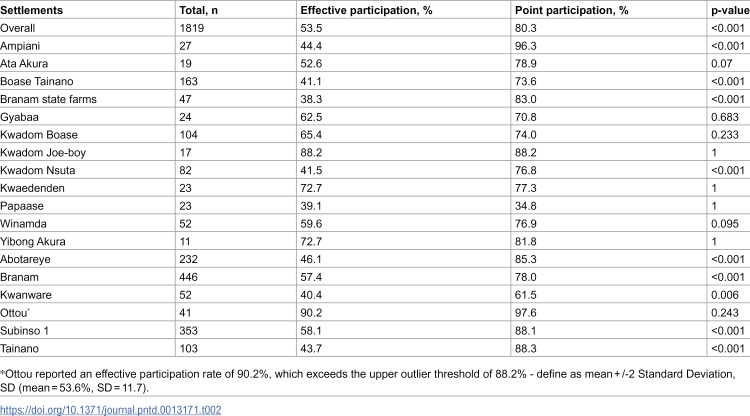 Figure 5
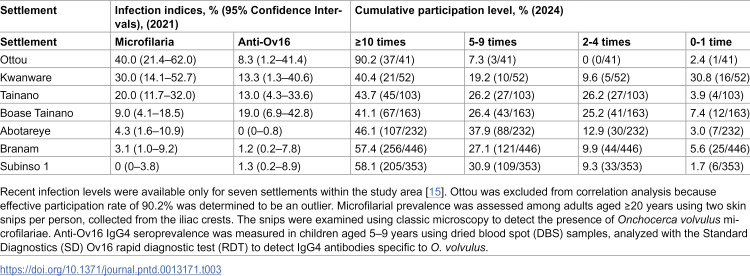 Figure 6
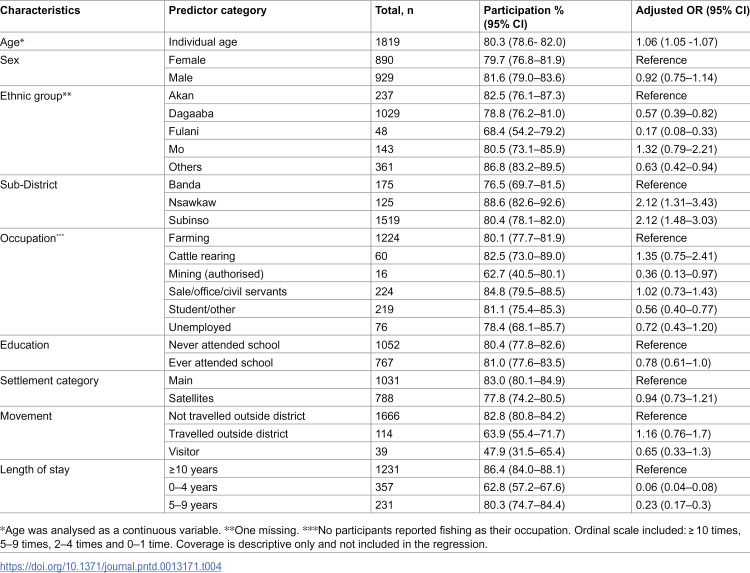 Figure 7
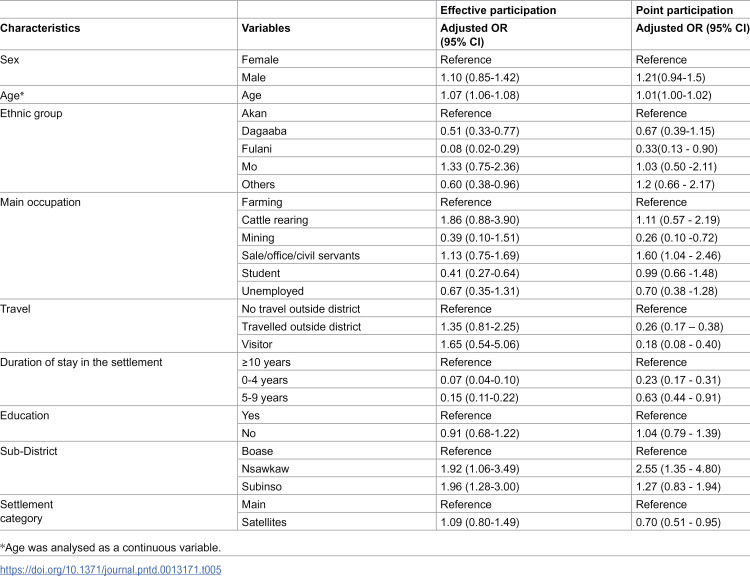 Figure 8
Peer Reviews
No public reviews on file for this paper yet. If you reviewed it on a platform where reviews are public (OpenReview, ICLR, NeurIPS, ICML), you can paste yours below so the community can read it here.
Videos
No videos yet. Explain this paper in a talk, walkthrough, or lecture? Add one.
Taxonomy
TopicsParasitic Diseases Research and Treatment · Parasites and Host Interactions · Antibiotic Use and Resistance