Machine learning prediction of weight gain after antiretroviral therapy initiation in people with HIV: Insights from a large french real-world cohort
Cyrielle Codde, Clément Benoist, Laurent Hocqueloux, Cyrille Delpierre, Clotilde Allevena, Amélie Ménard, Antoine Chéret, Cédric Arvieux, Jean-François Faucher, Jean-Baptiste Woillard, Carmen González-Domenech, Carmen González-Domenech, Carmen González-Domenech

TL;DR
This study explores whether machine learning can predict weight gain in HIV patients starting antiretroviral therapy, but finds it lacks precision for clinical use.
Contribution
The study evaluates machine learning's ability to predict weight changes in HIV patients using a large real-world cohort, revealing its limitations.
Findings
Machine learning models achieved RMSEs of 4.6 kg, 5.3 kg, and 6.4 kg at 6, 12, and 24 months post-ART initiation.
Baseline weight was the strongest predictor, with other factors contributing minimally to weight prediction.
Excluding individuals with extreme weight changes slightly improved model accuracy but did not make predictions clinically useful.
Abstract
Excessive weight gain after initiation of antiretroviral therapy (ART) has become a recognized concern among people living with HIV. Individual weight trajectories remain highly heterogeneous and challenging to predict using conventional methods. We leveraged the French Dat’AIDS national cohort to assess whether machine learning (ML) could enhance the prediction of individual body weight at 6, 12, and 24 months after ART initiation. Using 112 baseline variables encompassing demographic, clinical, laboratory, and treatment-related data, we trained XGBoost models and evaluated performance using root mean square error (RMSE), R², and mean prediction error. A simple benchmark model based on baseline weight was used for comparison. Among 24,014 eligible ART-naïve adults, the ML models achieved RMSEs of approximately 4.6 kg, 5.3 kg, and 6.4 kg at 6, 12, and 24 months respectively, with…
Genes, proteins, chemicals, diseases, species, mutations and cell lines named across the full text — each resolved to its canonical identifier and authoritative record.
Click any figure to enlarge with its caption.
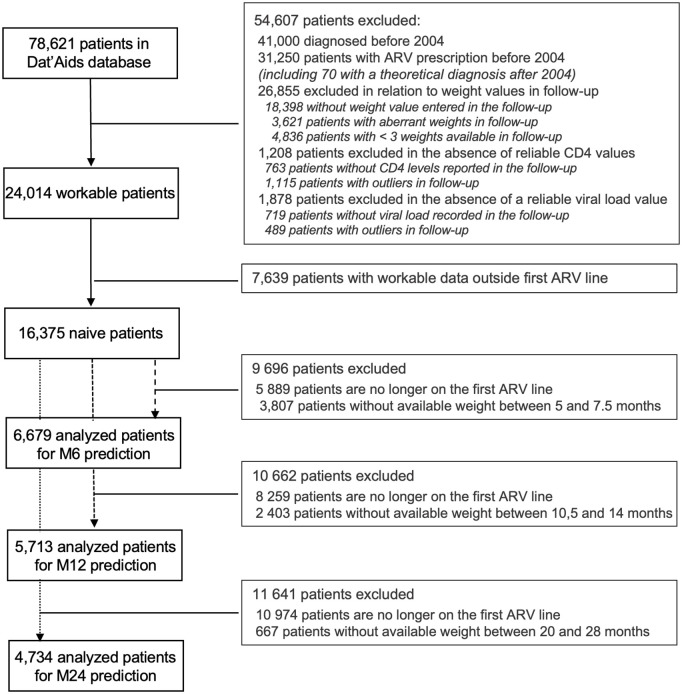 Figure 1
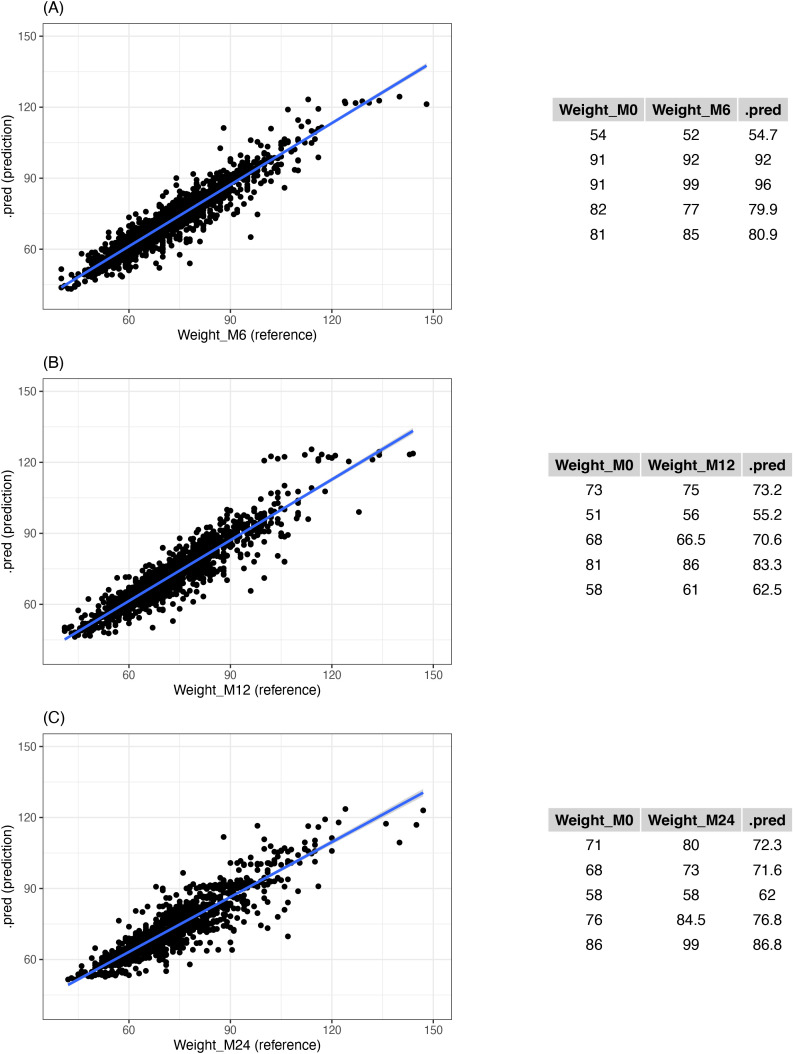 Figure 2
 Figure 3
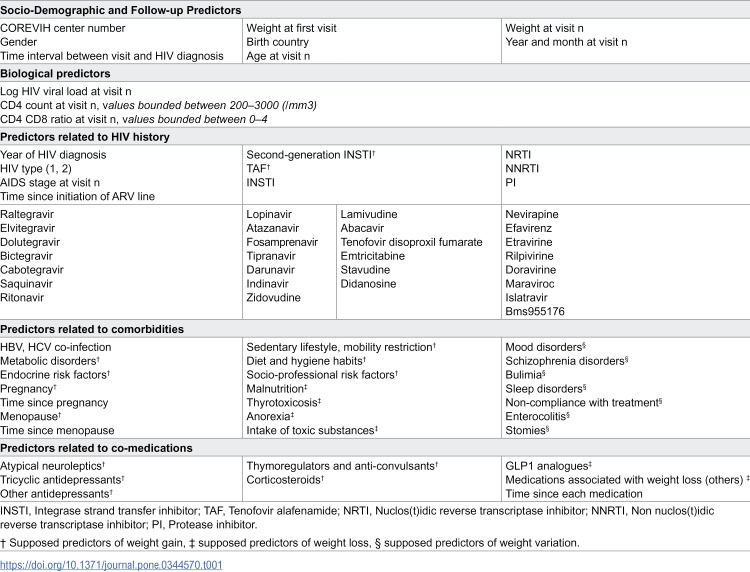 Figure 4
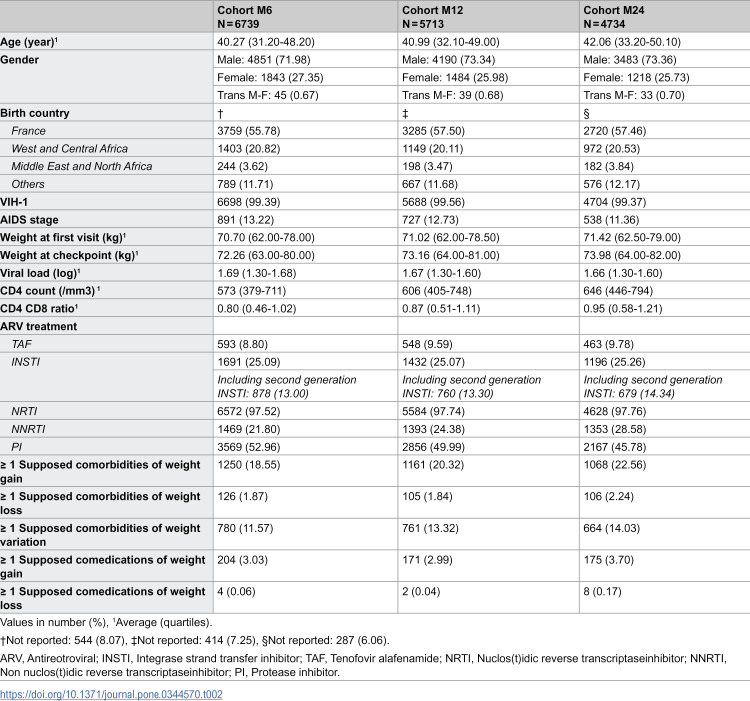 Figure 5
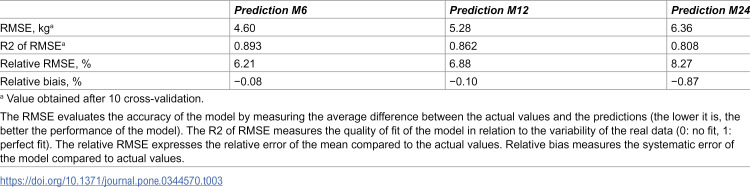 Figure 6
Peer Reviews
No public reviews on file for this paper yet. If you reviewed it on a platform where reviews are public (OpenReview, ICLR, NeurIPS, ICML), you can paste yours below so the community can read it here.
Videos
No videos yet. Explain this paper in a talk, walkthrough, or lecture? Add one.
Taxonomy
TopicsHIV-related health complications and treatments · HIV/AIDS Research and Interventions · Bariatric Surgery and Outcomes