Integrated disease model considering mutation-induced infection waves with COVID-19 cases
Seungho Baek, Haneol Cho, SangChul Lee, Myeongsu Yoo, Donghyok Kwon, KyuHwan Lee, Yeonju Kim, Chansoo Kim

TL;DR
The paper introduces a new model for tracking and predicting the spread of different COVID-19 variants using real-world data and mathematical techniques.
Contribution
A novel integrated model that combines logistic curves for dominant variants and uses the PELT algorithm to determine when to sum them.
Findings
The integrated model improves prediction accuracy compared to single-strain models using data from fourteen countries.
The PELT algorithm identifies when variant dominance reaches 50%, allowing valid summation of logistic curves.
The model supports iterative updates as new variants emerge, enhancing pandemic response.
Abstract
COVID-19, an unprecedented global pandemic, has caused successive waves that pose unique challenges to public health and epidemiological research. Traditional Susceptible–Infected–Recovered (SIR) models often struggle to capture these complex dynamics, especially given that the virus has spawned multiple sub-variants. To tackle these challenges, we adopt an empirical modeling approach by integrating real-world data from Our World in Data (daily confirmed COVID-19 cases) and GISAID (variant prevalence) into a newly proposed integrated model. Specifically, we sum multiple sigmoidal (logistic) curves, each representing the cumulative infections of a distinct dominant variant, and recalibrate the model whenever a new variant emerges. By incorporating variant-specific parameters, our framework effectively captures the biological and epidemiological characteristics of COVID-19 in a dynamic,…
Genes, proteins, chemicals, diseases, species, mutations and cell lines named across the full text — each resolved to its canonical identifier and authoritative record.
Click any figure to enlarge with its caption.
 Figure 1
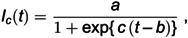 Figure 2
 Figure 3
 Figure 4
 Figure 5
 Figure 6
 Figure 7
 Figure 8
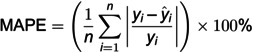 Figure 9
 Figure 10
 Figure 11
 Figure 12
 Figure 13
 Figure 14
 Figure 15
 Figure 16
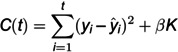 Figure 17
 Figure 18
 Figure 19
 Figure 20
 Figure 21
 Figure 22
 Figure 23
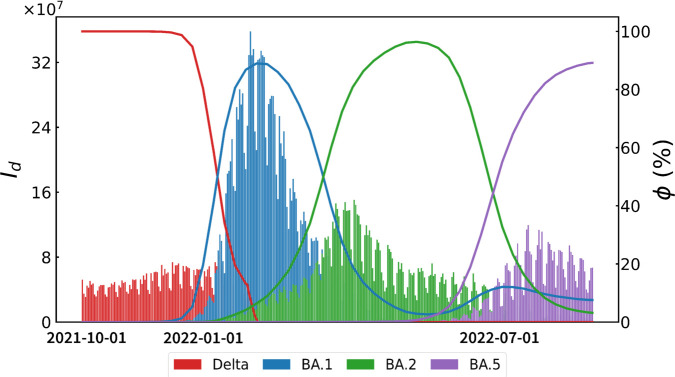 Figure 24
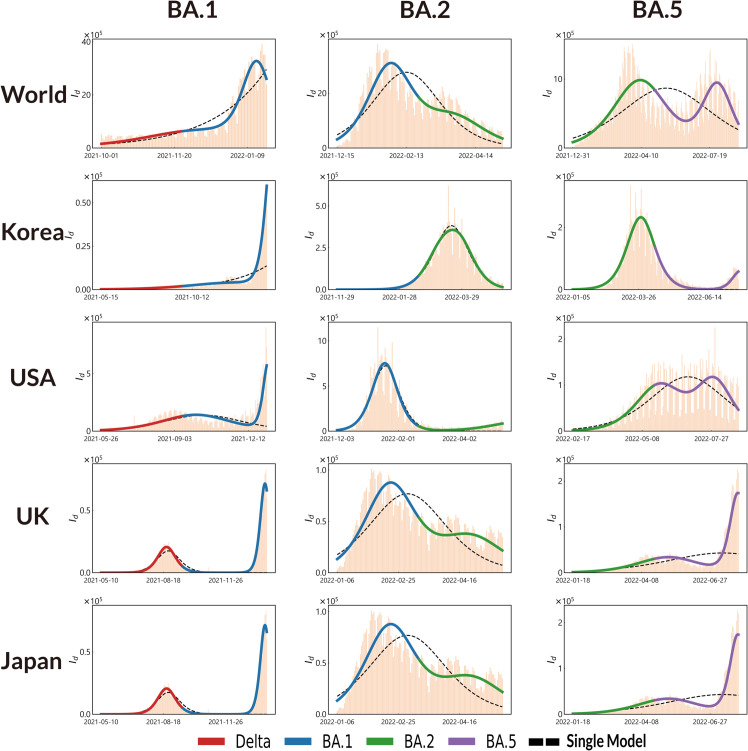 Figure 25
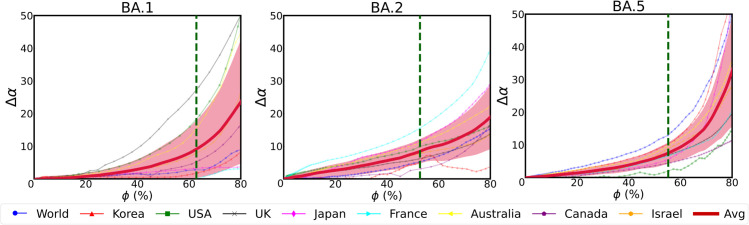 Figure 26
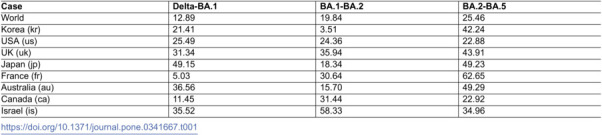 Figure 27
Peer Reviews
No public reviews on file for this paper yet. If you reviewed it on a platform where reviews are public (OpenReview, ICLR, NeurIPS, ICML), you can paste yours below so the community can read it here.
Videos
No videos yet. Explain this paper in a talk, walkthrough, or lecture? Add one.
Taxonomy
TopicsCOVID-19 epidemiological studies · Mathematical and Theoretical Epidemiology and Ecology Models · SARS-CoV-2 and COVID-19 Research