Sub-daily virus sampling at the Bermuda Atlantic Time Series reveals diel and depth-structured population dynamics without community-level shifts
Alfonso Carrillo, Emily Hageman, Lauren Chittick, Anna I. Mackey, Kimberley S. Ndlovu, Funing Tian, Naomi E. Gilbert, Daniel Muratore, Dean Vik, Gary R. LeCleir, Christine Sun, Ho B. Jang, Ricardo R. Pavan, Joshua S. Weitz, Steven W. Wilhelm, Matthew B. Sullivan

TL;DR
This study reveals that ocean viruses show detailed daily and depth-based population changes, even without major shifts in overall community structure.
Contribution
The study provides high-frequency, sub-daily virus sampling data revealing diel and depth-driven population dynamics in ocean microbes.
Findings
Community-level virus diversity metrics did not show significant temporal changes at fixed locations.
Population-level analyses revealed diel rhythms in surface waters and depth-driven differences.
Three archetypes of viral temporal dynamics were identified, including night-peaking viruses linked to Prochlorococcus.
Abstract
Ocean microbes contribute to biogeochemical cycles and ecosystem function, but they do so under top-down pressure imposed by viruses. While viruses are increasingly understood spatially and beginning to be incorporated into predictive modeling, high-frequency ocean virus dynamics remain understudied due to methodological challenges. Here we sampled stratified Bermuda Atlantic Time Series (BATS) waters for 112 hours at sub-daily 4- (surface) or 12- (deep chlorophyll maximum) hour intervals, purified viral particles from these samples, sequenced their metagenomes, and used the resulting data to characterize high-frequency virus community dynamics. Aggregated community diversity metrics changed with depth, but were not statistically significant temporally at a fixed location. However, finer-scale population-level analyses revealed both depth and temporal change, including physicochemical…
Genes, proteins, chemicals, diseases, species, mutations and cell lines named across the full text — each resolved to its canonical identifier and authoritative record.
Click any figure to enlarge with its caption.
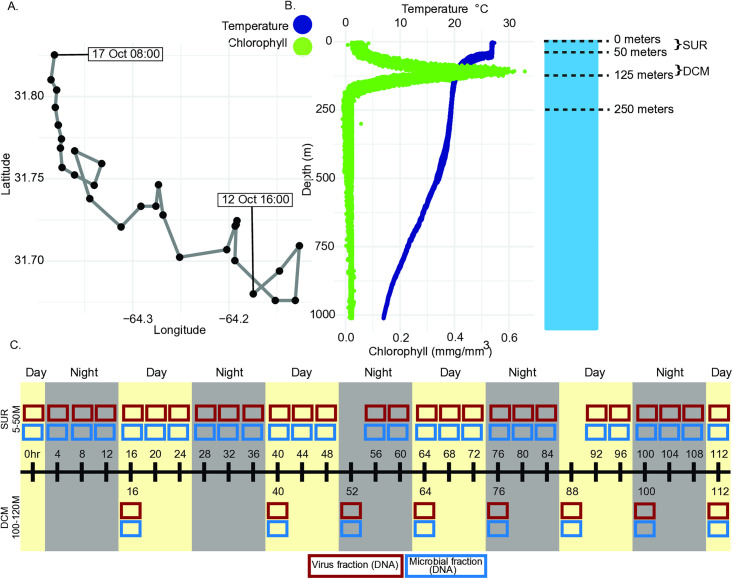 Figure 1
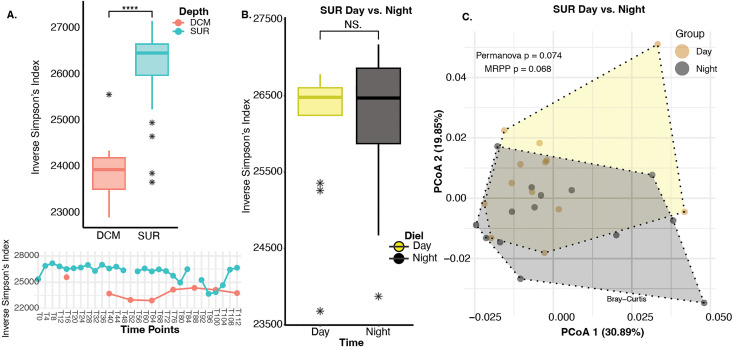 Figure 2
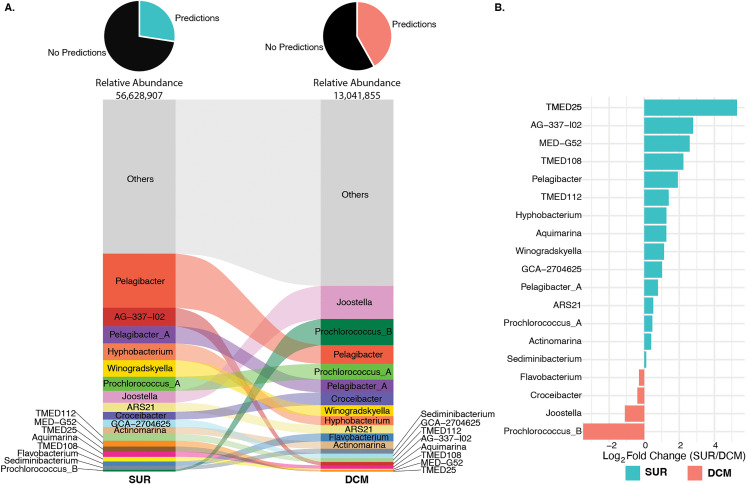 Figure 3
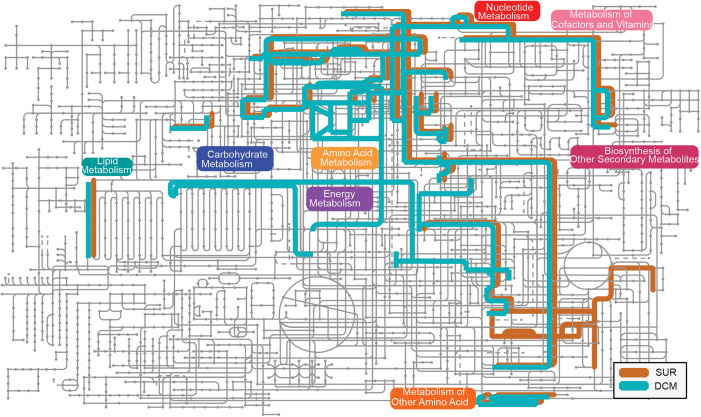 Figure 4
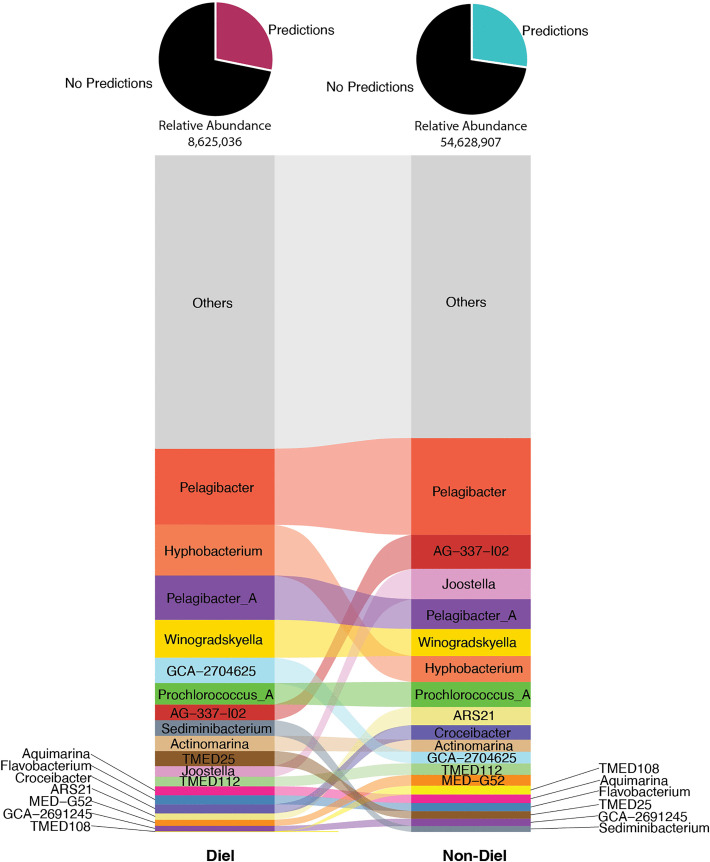 Figure 5
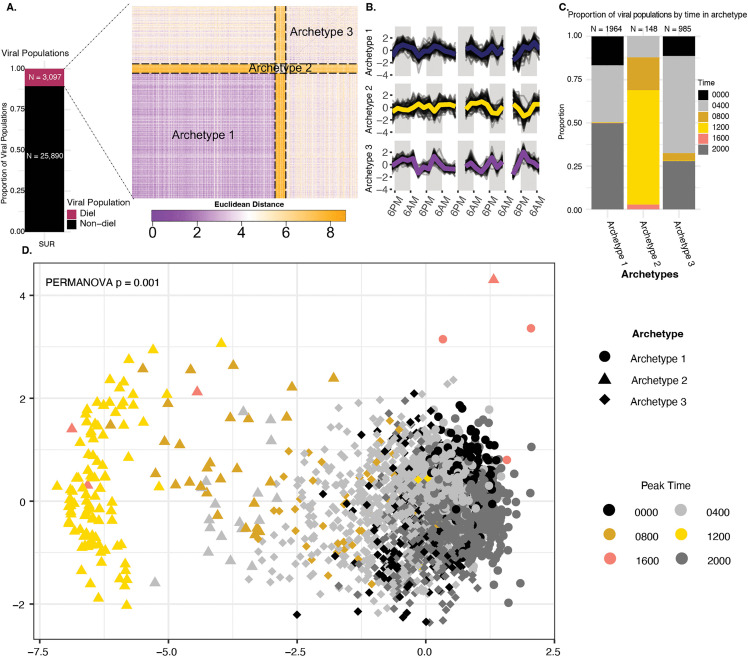 Figure 6
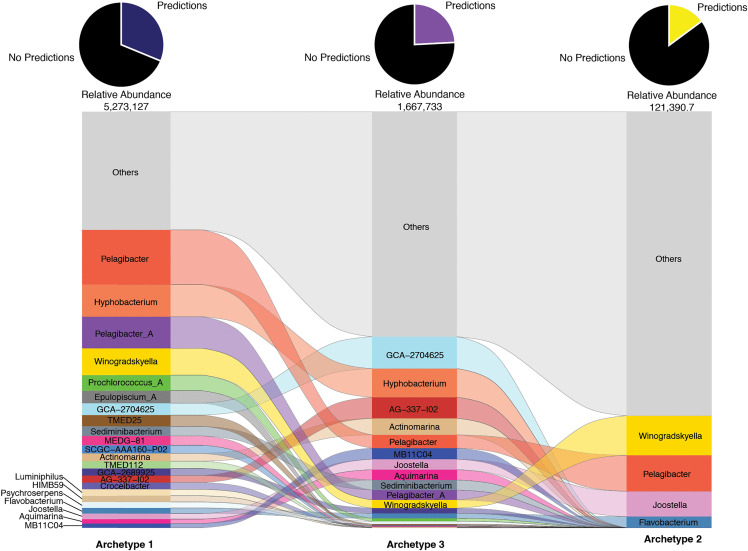 Figure 7
Peer Reviews
No public reviews on file for this paper yet. If you reviewed it on a platform where reviews are public (OpenReview, ICLR, NeurIPS, ICML), you can paste yours below so the community can read it here.
Videos
No videos yet. Explain this paper in a talk, walkthrough, or lecture? Add one.
Taxonomy
TopicsBacteriophages and microbial interactions · Microbial Community Ecology and Physiology · Fecal contamination and water quality