Psychosocial hierarchies of modifiable risk for Alzheimer’s disease: A networks analysis
James John Rochfort Brady, Larissa Bartlett, Eddy Roccati, Kimberley Norris, James Clement Vickers, Duncan Sinclair

TL;DR
This study explores how psychosocial factors like stress and coping influence Alzheimer’s disease risks, suggesting that targeting these factors could broadly reduce dementia risk.
Contribution
A novel dual-network framework identifies upstream psychosocial factors that influence multiple Alzheimer’s disease-related risks.
Findings
Stress, anxiety, and coping are upstream factors linked to downstream risks like depression and cardiometabolic domains.
Targeting psychosocial factors may offer cascading benefits for Alzheimer’s disease risk reduction.
A dual network approach combining RPCN and DAG reveals relational hierarchies among modifiable risk factors.
Abstract
Thirty per-cent of multidomain risk reduction trials for Alzheimer’s disease and related dementias (ADRD) report limited efficacy. Identifying potential cascading influences between psychosocial ADRD risk factors is a promising strategy for increasing this efficacy rate. We aimed to identify relational hierarchies among modifiable ADRD risk factors to inform temporally optimized prevention strategies. We applied a dual network approach—regularized partial correlation network (RPCN) and a Bayesian directed acyclic graph (DAG) generated via a novel ensemble method—to cross-sectional data from 898 community-dwelling older adults enrolled in an ADRD prevention initiative. The RPCN revealed clustering among mental health domains. The DAG suggested directional associations from stress, anxiety, and coping to downstream factors including depression, social support, cognitive activity, and…
Genes, proteins, chemicals, diseases, species, mutations and cell lines named across the full text — each resolved to its canonical identifier and authoritative record.
Click any figure to enlarge with its caption.
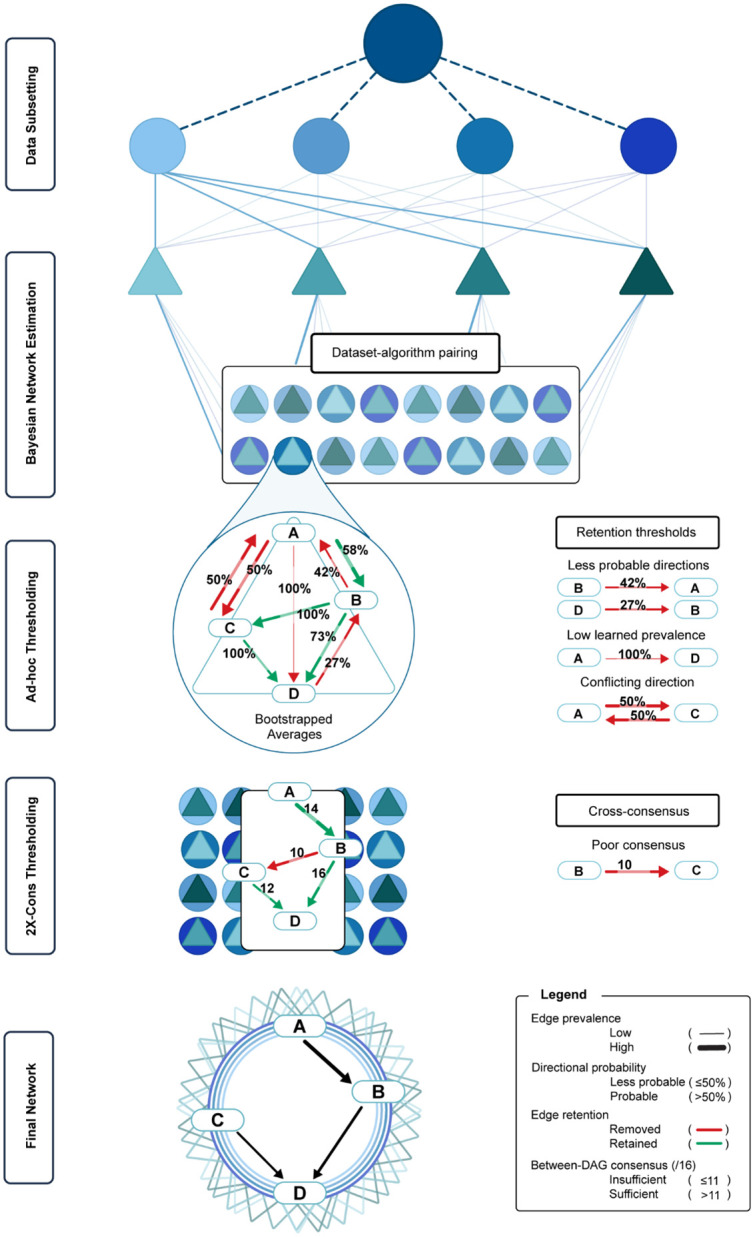 Figure 1
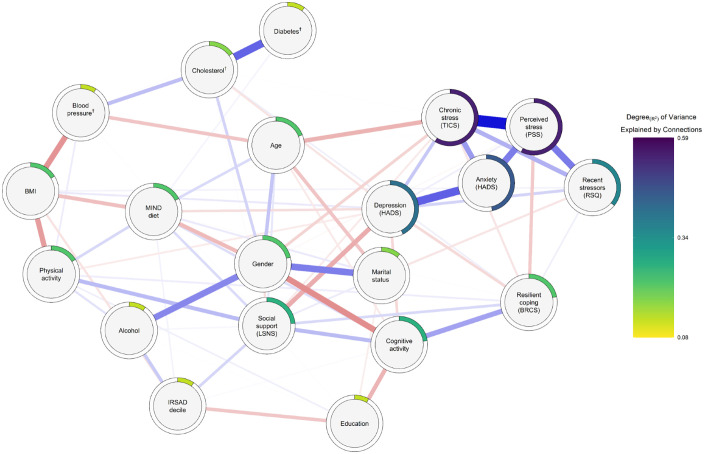 Figure 2
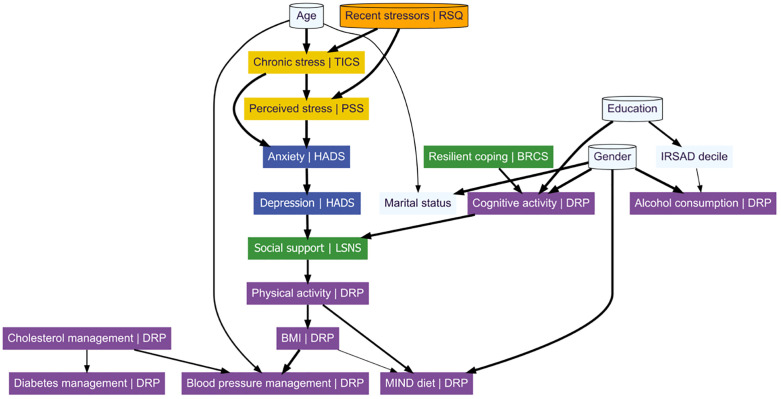 Figure 3
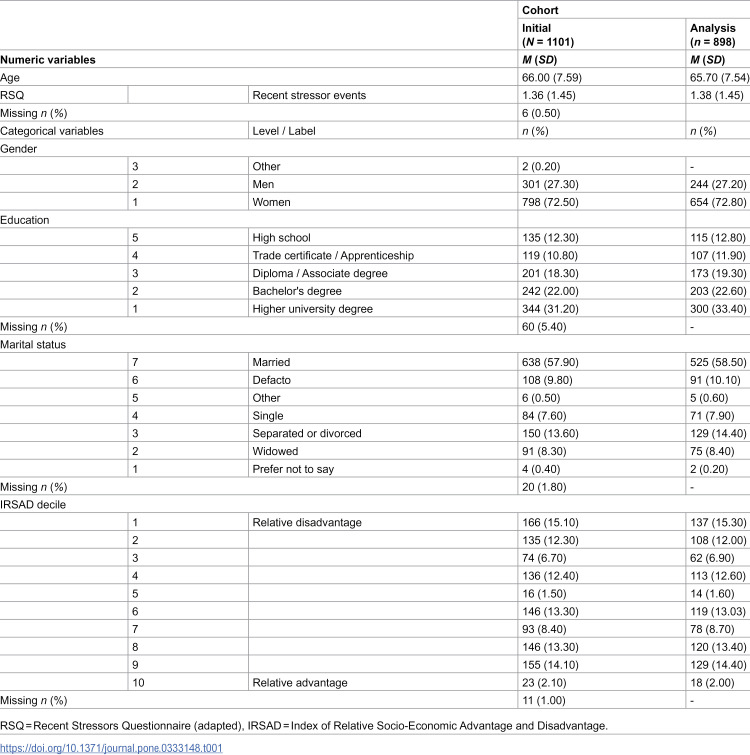 Figure 4
 Figure 5
 Figure 6
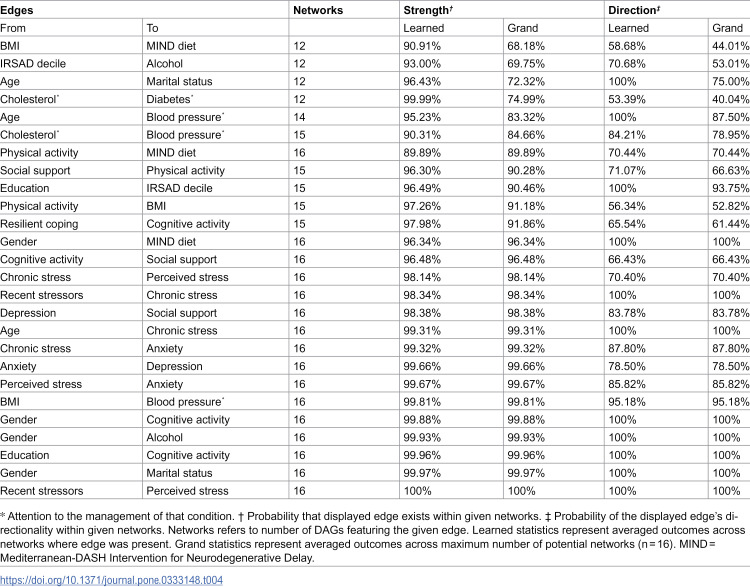 Figure 7
Peer Reviews
No public reviews on file for this paper yet. If you reviewed it on a platform where reviews are public (OpenReview, ICLR, NeurIPS, ICML), you can paste yours below so the community can read it here.
Videos
No videos yet. Explain this paper in a talk, walkthrough, or lecture? Add one.
Taxonomy
TopicsMental Health Research Topics · Health, Environment, Cognitive Aging · Dementia and Cognitive Impairment Research