Feasibility of MEG in assessing task-related oscillatory markers and evaluating cognitive changes in recently symptomatic carotid endarterectomy patients: A pilot study
Tiia Kukkonen, Sanna Liuha, Juha Leukkunen, Hanna-Maija Lapinkero, Ilmari Rouvinen, Simo Monto, Tiina Parviainen

TL;DR
This pilot study explores whether MEG can detect brain changes in patients who recently had carotid endarterectomy, suggesting it may help evaluate cognitive improvements.
Contribution
The study is the first to use MEG to assess task-related brain oscillations and cognitive changes after carotid endarterectomy.
Findings
MEG detected changes in cortical alpha oscillations in attention tasks from pre- to 12 months post-surgery.
Neuropsychological tests showed postoperative improvements in motor dexterity and working memory.
MEG shows potential as a tool to evaluate CEA-related brain function changes.
Abstract
Revascularization ensures oxygen supply to the brain in patients with significant carotid atherosclerosis. The current indication for carotid endarterectomy (CEA) is stroke risk reduction, but it may also impact cognitive functions and their neural basis. Findings on cognitive outcomes after CEA are inconsistent, and the changes in task-related brain electrophysiology are unknown. In this pilot study, we studied the feasibility of using magnetoencephalography (MEG) to follow the associated brain changes during the first postoperative year in five recently symptomatic CEA patients. Head magnetic resonance imaging (MRI), neuropsychological examinations (NPE), and MEG were performed prior to surgery and repeated twice postoperatively. The stimulus-induced modulation of cortical alpha oscillation changed from pre- to 12 months postoperative recording in simple attention tasks.…
Genes, proteins, chemicals, diseases, species, mutations and cell lines named across the full text — each resolved to its canonical identifier and authoritative record.
Click any figure to enlarge with its caption.
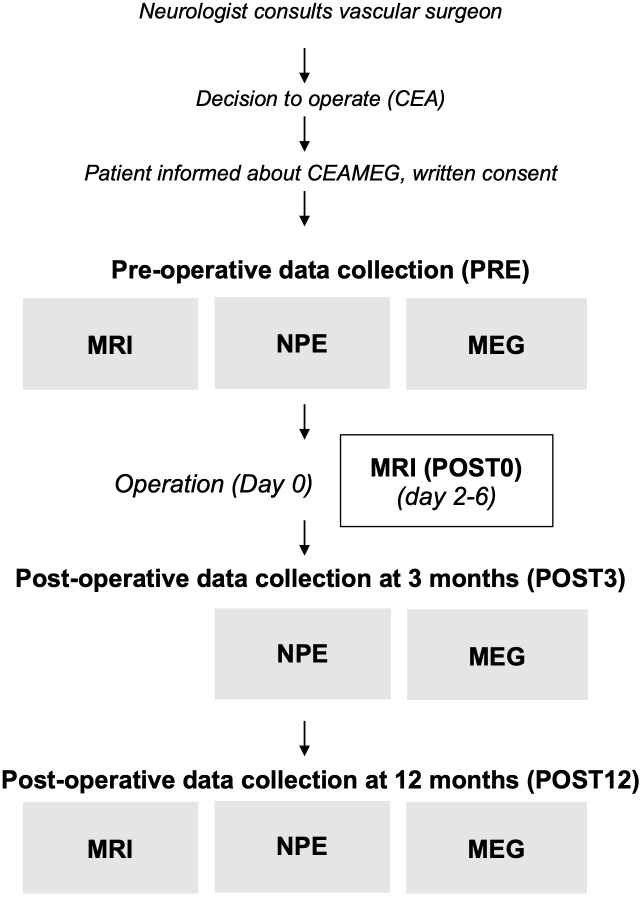 Figure 1
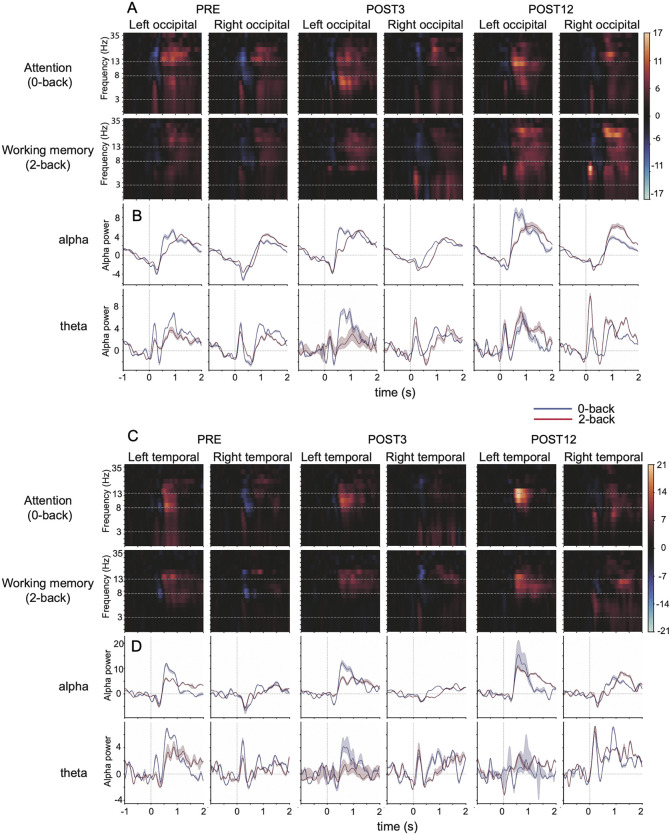 Figure 2
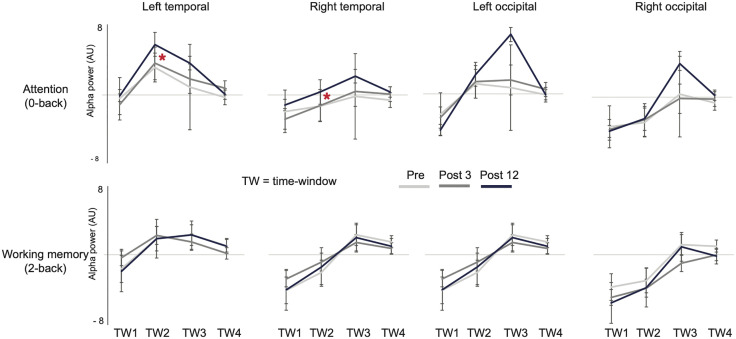 Figure 3
 Figure 4
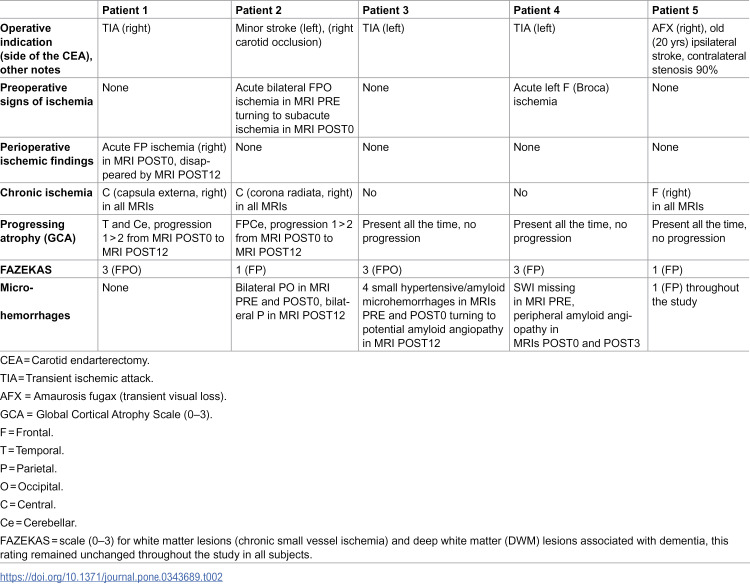 Figure 5
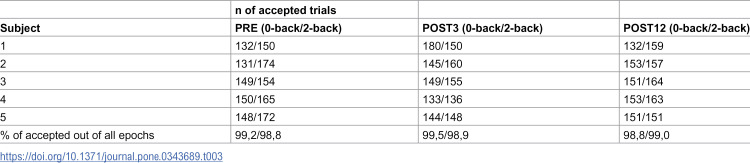 Figure 6
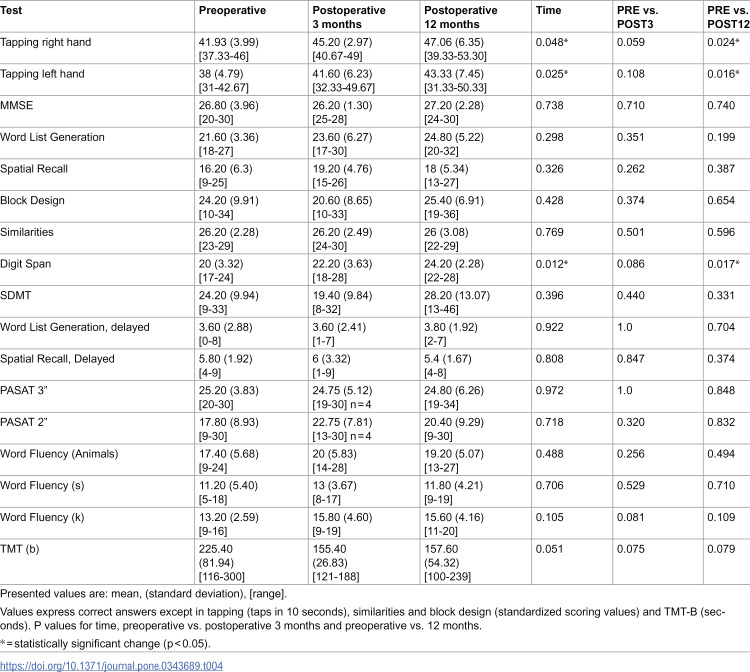 Figure 7
Peer Reviews
No public reviews on file for this paper yet. If you reviewed it on a platform where reviews are public (OpenReview, ICLR, NeurIPS, ICML), you can paste yours below so the community can read it here.
Videos
No videos yet. Explain this paper in a talk, walkthrough, or lecture? Add one.
Taxonomy
TopicsCerebrovascular and Carotid Artery Diseases · Intracranial Aneurysms: Treatment and Complications · Cardiovascular Health and Disease Prevention