Barriers and facilitators to HIV testing among transgender people in Georgia: Qualitative study results using the COM-B Framework
Marine Gogia, Tamar Zurashvili, Jack DeHovitz, Mamuka Djibuti, Dumile Gumede, Dumile Gumede

TL;DR
This study explores why transgender people in Georgia get or avoid HIV testing, finding that stigma, lack of knowledge, and community support are key factors.
Contribution
The study applies the COM-B framework to identify specific barriers and facilitators to HIV testing among transgender individuals in Georgia.
Findings
Barriers include stigma, low HIV knowledge, and confidentiality fears.
Facilitators include community outreach, self-testing, and peer support.
Structural and sociocultural factors significantly influence testing behaviors.
Abstract
Transgender (TG) people face a disproportionately high burden of HIV globally due to stigma, discrimination, criminalization, and limited access to trans-specific healthcare. In Georgia, HIV prevalence among TG individuals is 24.1%, compared with 0.3% in the general adult population. While predictors of HIV testing have been documented, the factors influencing testing behaviors remain insufficiently understood. This study explored barriers and facilitators to HIV testing among TG in Georgia using the Capability, Opportunity, Motivation–Behavior (COM-B) model. We conducted 15 in-depth interviews (IDIs) with TG and non-binary individuals aged 18–45 years in Tbilisi between February–April 2025. Eligible participants were HIV-negative, not enrolled in pre-exposure prophylaxis (PrEP), and recruited with support from community-based organizations. Data were transcribed, coded, and…
Genes, proteins, chemicals, diseases, species, mutations and cell lines named across the full text — each resolved to its canonical identifier and authoritative record.
Click any figure to enlarge with its caption.
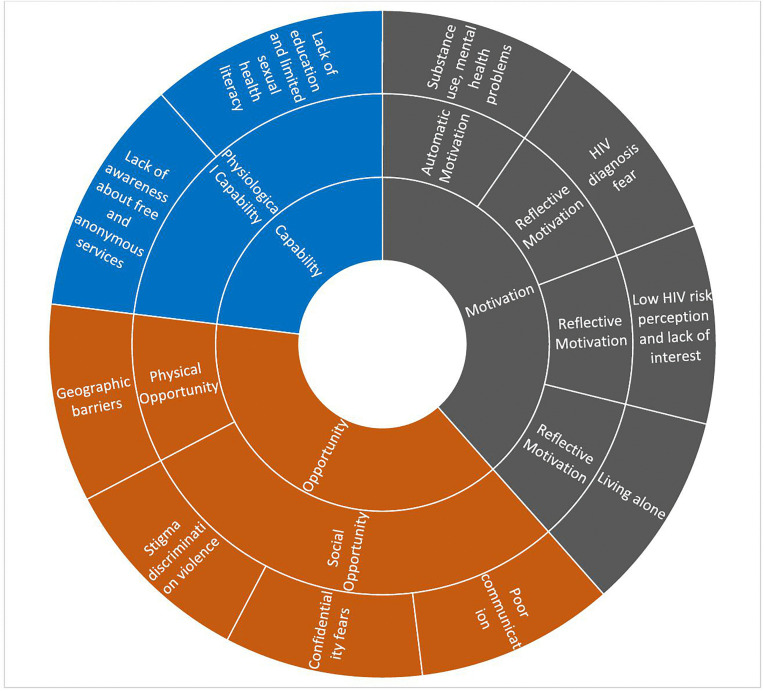 Figure 1
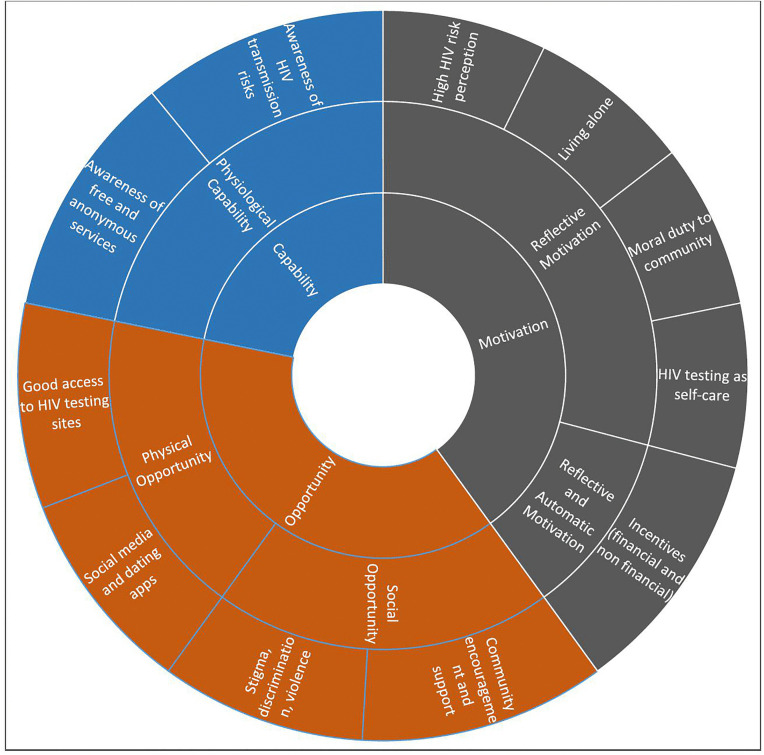 Figure 2
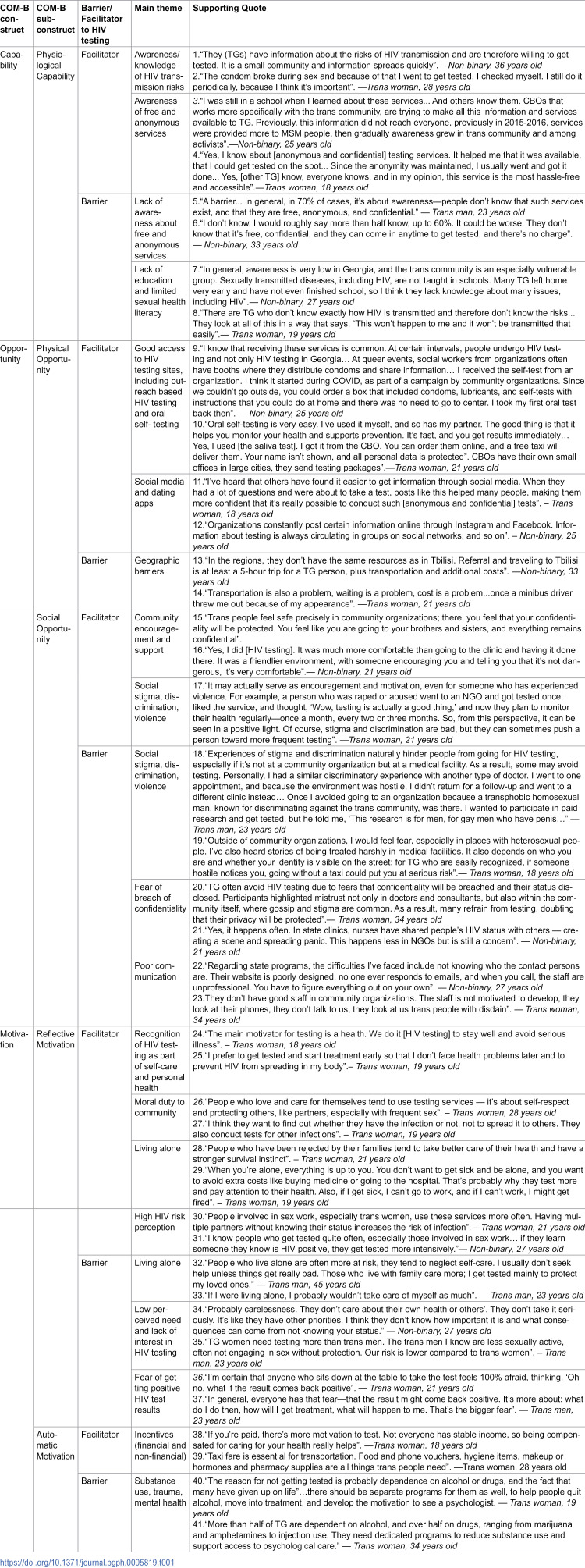 Figure 3
Peer Reviews
No public reviews on file for this paper yet. If you reviewed it on a platform where reviews are public (OpenReview, ICLR, NeurIPS, ICML), you can paste yours below so the community can read it here.
Videos
No videos yet. Explain this paper in a talk, walkthrough, or lecture? Add one.
Taxonomy
TopicsHIV/AIDS Research and Interventions · LGBTQ Health, Identity, and Policy · Sexuality, Behavior, and Technology