Power management and performance optimization of underwater wireless sensor networks based on MARL
Jingtao Guan

TL;DR
This paper introduces a new method using multi-agent reinforcement learning to optimize energy use and communication performance in underwater wireless sensor networks.
Contribution
A novel multi-agent reinforcement learning-based power management scheme for underwater wireless sensor networks is proposed.
Findings
The proposed method achieves a network capacity of 245.68 kb and a fairness reuse index of 1.85 in heterogeneous network scenarios.
In imperfect networks with 5% node failures, the average communication latency is only 6.18 time slots.
The method maintains a network capacity of over 32,045 kb and an energy efficiency of 0.4 kb/J in dynamic environments.
Abstract
In underwater wireless sensor network communication, communication performance degrades due to factors such as complex underwater channels and limited node resources. To reduce node redundancy energy consumption, improve transmission reliability, and extend the overall network lifetime, this study proposes an intelligent network performance optimization algorithm based on multi-agent reinforcement learning. By constructing an underwater wireless sensor network system model including fixed and mobile nodes, the network performance optimization problem is formalized as a partially observable Markov decision process. Then, multi-agent reinforcement learning is used to construct a comprehensive team reward function containing fair reuse rewards and survival time penalties, thereby establishing a distributed intelligent power management scheme. This solution enables each node to make…
Genes, proteins, chemicals, diseases, species, mutations and cell lines named across the full text — each resolved to its canonical identifier and authoritative record.
Click any figure to enlarge with its caption.
 Figure 1
 Figure 2
 Figure 3
 Figure 4
 Figure 5
 Figure 6
 Figure 7
 Figure 8
 Figure 9
 Figure 10
 Figure 11
 Figure 12
 Figure 13
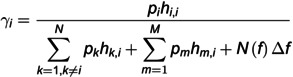 Figure 14
 Figure 15
 Figure 16
 Figure 17
 Figure 18
 Figure 19
 Figure 20
 Figure 21
 Figure 22
 Figure 23
 Figure 24
 Figure 25
 Figure 26
 Figure 27
 Figure 28
 Figure 29
 Figure 30
 Figure 31
 Figure 32
 Figure 33
 Figure 34
 Figure 35
 Figure 36
 Figure 37
 Figure 38
 Figure 39
 Figure 40
 Figure 41
 Figure 42
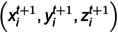 Figure 43
 Figure 44
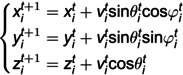 Figure 45
 Figure 46
 Figure 47
 Figure 48
 Figure 49
 Figure 50
Peer Reviews
No public reviews on file for this paper yet. If you reviewed it on a platform where reviews are public (OpenReview, ICLR, NeurIPS, ICML), you can paste yours below so the community can read it here.
Videos
No videos yet. Explain this paper in a talk, walkthrough, or lecture? Add one.
Taxonomy
TopicsUnderwater Vehicles and Communication Systems · Energy Efficient Wireless Sensor Networks · Maritime Navigation and Safety